Inflation in Peru is back in the news: according to INEI, prices in Metropolitan Lima rose 0.57% in October and annual inflation reached 5.25%, the highest level in 38 months. That is almost double the upper limit of the Central Reserve Bank of Peru’s (BCRP) target. I’ll explain what pushed it up and what it means for your money.
What went up in October
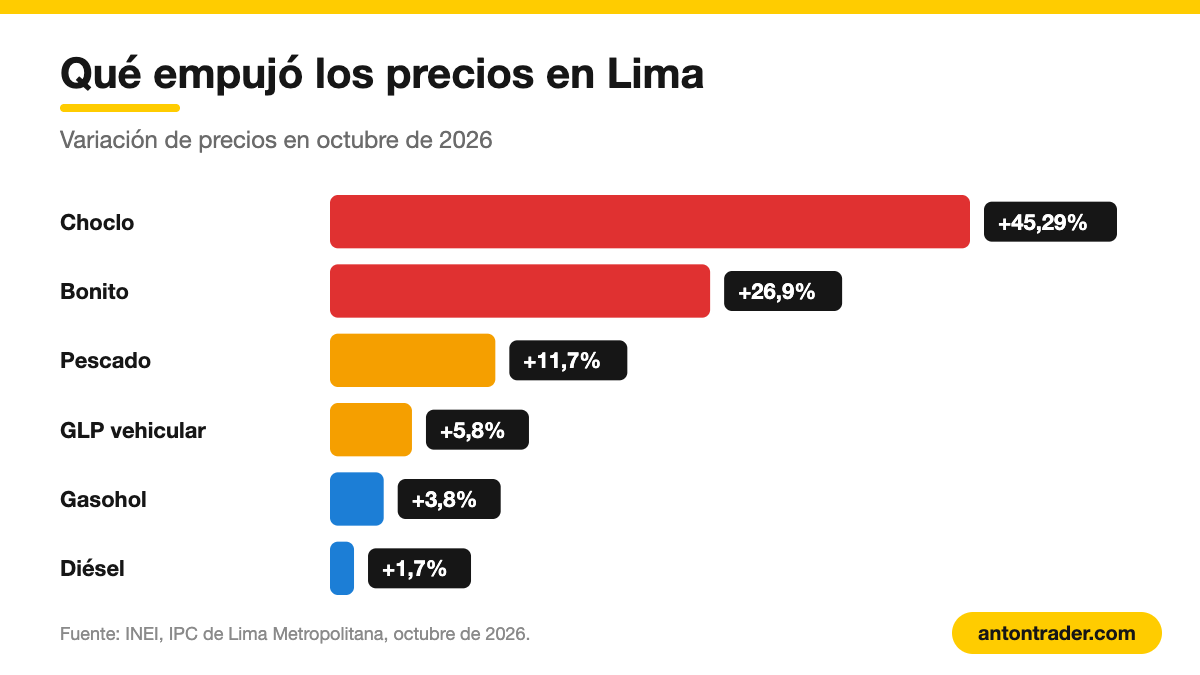
Most of the increase came from food. Food accounted for about 68% of the month’s rise: bonito rose 26.9% and was the item with the most weight in the index, corn on the cob (choclo) rose 45.29%, and fish in general 11.7%.
The second driver was transportation, which rose 0.77% in the month and has accumulated 15.75% over 12 months. Fuel weighs heavily here: vehicular LPG rose 5.8%, gasohol 3.8% and diesel 1.7%. When fuel goes up, almost everything else goes up too, because goods arrive by truck.
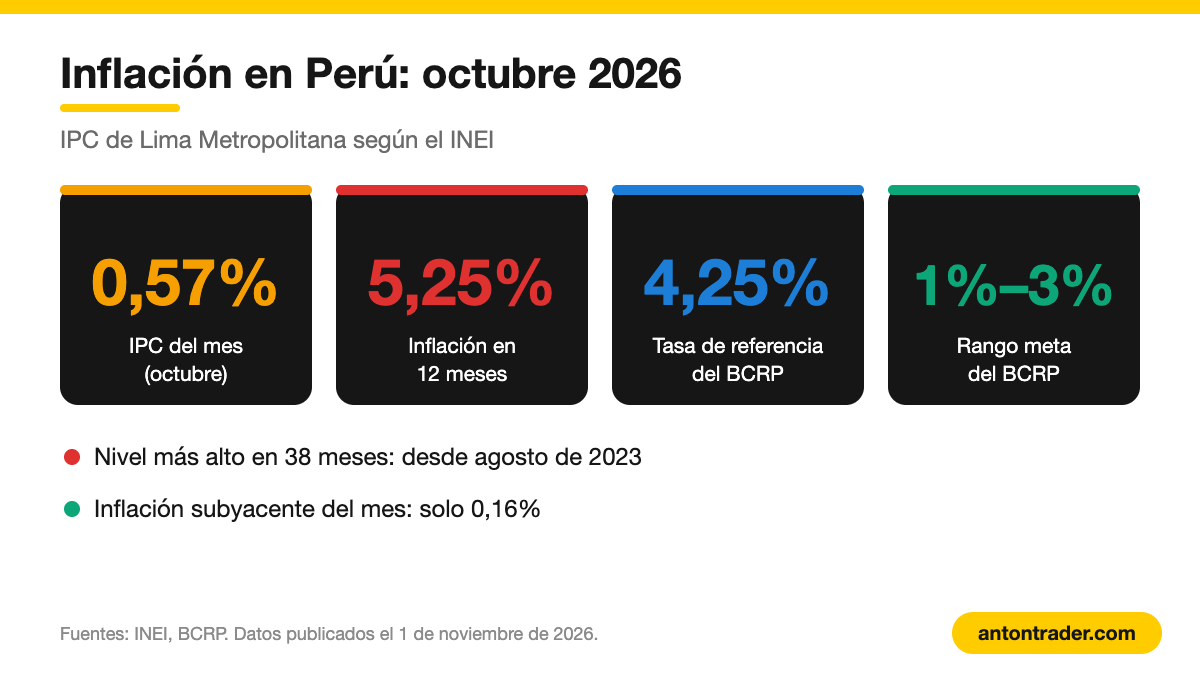
| Indicator | Value |
|---|---|
| Lima CPI, October 2026 | 0.57% |
| 12-month inflation | 5.25% |
| Cumulative January-October | 4.88% |
| National CPI, October | 0.56% |
| BCRP reference rate | 4.25% |
| BCRP target range | 1% to 3% |
Sources: INEI and BCRP, data published on November 1, 2026.
A figure that is not as bad as it looks
Here is an important clue. Core inflation, which excludes the most volatile prices such as food and energy, rose only 0.16% in October. In other words, the blow comes mainly from food and fuel, not from a general rise in all prices.
This matters because food shocks tend to be temporary: a bad fishing season or a short harvest makes a product more expensive for a few months and then the price calms down. But if fuel stays expensive, the effect spreads across the whole economy and becomes harder to bring down.
What the Central Bank can do
The BCRP has kept its reference rate at 4.25% since September 2025. In its September Inflation Report, it projected closing 2026 with inflation of 4.2%, and October is already above that. The bank expects inflation to gradually return to 2% in 2027.
With inflation at 5.25% and the rate at 4.25%, Peru’s real rate (the rate minus inflation) is now negative. That means savings in soles held in instruments that pay close to the reference rate are losing purchasing power. If the next readings don’t come down, the market will start asking whether the BCRP will raise the rate, and that can move the sol against the dollar.
What it means for your wallet
- Check the real rate on your savings. If your deposit pays less than 5% a year, you are losing purchasing power today. It’s not a catastrophe, but it’s worth knowing.
- Don’t rush to buy dollars out of fear. The sol has been one of the most stable currencies in the region. Diversifying is fine; betting everything on one side because of one data point is not.
- If you follow the market: inflation data and BCRP meetings move USD/PEN. I explain the logic in how the differential with the Fed moves the peso, the real and the sol.
If you want to learn to trade currencies, start with a demo account and use a stop loss on every trade. For Forex and CFDs I work with FxPro, RoboForex and Tickmill: all three accept clients from Latin America.
Where to trade
These are the brokers and exchanges I use that work with clients from Latin America. Always check that the service is available in your country and start small.
Risk warning: CFDs, Forex and crypto derivatives carry a high risk of losing money due to leverage. This article is not investment advice.