This strategy has enormous potential! It teaches you to enter (pay attention!) ONLY AT THE REVERSALS of a trend. That means you will always get the most favorable entry point. It’s a breakout strategy: you don’t need to memorize hundreds of patterns or tweak oscillators.
“Structure Frame” is a strategy without a single indicator, in which you know the stop loss and take profit prices in advance. You enter the market with convenient pending orders: you set the entry price yourself and pay minimal commissions.
Technical specifications
- Timeframe: H1 (1-hour charts).
- Instruments: EURUSD, GBPUSD, USDJPY, ETHUSDT, TONUSDT, SOLUSDT, ADAUSDT and others.
- Leverage: from 1:1 to 1:2000.
- Markets: Forex and crypto.
Trade only with reliable brokers and exchanges (below you’ll find the ones I use).
How do you make money with this strategy?
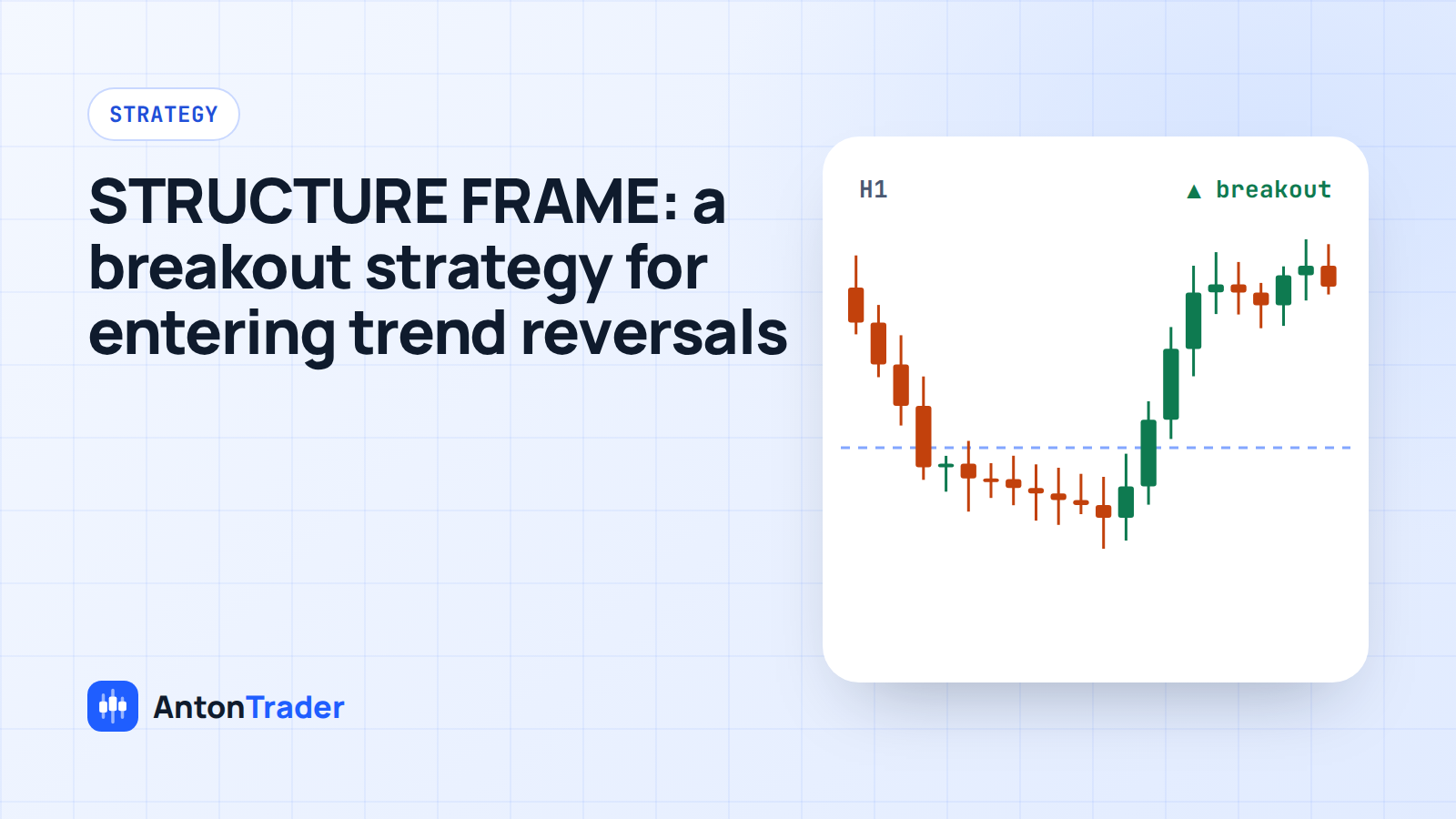
Your task is to watch the current trend structure until its “frame” breaks. That is, the moment the price breaks the true extreme, which triggers a mass of stop orders. Those orders, in turn, give us the momentum toward a take profit known in advance.
Technically, the trader must find the nearest local structure and mark the opposite edge of the correction wave.
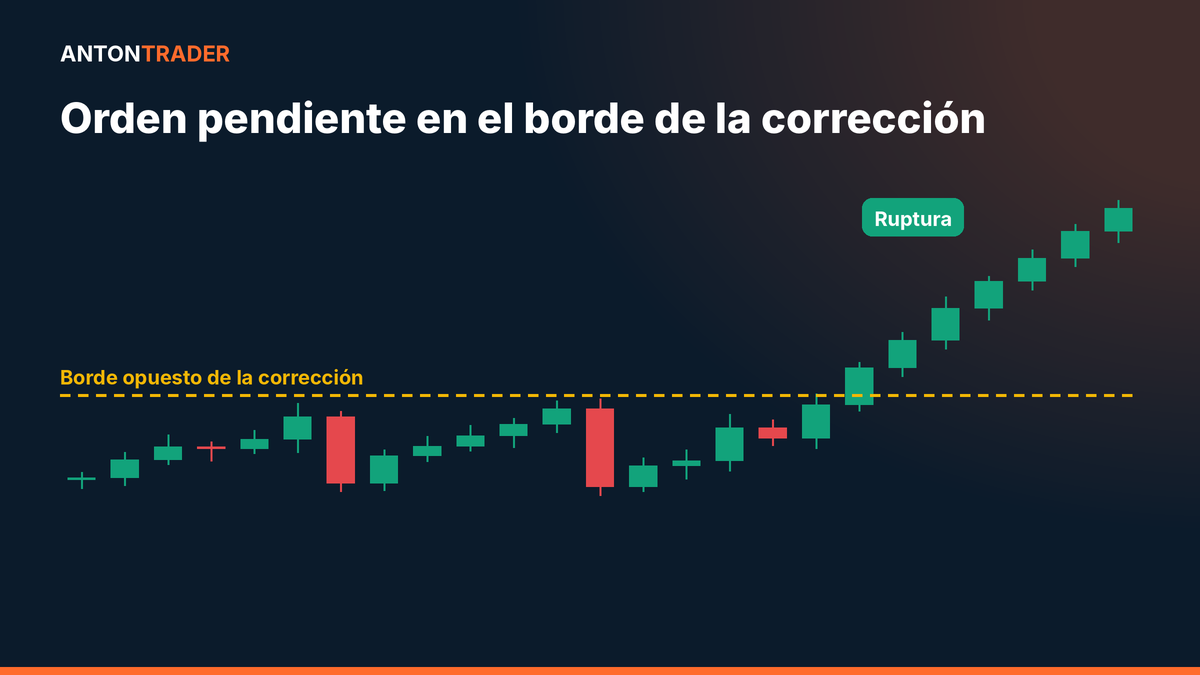
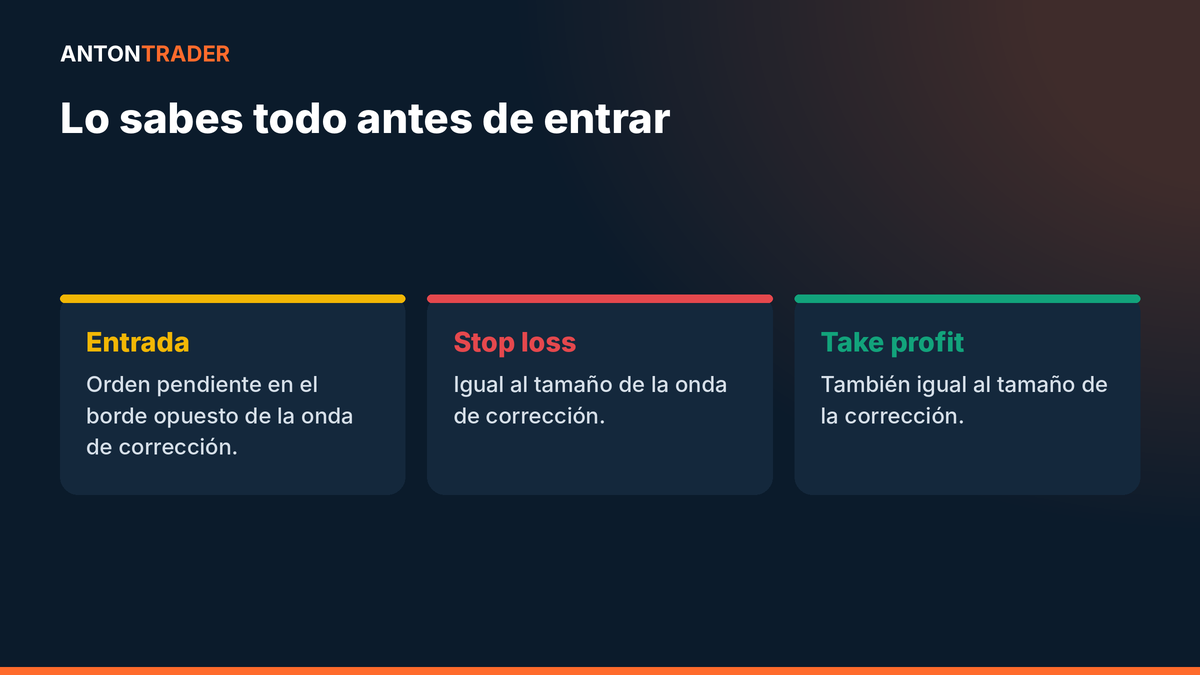
At the opposite edge of the correction, the trader places a pending buy order. The stop loss and take profit in this case are equal to each other and are the same size as the correction wave.
Discard correction waves in low-volatility stretches: most of the time they reflect low activity, not resistance from the other side.
What can you combine the strategy with?
“Structure Frame” is very convenient for those who prefer to calculate all their risks in advance instead of leaving everything to chance. Here you know where to enter and when to exit no matter what. But, of course, what is described here is only the skeleton of more complex mathematical methods.
The ideal approach is to use the Structure Frame together with the “1-2-2-2” mathematical reversal method. That way, even wrong signals let you take good profits, smoothing out the inaccuracies of your own analysis.