Express trading course

Lesson 1. Introduction to the World of Trading: Basic Terms and Concepts

Anton Rozhnovsky · October 11, 2026 · 2 min read
Lesson 1. Introduction to the World of Trading: Basic Terms and Concepts

Friends, welcome to the trading training series!

Today I’ll tell you what the world of trading looks like and introduce its basic concepts and terms. It’s your first step toward getting to know the world of financial markets.

The first thing is to understand what trading is. Trading is the process of buying and selling financial assets (stocks, currencies, commodities and other instruments) to profit from the difference between their prices.

Basic concepts every trader knows

Let’s go over the concepts and terms every trader is familiar with:

  1. Asset: a financial instrument that can be bought or sold in the market, for example, company stocks or currency pairs.
  2. Exchange: an organized platform where traders buy and sell assets. Among the best known are the New York Stock Exchange and the London Stock Exchange.
  3. Long (buy position): buying an asset expecting its price to rise. The trader aims to profit from the difference between the buy price and the sell price.
  4. Short (sell position): selling an asset expecting its price to fall. The trader then buys it back at a lower price to make a profit.
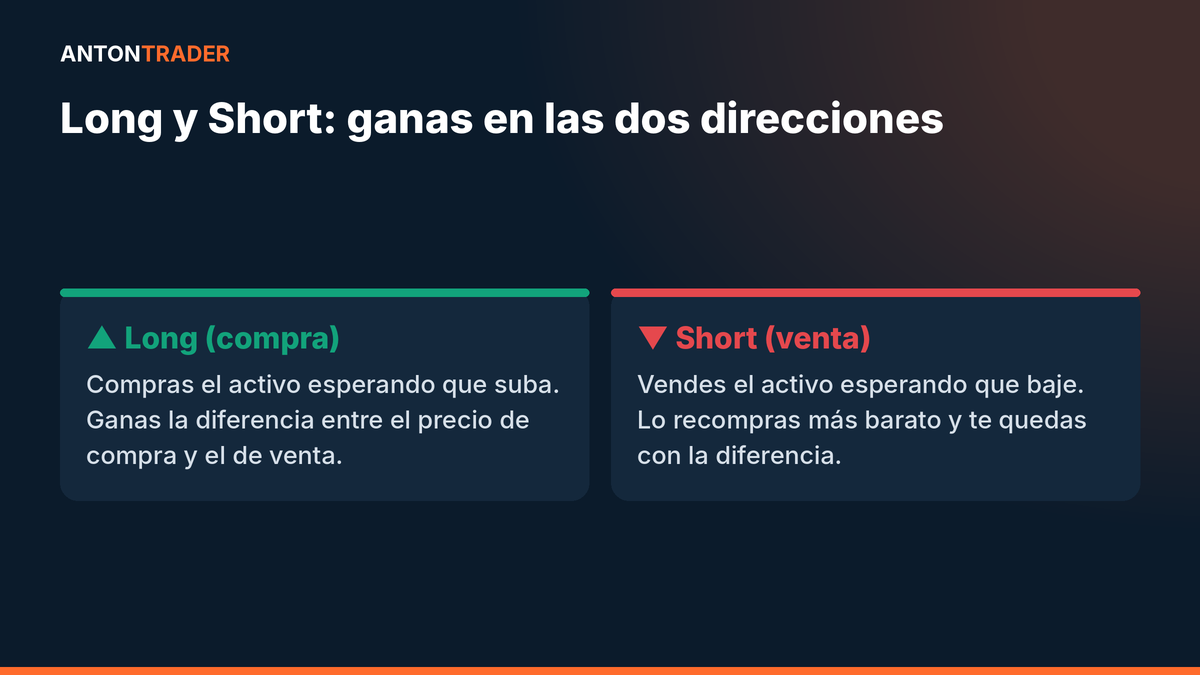
Long and Short: you profit if the price rises or if the price falls
  1. Stop Loss: an order that limits your potential loss if the asset’s price moves against you.
  2. Take Profit: an order to close the position and lock in the profit when the price reaches a certain level.
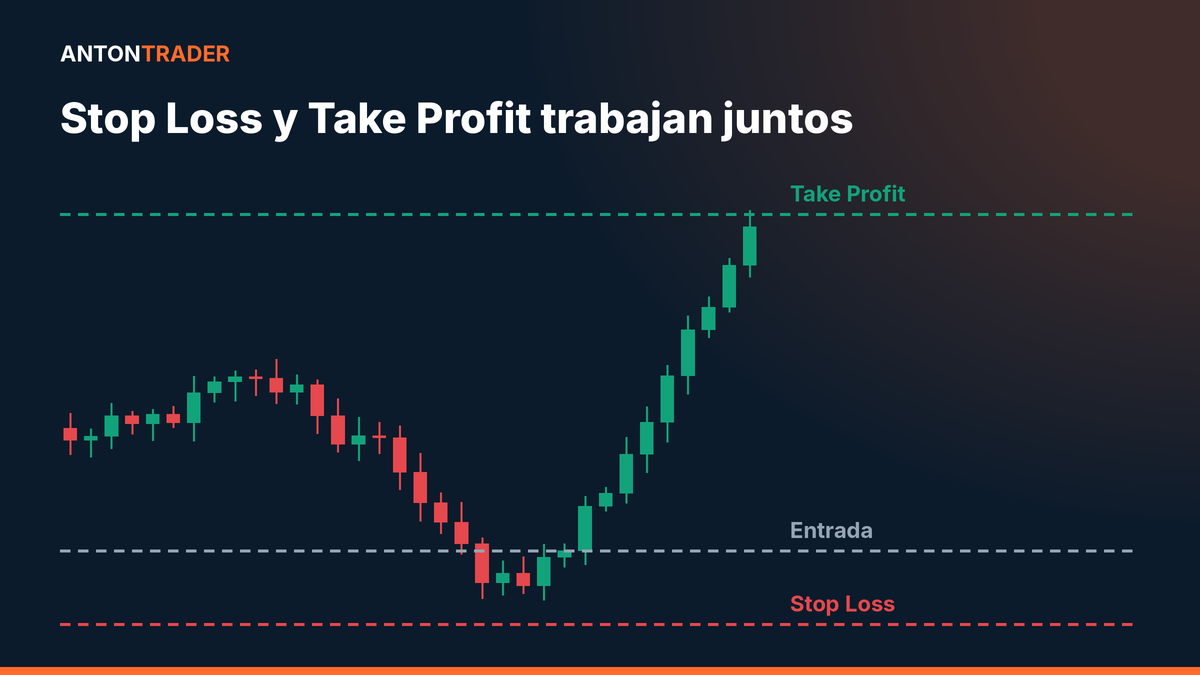
Stop Loss and Take Profit on the chart

These are just some of the basic concepts you’ll need in trading. Now you know the essential terms and you’re ready to move forward.

In the next lessons we’ll cover trading strategies, market analysis and much more, so you can progress step by step.

Happy trading!

Dónde opero y qué recomiendo
Brokers de Forex y CFD
1
FxPro
Broker con historia desde 2006 y uno de los nombres más conocidos del mercado. Ejecución rápida y muchas plataformas.
MT4MT5cTraderFxPro App
Abrir cuenta
2
RoboForex
Depósito de entrada bajo y muchos tipos de cuenta. Buena opción para empezar con poco capital.
MT4MT5R StocksTraderCopyFX
Abrir cuenta
3
Tickmill
Spreads bajos y comisiones competitivas. Pensado para quien opera seguido y cuida cada pip.
MT4MT5Spreads bajos
Abrir cuenta
Exchanges de criptomonedas
1
Bybit
Uno de los mayores exchanges de derivados cripto. Futuros, spot y copy trading en una sola cuenta.
FuturosSpotCopy trading
Abrir cuenta
2
BingX
Exchange muy fuerte en copy trading: puedes seguir a traders y ver sus resultados.
Copy tradingFuturosSpot
Abrir cuenta
3
KuCoin
Exchange con cientos de criptomonedas y muchas altcoins. Spot, futuros y bots de trading en una sola cuenta.
SpotFuturosBots de trading
Abrir cuenta
Los enlaces son de afiliado: si abres una cuenta, puedo recibir una comisión sin costo para ti. Operar con CFD, Forex y criptomonedas apalancadas conlleva un alto riesgo de perder dinero. Revisa si el servicio está disponible en tu país y opera solo con dinero que puedas permitirte perder.
Anton Rozhnovsky
Anton Rozhnovsky

Trader for 14 years. He has automated and tested more than 2,000 strategies in trading robots and develops his own indicators for MetaTrader 5.

Keep reading

Lesson 13. Will the price break the level or bounce off it?
Express trading course

Lesson 13. Will the price break the level or bounce off it?

How to assess whether the price will break a level or bounce off it: methods, factors to watch and the role of the stop loss.

Lesson 7. Capital Management and Portfolio Diversification
Express trading course

Lesson 7. Capital Management and Portfolio Diversification

Four rules to protect your money: spread the risk, diversify, combine asset classes, and rebalance your portfolio.

Lesson 5. Trading Psychology: Emotions and Risk Management
Express trading course

Lesson 5. Trading Psychology: Emotions and Risk Management

Fear and greed: the two emotions that cost traders the most money, and how to keep them from making your decisions.