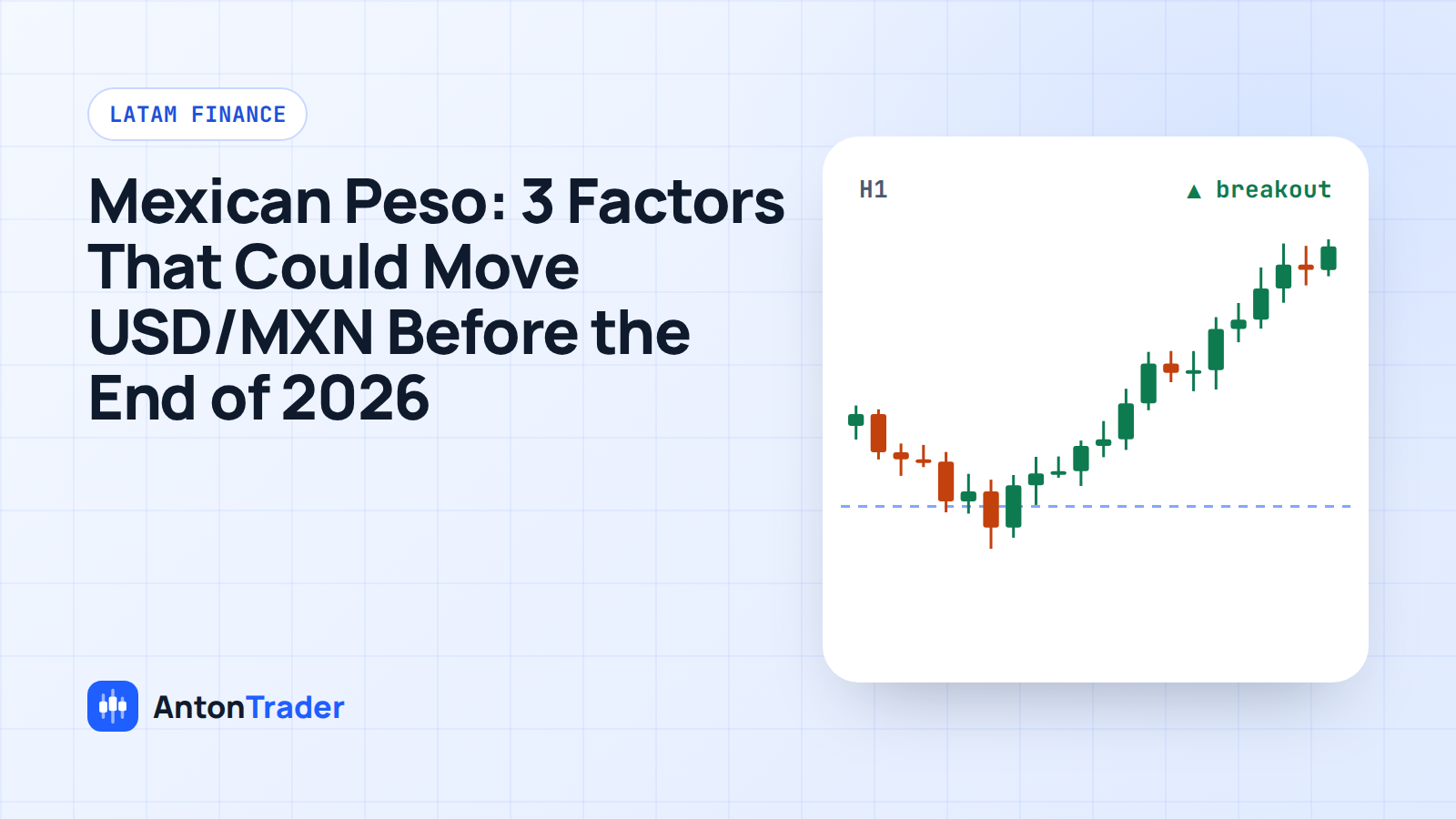
At the beginning of October the dollar was trading near 18.20 pesos again, when at the end of August it was below 17. For someone who saves in pesos, that’s bad news. For a trader, it’s volatility, and volatility is opportunity if you have a plan.
I’ve been trading for 14 years, and in pairs like USD/MXN I don’t try to guess. I look at what can move the price, mark the dates, and wait for the chart to confirm. These are the three key factors I’m following through the end of the year.
1. The Fed Hikes, Banxico Stays Put
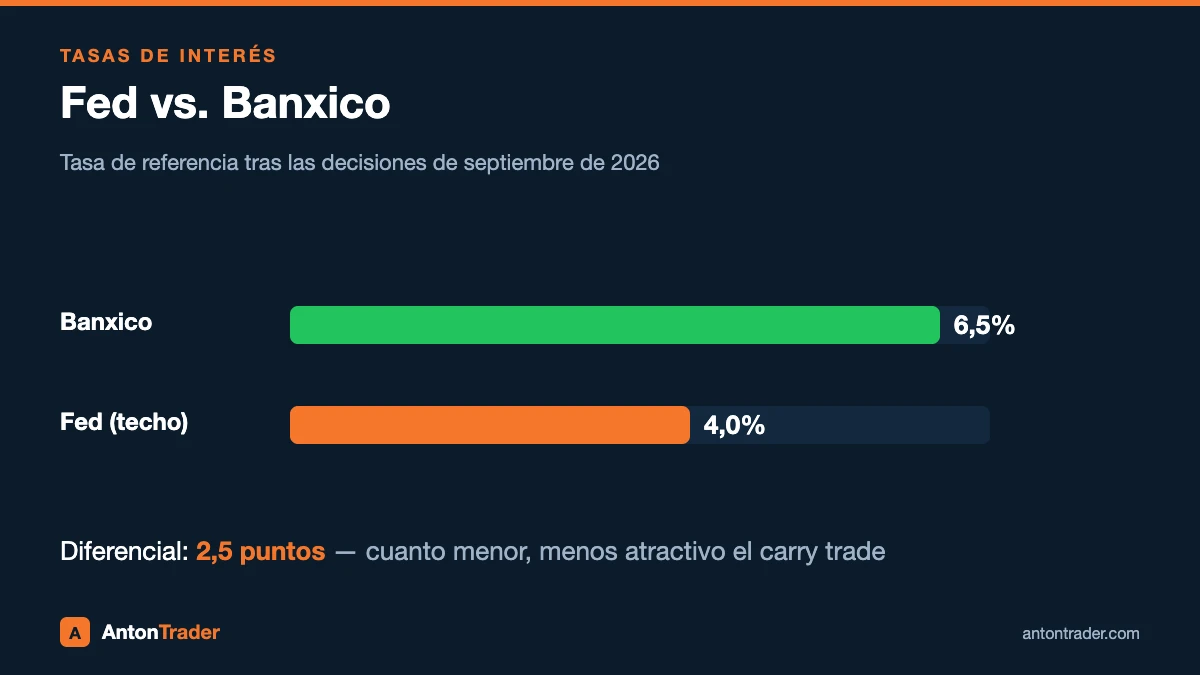
On September 16, the Federal Reserve raised its rate by 25 basis points, to the 3.75%–4.00% range. Banxico, on the other hand, held its rate at 6.50% on September 24, and its minutes show some members are open to cutting later on.
Why does it matter? For years the peso was a carry currency: investors borrow cheap dollars and buy pesos that pay more. When the rate differential narrows, that trade loses its appeal, capital flows out, and the dollar rises.
2. Inflation in the United States
US inflation remains around 3.4% annually. Every reading higher than expected increases the probability that the Fed will keep hiking, and that strengthens the dollar against almost all emerging-market currencies, including the peso.
3. Inflation in Mexico
In September, Mexican inflation rose to 3.45%, above Banxico’s 3% target, although within its tolerance range. If prices don’t ease, Banxico will have less room to cut, and that would help the peso. It’s the factor working against the dollar.
The Dates I Mark on My Calendar
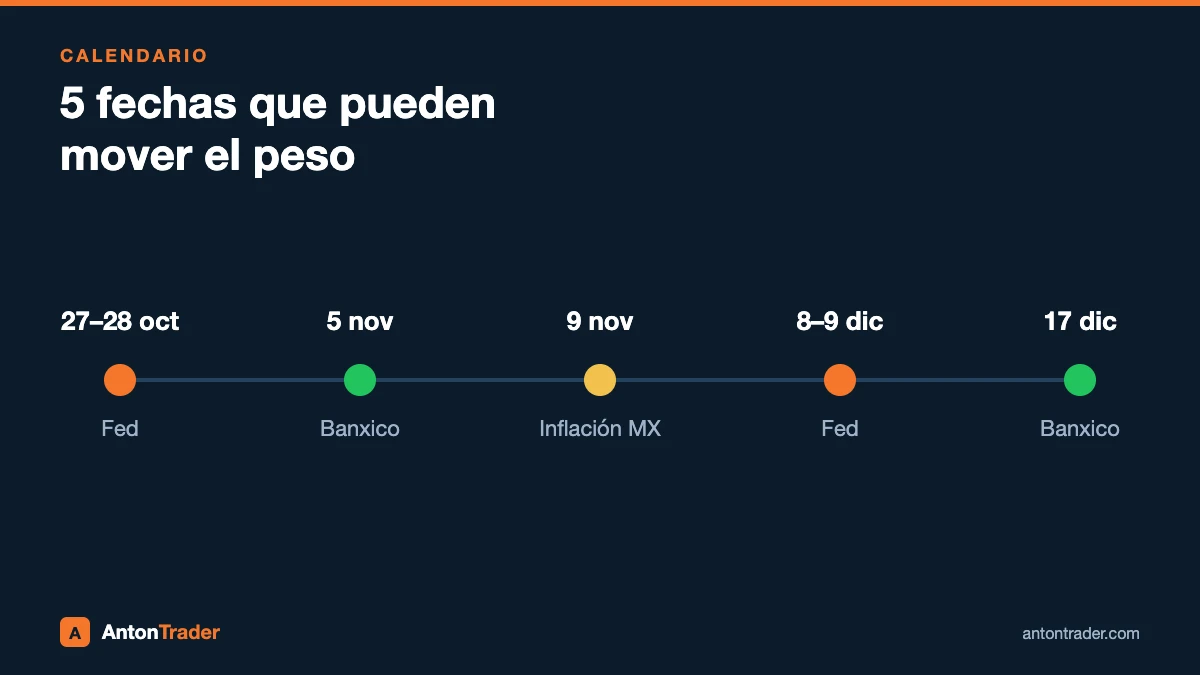
- October 27–28: Fed meeting.
- November 5: Banxico decision.
- November 9: Mexico’s October inflation.
- December 8–9: the Fed’s last meeting of the year.
- December 17: Banxico’s last decision of 2026.
How I Trade It
I don’t open positions right before the news. Price can jump dozens of points in seconds and the stop gets filled with slippage. What I do is mark on H1 and H4 the levels where price reacted before and wait for the reaction after the data release: a breakout with a retest or a false breakout. When I use a stop, it goes behind the level, never “by eye.”
The analysts surveyed by Banxico expect the dollar around 17.50 pesos at year-end. It could happen, but the market has no obligation to meet forecasts. That’s why I trade what I see on the chart, not what the survey says.
Where to Trade
These are the brokers and exchanges I use that work with clients from Latin America. Always check that the service is available in your country, and start small.
Risk warning: CFDs, Forex and crypto derivatives carry a high risk of losing money due to leverage. This article is not investment advice.