Practical guides

My 3 Best Market Entry Points

Anton Rozhnovsky · October 10, 2026 · 3 min read
My 3 Best Market Entry Points

In trading, there aren’t that many situations you can rely on. And if you want to grow a small account, you need entries with a high probability of working.

To make it easier for you, I’ve put together my 3 strongest entry points. All three use the same candlestick pattern, so let’s learn it first.

The base pattern

Description: 3 or 4 bars whose opens and closes are at roughly the same price. The signal bar must close above or below the previous one, depending on the type of pattern (buy or sell). In my materials I call it the GPR pattern.

Once you’ve memorized it, all that’s left is to find the conditions to apply it. They’re simple: perhaps you didn’t pay attention to them before. In every combination, the entry is made only on the pattern’s signal candle.

Entry point #1

You need a sloping trendline drawn through the nearest extremes and the last correction wave. At the edges of that correction, we look for the pattern in the direction of the trendline.
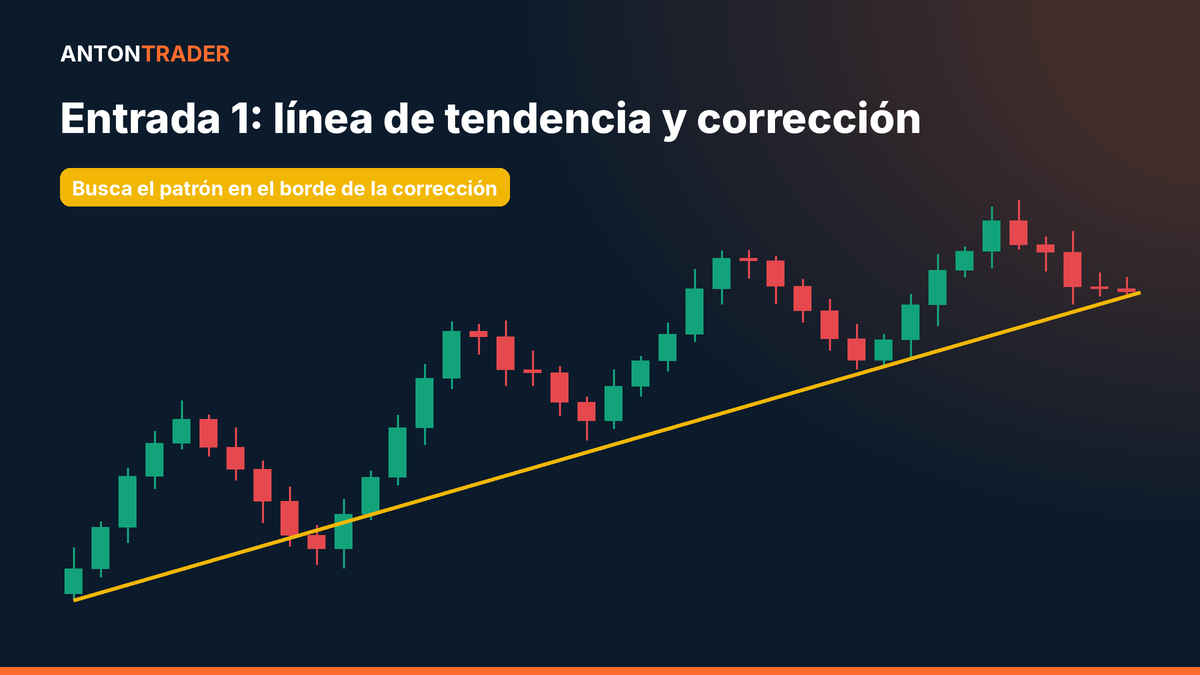
Entry point on the trendline

Entry point #2

Here it’s best to switch to the 5-minute chart. Look for a range zone (when price moves in a horizontal channel), mark its boundaries, and wait for a wave that completely absorbs it. Draw the Fibonacci grid over that wave and, when price touches the 50 level, enter in the direction of the wave with the pattern.
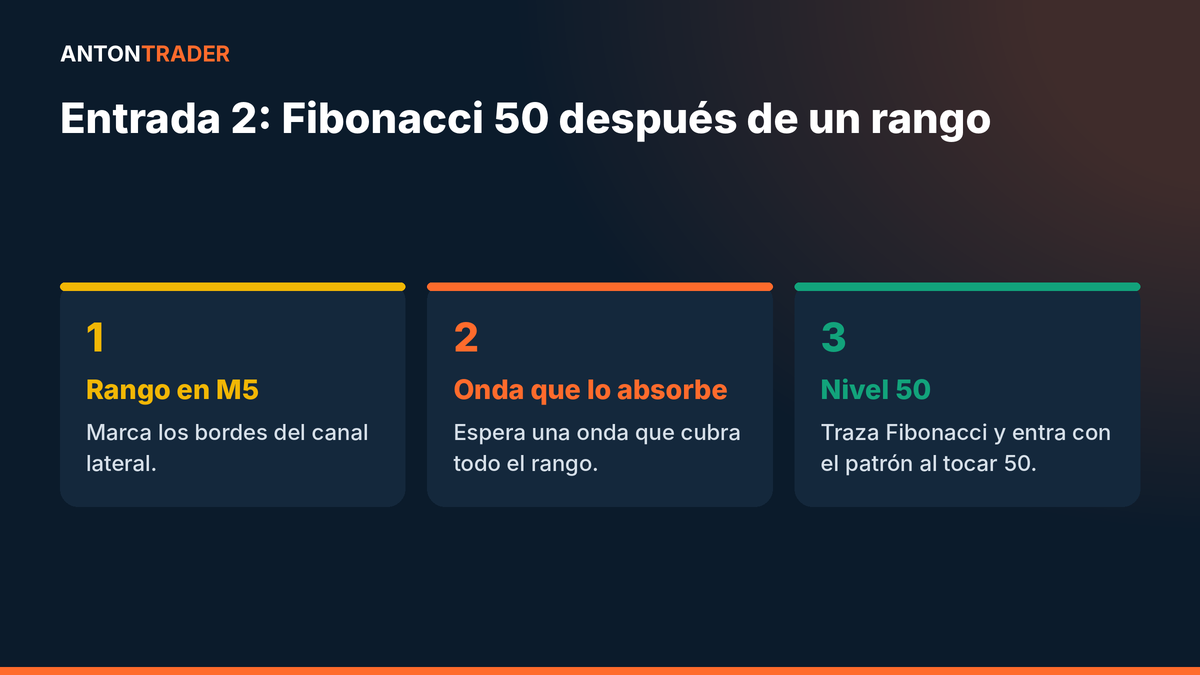
Entry point with Fibonacci 50

Entry point #3

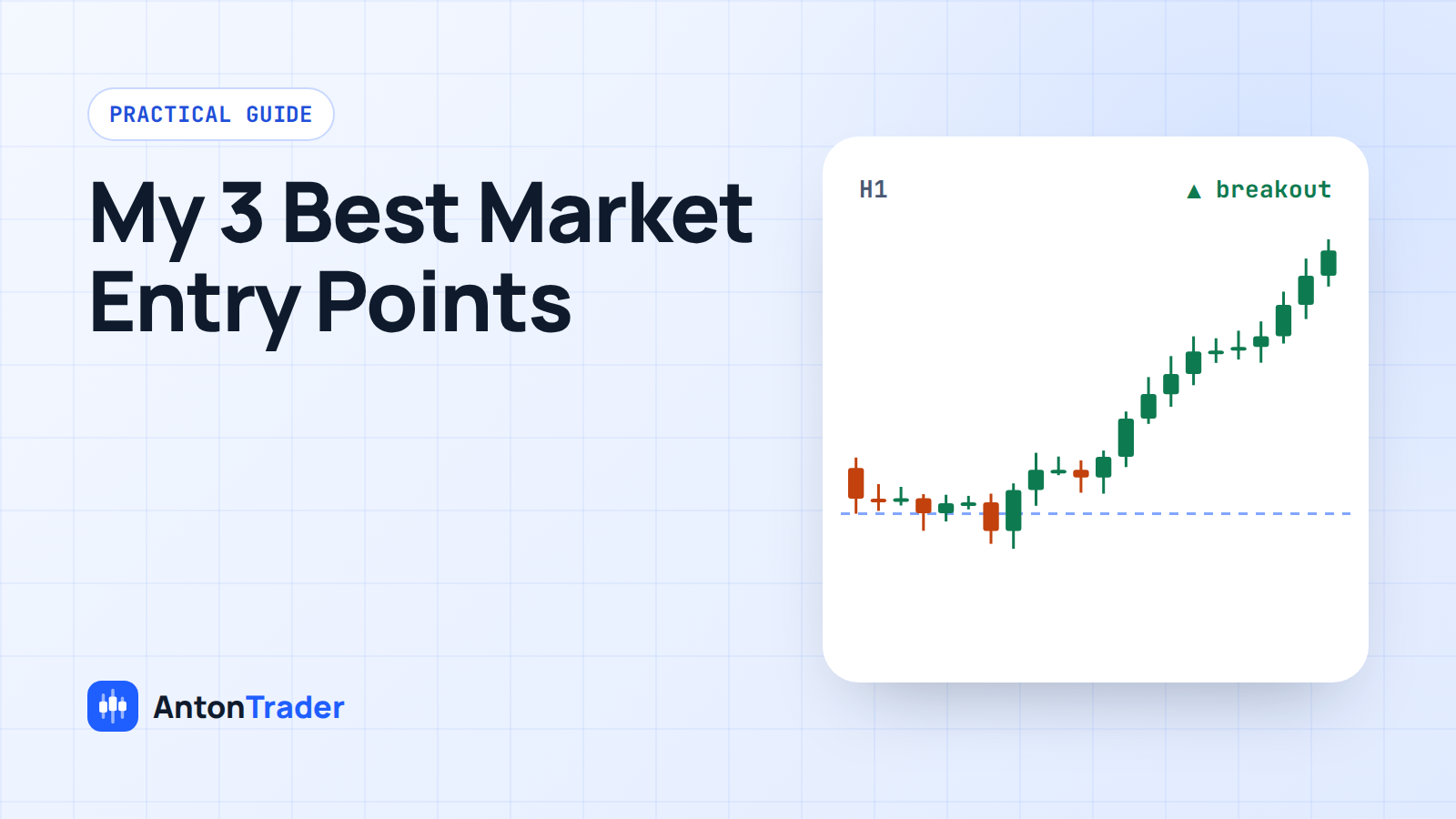
On your chosen timeframe (from M5 to H1), draw levels through the extremes that are truly visible. Then wait for the level to break and, if price returns to it, take the trade with the pattern, which will appear right where the new trend move begins. In practice, you’re watching a mirror level being born.
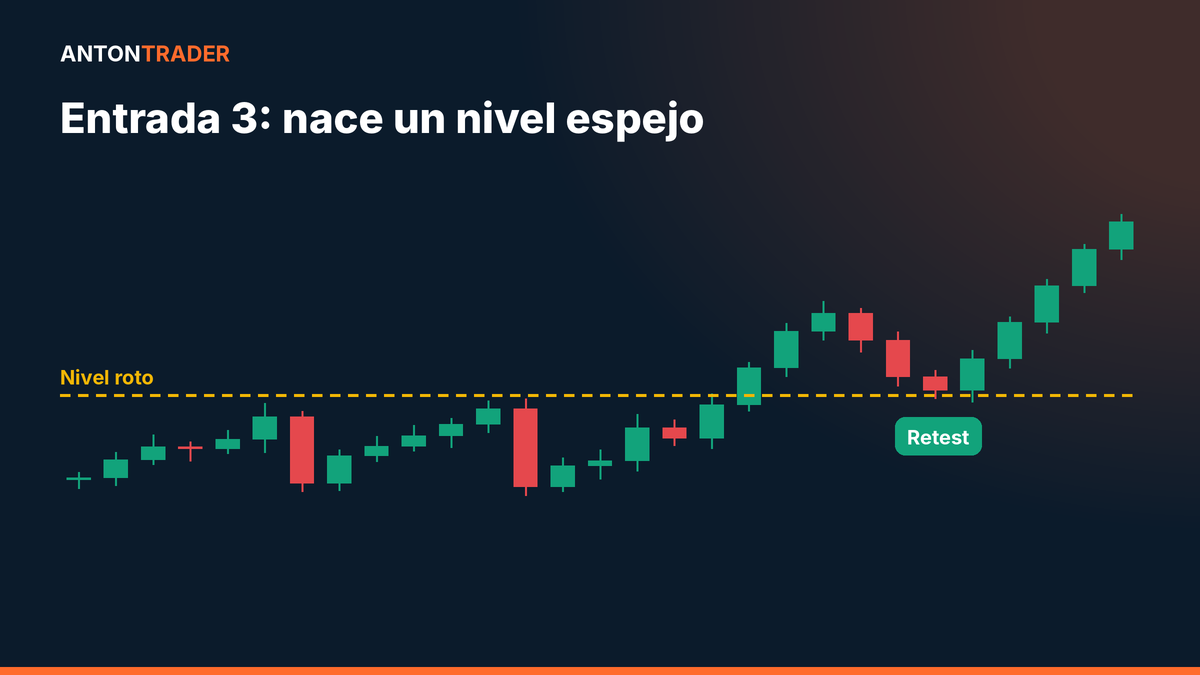
Entry point on the retest of a level

No entry point works every time. Use a stop loss on every trade, risk no more than 1% of your capital, and practice on a demo account first.

Dónde opero y qué recomiendo
Brokers de Forex y CFD
1
FxPro
Broker con historia desde 2006 y uno de los nombres más conocidos del mercado. Ejecución rápida y muchas plataformas.
MT4MT5cTraderFxPro App
Abrir cuenta
2
RoboForex
Depósito de entrada bajo y muchos tipos de cuenta. Buena opción para empezar con poco capital.
MT4MT5R StocksTraderCopyFX
Abrir cuenta
3
Tickmill
Spreads bajos y comisiones competitivas. Pensado para quien opera seguido y cuida cada pip.
MT4MT5Spreads bajos
Abrir cuenta
Exchanges de criptomonedas
1
Bybit
Uno de los mayores exchanges de derivados cripto. Futuros, spot y copy trading en una sola cuenta.
FuturosSpotCopy trading
Abrir cuenta
2
BingX
Exchange muy fuerte en copy trading: puedes seguir a traders y ver sus resultados.
Copy tradingFuturosSpot
Abrir cuenta
3
KuCoin
Exchange con cientos de criptomonedas y muchas altcoins. Spot, futuros y bots de trading en una sola cuenta.
SpotFuturosBots de trading
Abrir cuenta
Los enlaces son de afiliado: si abres una cuenta, puedo recibir una comisión sin costo para ti. Operar con CFD, Forex y criptomonedas apalancadas conlleva un alto riesgo de perder dinero. Revisa si el servicio está disponible en tu país y opera solo con dinero que puedas permitirte perder.
Anton Rozhnovsky
Anton Rozhnovsky

Trader for 14 years. He has automated and tested more than 2,000 strategies in trading robots and develops his own indicators for MetaTrader 5.

← PreviousFalse Breakout: What It Is, Why It Happens, and How to Trade It

Keep reading

The Danger of Leverage
Practical guides

The Danger of Leverage

Leverage multiplies gains and losses alike. Here's how it works, with real numbers, and why it is so dangerous for beginners.

Level Breakout and Retest: Strategies and Analysis
Practical guides

Level Breakout and Retest: Strategies and Analysis

What a level breakout is, what a retest is, and three ways to trade when the price comes back to test the broken level.

Spread, Commission and Swap: What You Really Pay When You Trade
Practical guides

Spread, Commission and Swap: What You Really Pay When You Trade

What the spread is in Forex, how commission and swap work, and how to calculate what each trade costs you before opening an account.