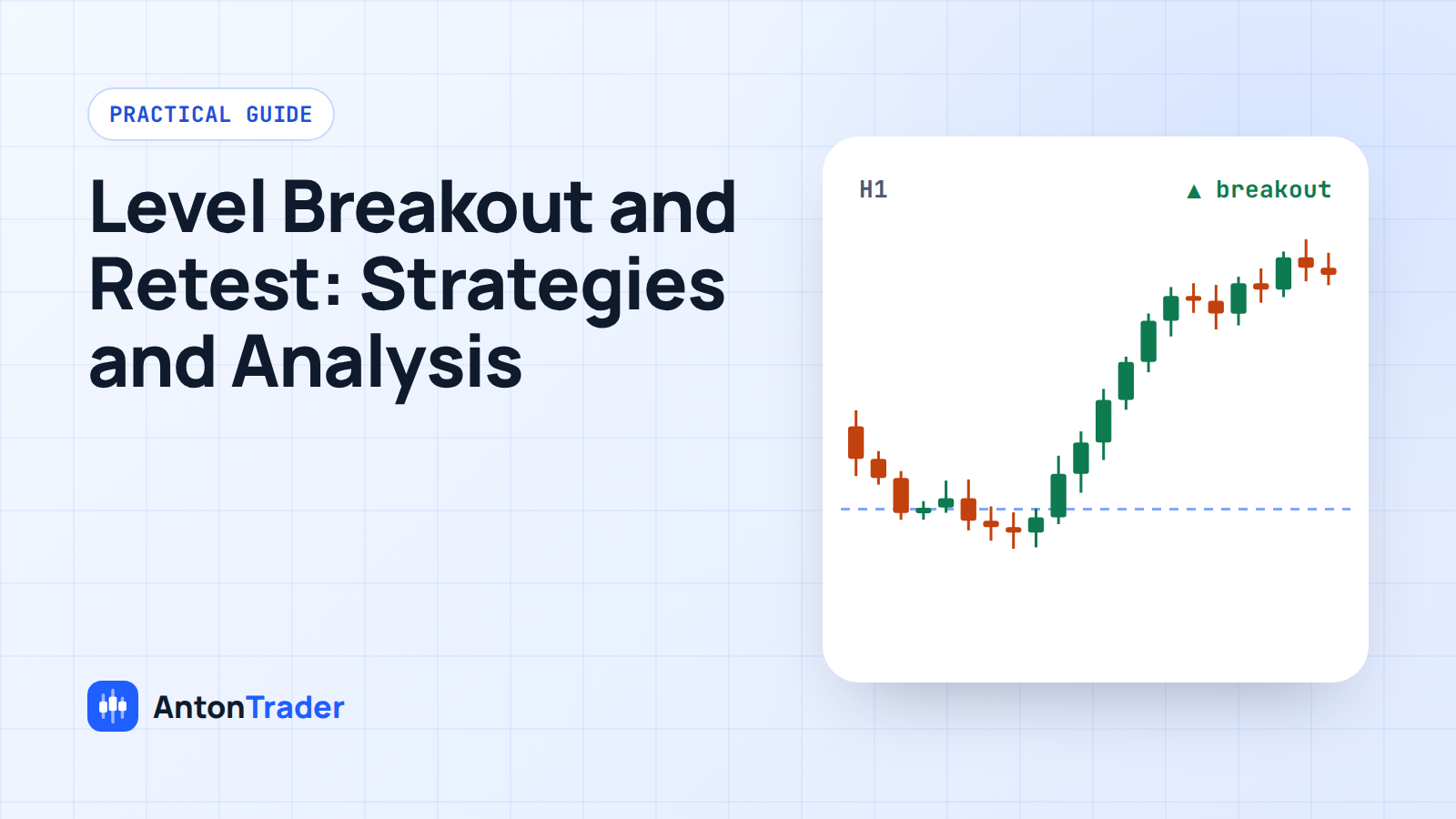
In trading, a lot of attention is paid to support and resistance levels: points where the price may slow down or reverse. A breakout of a level is the moment when the price moves beyond it and keeps moving in that direction. A retest is when, after the breakout, the price returns to the level and tests it again. Let’s look at the strategies based on both.
Level breakout
The breakout strategy consists of opening a trade in the direction of the breakout once the level has been broken. You draw a support or resistance line on the chart and, when the price breaks it, you open the trade. Keep in mind that not every breakout leads to the price continuing in that direction, so the strategy needs additional filters and indicators.
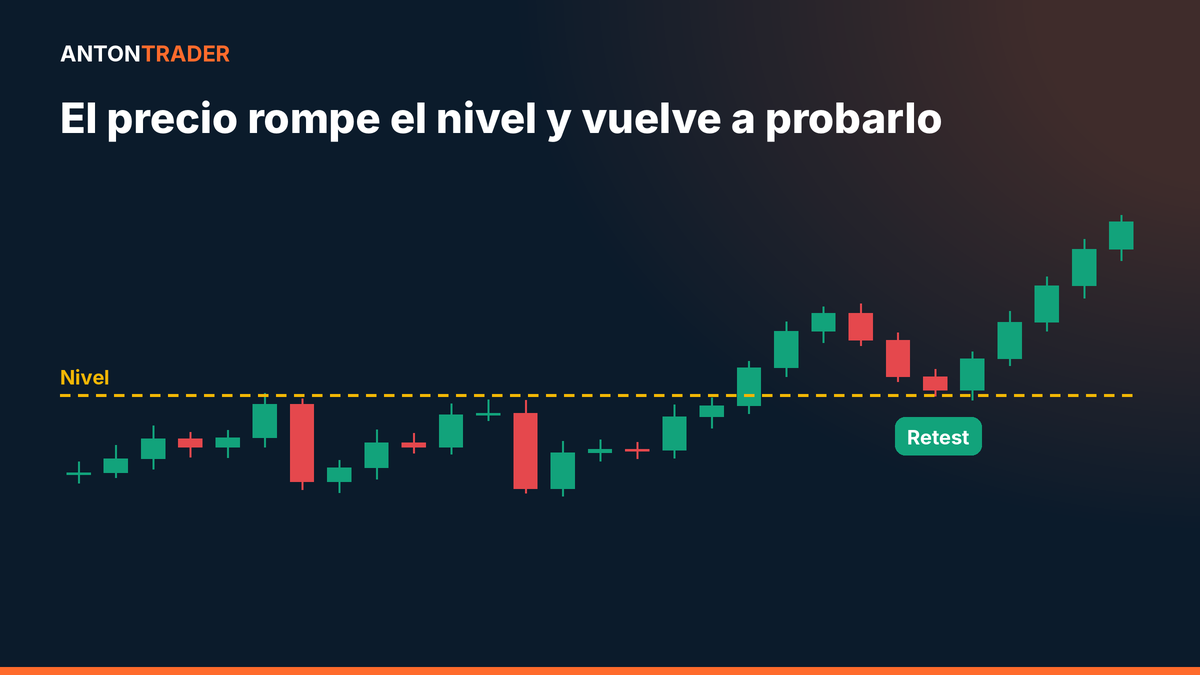
Level retest
After the breakout, a retest often follows: the price returns to the level to test it. There are several strategies based on it:
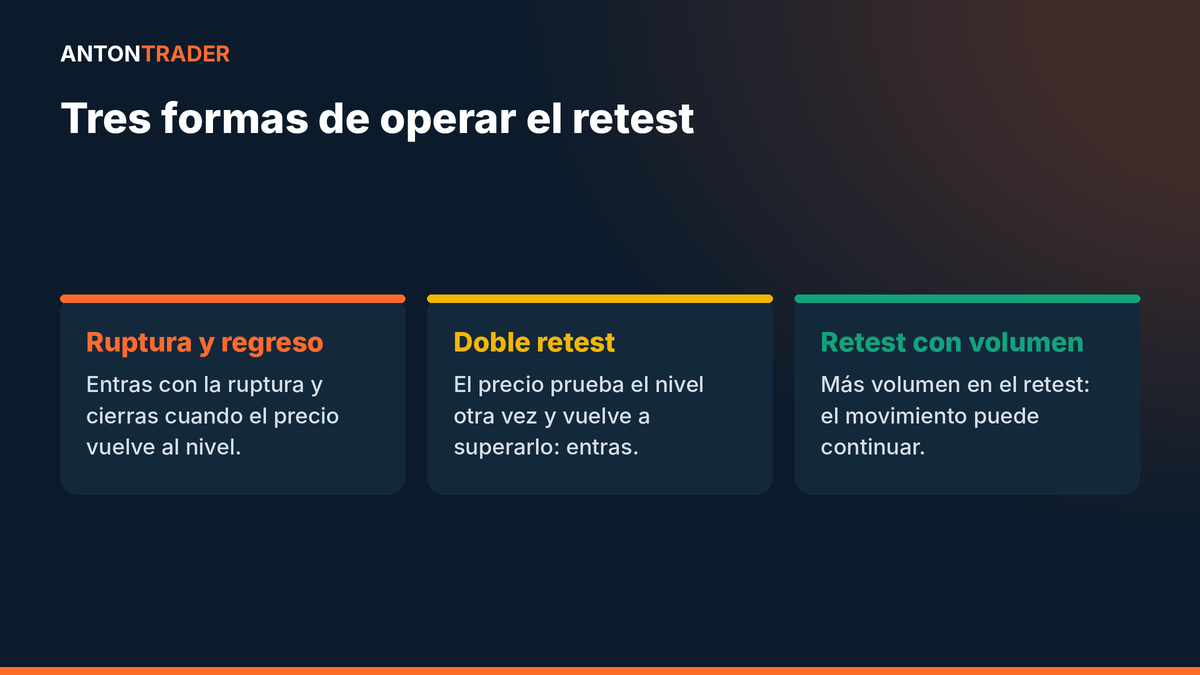
- Breakout and return to the level: you open the trade in the direction of the breakout and close it at a profit when the price returns to the level.
- Double retest: after the breakout and the return, the price tests the level again; if it breaks through it once more, you open the trade in the original direction of the breakout.
- Retest with rising volume: if volume grows during the retest, it may indicate that the move will continue in the original direction; if it falls, it may be a sign of a weak trend.
Trading breakouts and retests requires experience and knowledge of technical analysis, as well as taking additional factors into account, such as volume and indicators.
Breakouts and retests are important elements of technical analysis. Used properly and combined with other factors, they can be effective strategies.