A trailing stop is a tool that automatically adjusts your stop loss at a set distance from the current price. It is useful for traders who want to protect their profit without giving up the chance to earn more if the price keeps moving in their favor. Let’s look in detail at how it works and how to use it in practice.
What is a trailing stop?
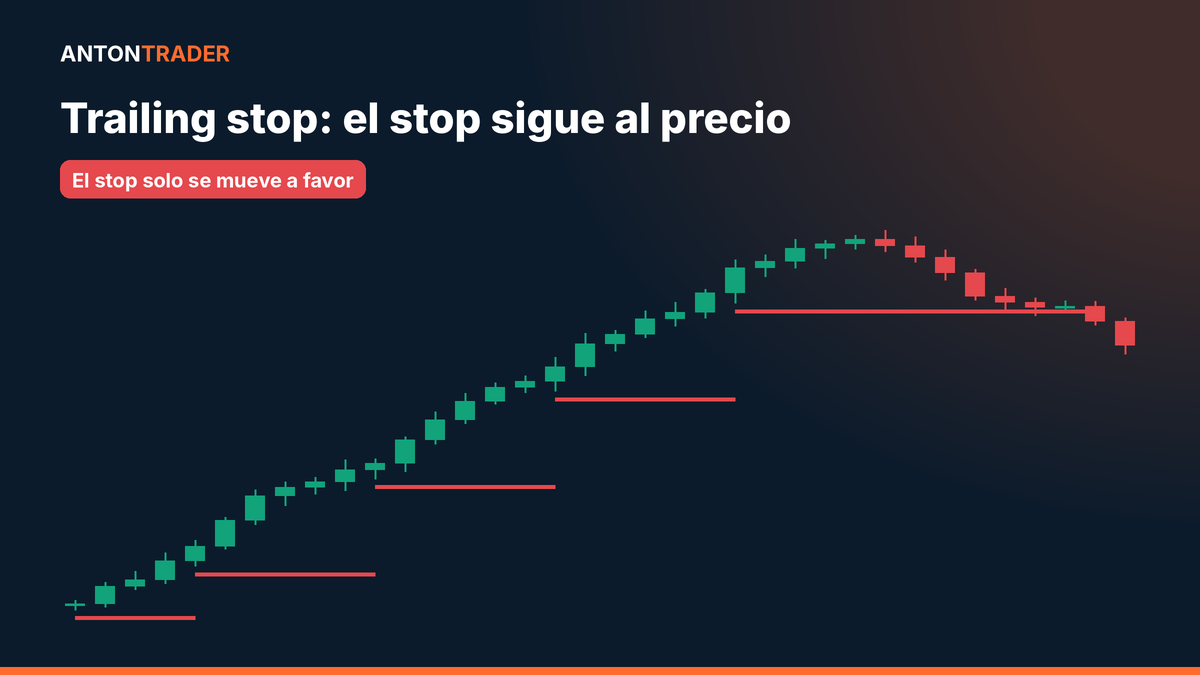
A trailing stop (or dynamic stop) is a way of managing risk in which the stop loss moves automatically behind the price. This protects your profit and lets you take advantage of the move as long as it keeps going your way.
How does it work?
The stop loss is placed at a set distance from the entry price. When the price moves in the trader’s favor, the stop follows it automatically, keeping that distance. If the price starts moving against you, the stop stays where it is until the price hits it.
Types of trailing stop
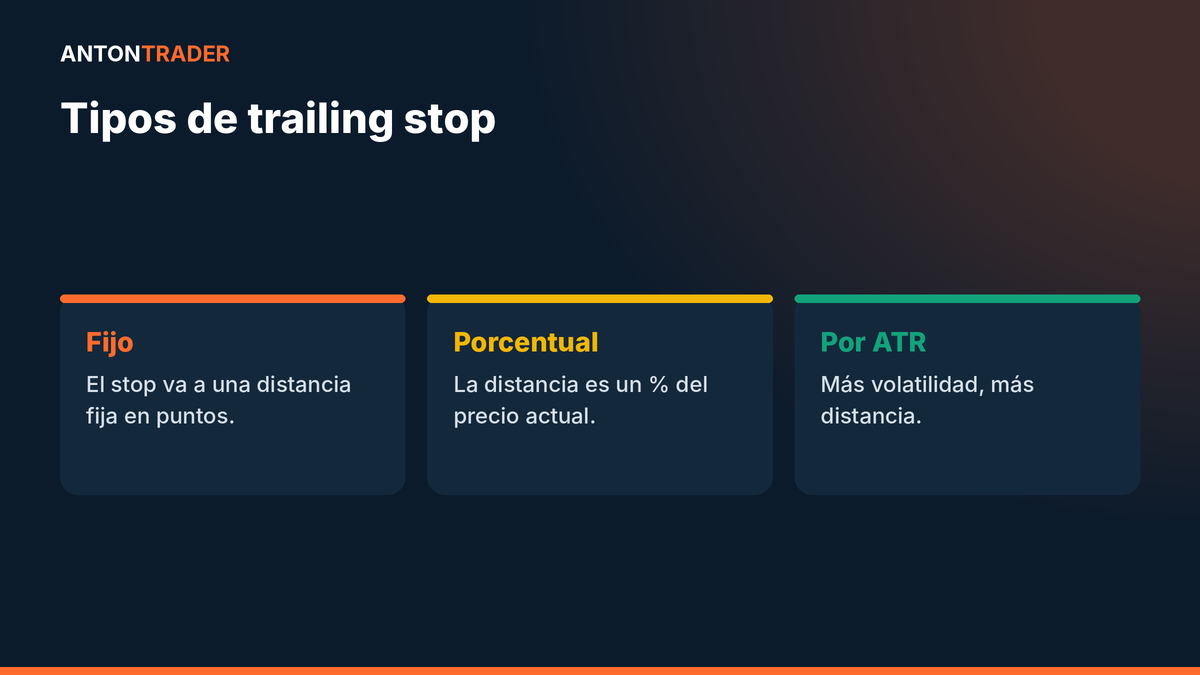
They differ in how the distance between the stop and the price is calculated:
- Fixed: the stop moves at a fixed number of points from the price, no matter how much it changes.
- Percentage: the distance is a percentage of the current price. For example, with a 2% trailing stop, if the price rises from 100 to 110 dollars, the stop moves from 98 to 107.8 dollars.
- ATR (Average True Range): the distance depends on the average true range over a period. The higher the ATR, the greater the distance between the stop and the price.
Pros and cons
Pros:
- Protects your profit: the stop moves on its own and shields what you’ve earned from price swings.
- Flexibility: the protection adapts to market conditions.
- Saves time: you don’t need to watch the position and move the stop by hand.
Cons:
- Premature exit: if the price pulls back, the stop can be triggered earlier than you expected.
- Hard to tune: choosing the optimal distance takes experience.
Example
A trader buys shares of company XYZ at 100 dollars and sets a 3% trailing stop, that is, 3 dollars from the price. If the stock rises to 120 dollars, the stop rises with it to 116.40 dollars, and the profit is protected. If the stock falls right after the purchase, the stop stays at 97 dollars and the position is closed with a limited loss.
Summary: what is a trailing stop for?
It is a useful tool for managing risk and protecting your profit from price swings. But using it well takes experience and market knowledge, so you can choose the right distance and adapt it to the current situation.