Trading the stock market can be profitable, but it also carries risks. One of the most dangerous tools for beginners is leverage.
Leverage is money the broker lends you to increase the size of your trades. It lets you earn more from small price movements, but it also increases the risk of losing your money.
How does leverage work?
Imagine you have $10,000 and you want to buy shares of company “A” at $100 each. Without leverage you can buy 100 shares. With 1:2 leverage, the broker lends you another $10,000 and you can buy 200 shares. If the price rises 10%, you make $2,000. But if it falls that same 10%, you lose $2,000.
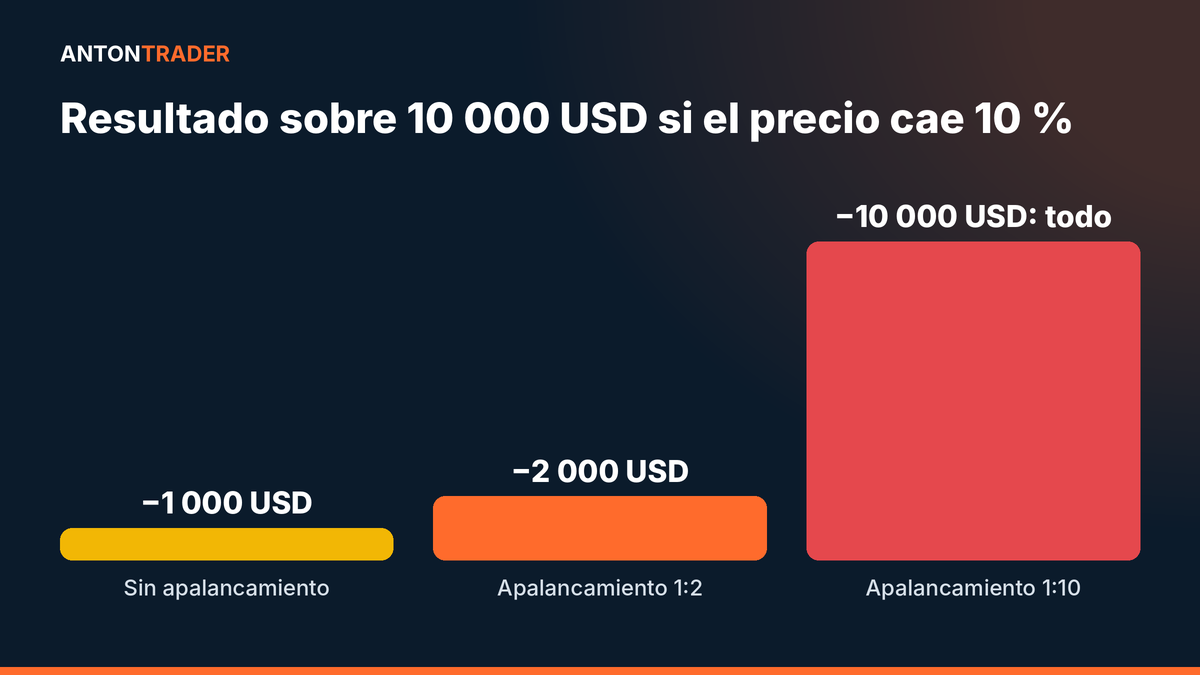
The example shows that leverage increases your potential profit, but also your risk. The higher the leverage, the greater the risk of losing money if the price moves against you.
Why is it dangerous?
- Risk of losing everything. With high leverage, even a small move against you can trigger a margin call: the broker asks you to deposit more funds or closes part of your positions. If you don’t have extra funds, you can lose your entire investment.
- Psychological stress. Watching your account go up or down so quickly stirs up strong emotions that can affect your decisions.
- Harder risk management. Trading with leverage requires more careful risk management. You must be prepared for the price to move against you and have a plan for a margin call.
- Not for beginners. It is especially dangerous for those who don’t yet have experience managing risk. It is better to start with small amounts and increase your size as you gain experience.
If you decide to use leverage, remember the risks and manage your positions carefully: a stop loss on every trade and no more than 1% of your capital at risk.