In Argentina, according to Chainalysis, stablecoins account for about 62% of the volume of crypto transactions. In Brazil, almost 60%. The global average is around 45%. In other words: in our region, people don’t get into crypto to speculate on Bitcoin, but to hold dollars.
What a stablecoin is
It’s a cryptocurrency pegged to the value of the dollar: 1 USDT or 1 USDC should always be worth around 1 dollar. Behind it is a company (Tether or Circle) that says it holds reserves in cash and US Treasury bonds backing every coin issued.
Why they’re growing so much in Latin America
- Inflation: anyone who has watched their salary lose value month after month looks for a currency that doesn’t melt away.
- Currency restrictions: buying dollars at the bank can be expensive, limited, or simply impossible.
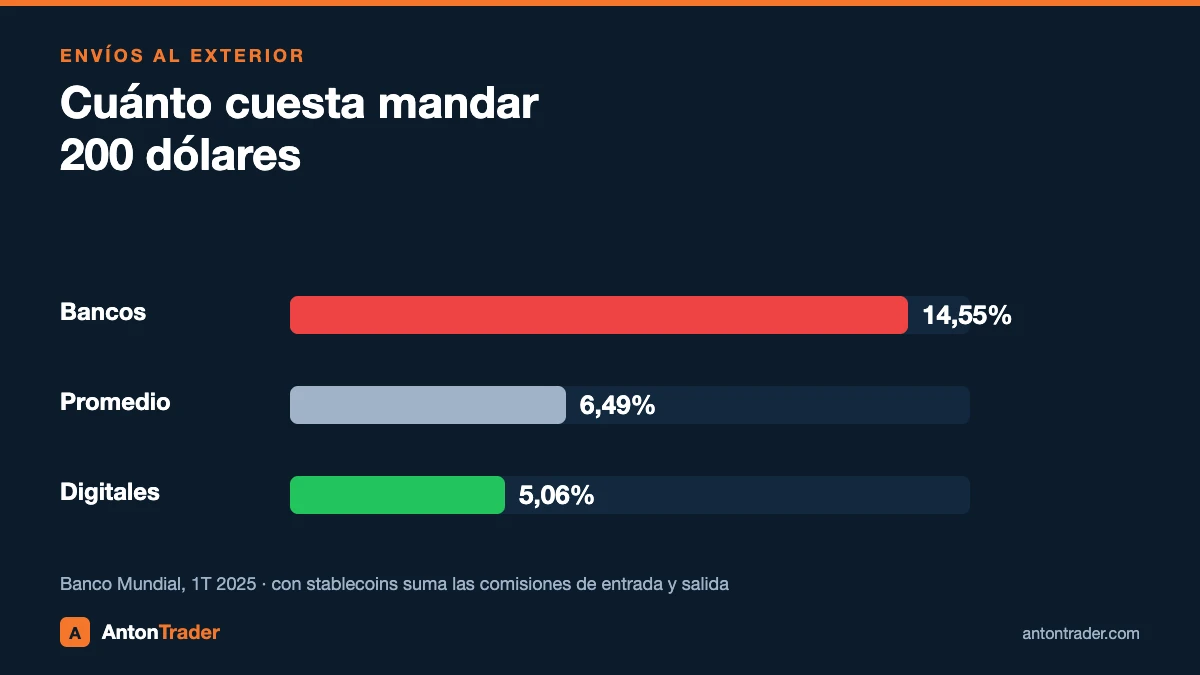
- Remittances and international payments: the World Bank estimates that sending 200 dollars through a bank costs more than 14% on average. With stablecoins it’s usually cheaper, although there are fees when you get in and out.
The risks nobody tells you about
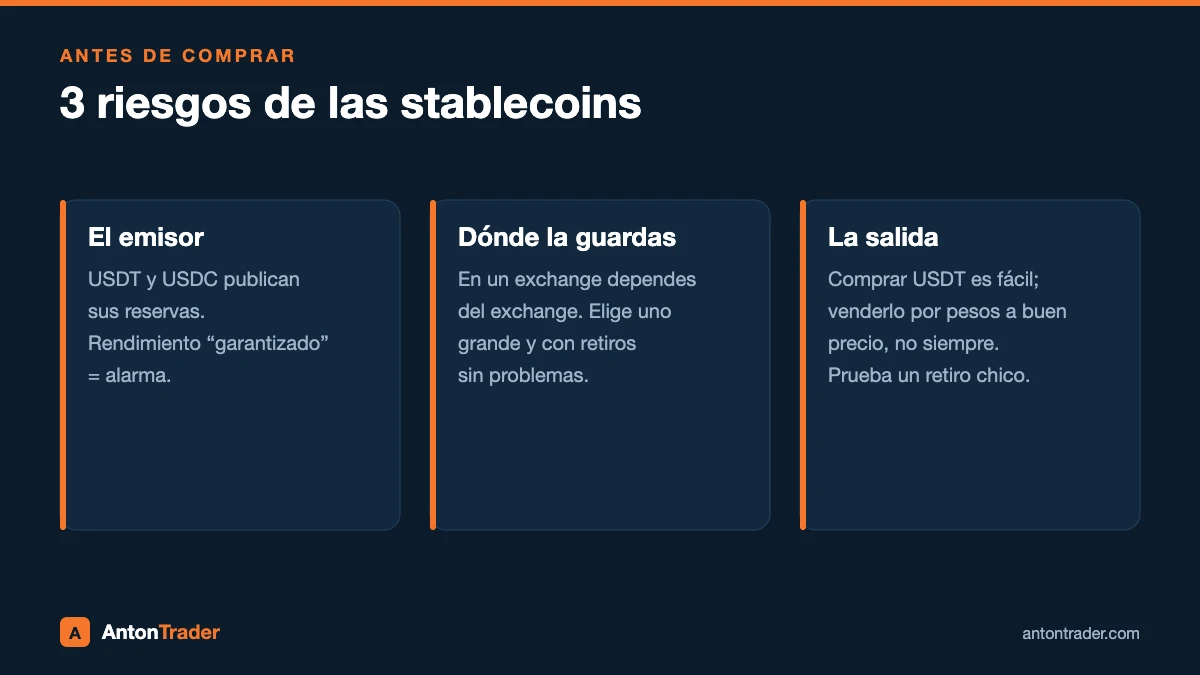
A stablecoin is not a dollar in your hand. It’s a promise from a private company. These are the points I check:
- The issuer: USDT and USDC are the largest and they publish their reserves. Small coins offering “guaranteed returns” are a red flag.
- Where you keep it: if it’s on an exchange, you depend on that exchange. Choose large platforms with years in the market and smooth withdrawals.
- The exit to local currency: buying USDT is easy; selling it for pesos or reais at a good price sometimes isn’t. Test a small withdrawal first.
Stablecoins and trading
On exchanges, USDT is the base currency for trading crypto futures. If you already hold USDT to protect your savings, always keep that part separate from your trading capital. Savings are savings; trading is another account, with its own money management plan and its own risk rules.
My rule: I never risk on a trade more than I’m willing to lose without it changing my mood. With leverage, that amount is reached faster than it seems.
Where to trade
These are the brokers and exchanges I use that work with clients from Latin America. Always check that the service is available in your country and start small.
Risk warning: CFDs, Forex and crypto derivatives carry a high risk of losing money due to leverage. This article is not investment advice.