Inflation in Argentina was 1.9% in September 2026, according to INDEC. Next to the years of triple-digit inflation it seems low, but over twelve months prices rose 33.4%, and 23.6% so far this year. Let’s look at what this means for your salary, your pesos and your savings.
The September numbers
August had closed at 1.7%, the lowest monthly figure in 14 months. In September the index accelerated a little again, driven mainly by utility rates and seasonal prices.
| Indicator | September 2026 |
|---|---|
| Monthly inflation | 1.9% |
| Core inflation | 1.7% |
| Regulated prices | 2.3% |
| Seasonal prices | 2.9% |
| Cumulative January–September | 23.6% |
| Last 12 months | 33.4% |
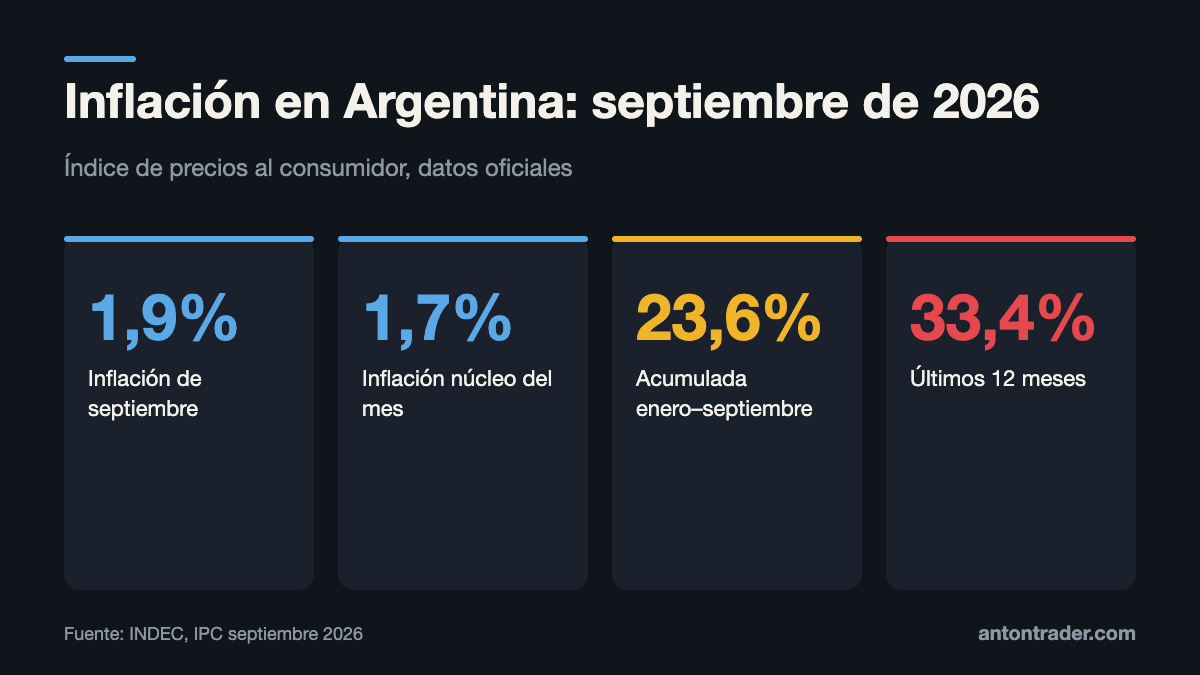
By category, the biggest increases were in housing, water, electricity, gas and other fuels (3.1%), followed by education (3%). The smallest were restaurants and hotels (1.1%) and clothing and footwear (1.4%). By region, Greater Buenos Aires (GBA) and the Pampeana region came in at 2%, and Patagonia at 1.4%.
Core inflation, which leaves out utility rates and seasonal products, was 1.7%. It is the number that best shows the underlying trend, and it is below the headline index.
The dollar: within the band, but rising
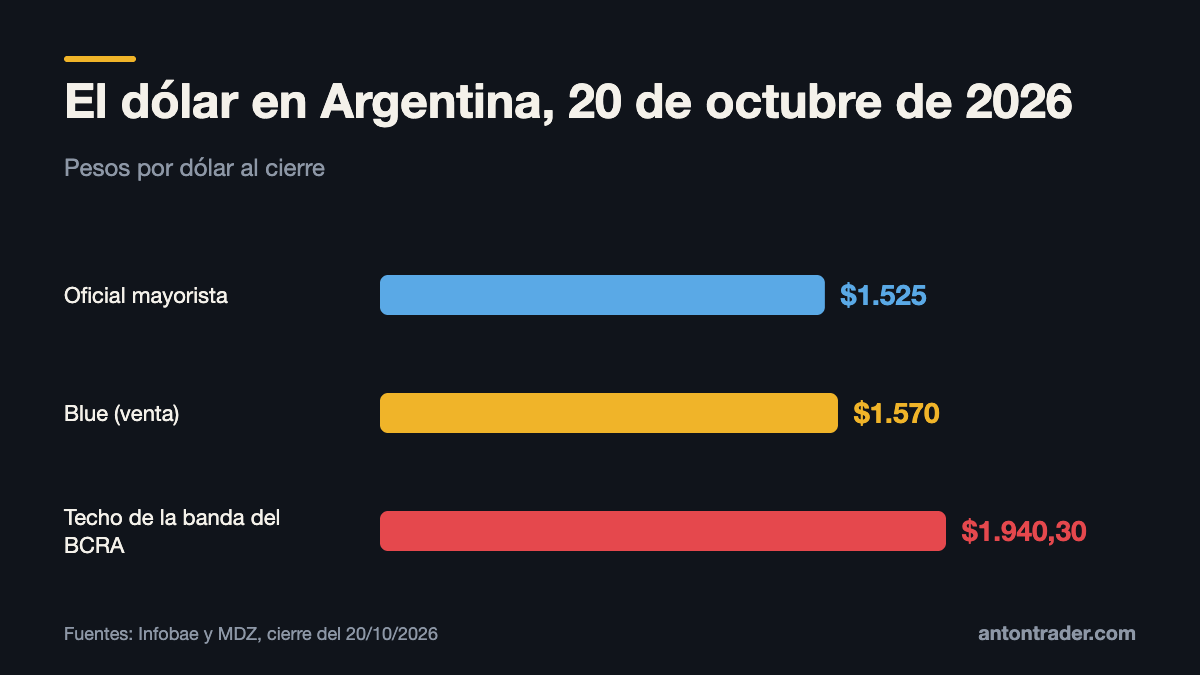
On October 20, the official wholesale dollar closed at $1,525 and the blue dollar touched $1,570, its high for the year. The ceiling of the BCRA’s exchange rate band stood at $1,940.30, so the wholesale rate still has room before reaching the limit.
Country risk closed that day at 672 points. These are data from a single session: the exchange rate moves every day, so take them as a snapshot, not a forecast.
What it means for your wallet
Inflation of 33.4% over twelve months means that what cost $100,000 a year ago now costs about $133,400. If your salary or your peso savings grew less than that, you lost purchasing power, even if the number in your account is bigger.
At 1.9% per month, any peso that sits still loses some value every month. That’s why it’s worth keeping three things clear:
- Always compare against inflation. A return in pesos is only useful if it beats the rise in prices over the same period.
- Separate savings from trading. The money you live on and your emergency fund don’t belong in a trading account. Only what you can afford to risk goes there.
- If you dollarize, know the cost. Between the official rate, the blue dollar and stablecoins there are differences in price and fees. Before moving a significant amount of money, do a small test.
And if you want to trade
The volatility of the peso and the markets draws many people to trading. My advice is to come in through the right door: first learn, then open a small account with a regulated broker with years in the market. Brokers like FxPro or RoboForex accept clients from the region and let you start with small amounts; for crypto and USDT, large exchanges such as Bybit.
Before depositing, read how to deposit from Latin America without losing money to fees and don’t use high leverage while you’re learning.
Where to trade
These are the brokers and exchanges I use that work with clients from Latin America. Always check that the service is available in your country and start small.
Risk warning: CFDs, Forex and crypto derivatives carry a high risk of losing money due to leverage. This article is not investment advice.