Opening an account is the easy part. The real question many readers have is a different one: how do I get money in and out without half of it disappearing along the way?
The most common options
- Credit or debit card: fast, but your bank may charge a fee for foreign transactions and apply a poor exchange rate. Some banks block payments to brokers.
- International bank transfer: safe, but slow, with flat fees that hurt on small amounts.
- E-wallets and local methods: several brokers accept local payment systems depending on the country. They tend to be cheaper; check the list in your account.
- USDT (crypto): widely used in the region. You buy USDT on an exchange and send it to the broker. Pay attention to the network you choose (TRC20, ERC20, etc.): sending it over the wrong network can make you lose your money.
Hidden costs
- The exchange rate applied by your bank or the intermediary.
- Deposit and withdrawal fees (some brokers don’t charge for deposits, but they do for withdrawals).
- Network fee when sending crypto.
- Local taxes on purchases made abroad, depending on the country.
The test I always run
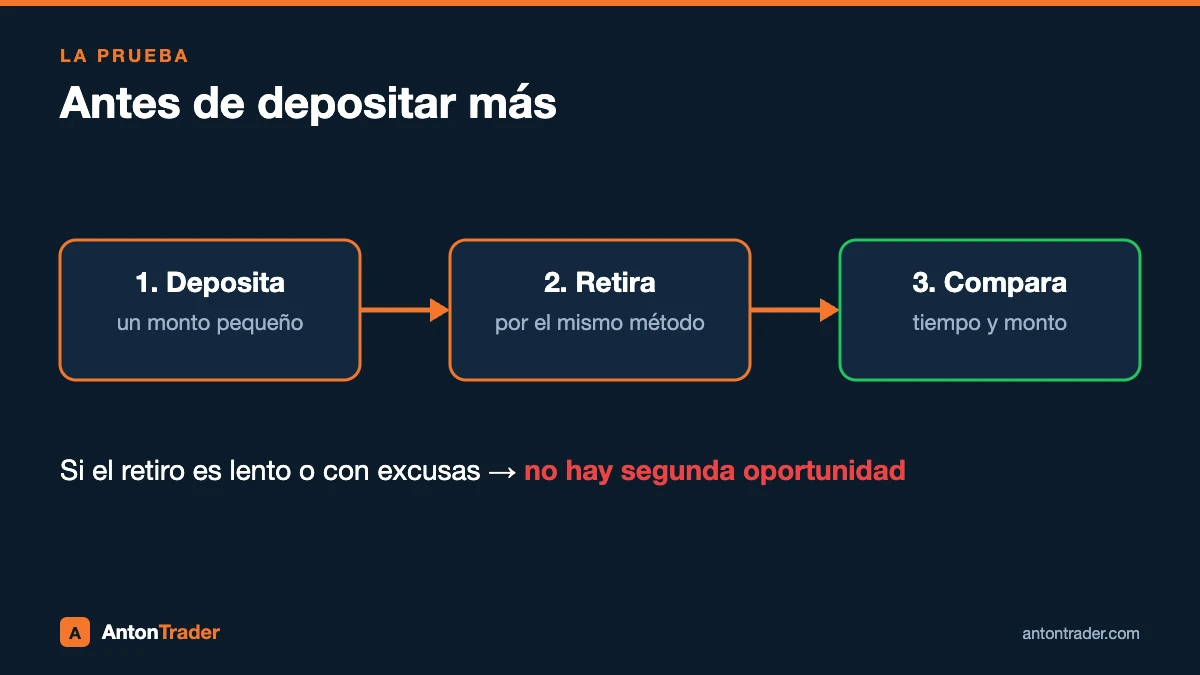
Before trading with significant money, I do this with any broker or exchange:
- I deposit a small amount.
- I request a withdrawal using the same method.
- I check how long it took and how much actually arrived.
If the withdrawal is slow, complicated or comes with excuses, there is no second chance. Money has to leave as easily as it comes in. More criteria in how to choose a reliable broker.
And one security tip: the withdrawal method almost always has to be the same as the deposit method and in your own name. Be wary of anyone who asks you to deposit into the personal account of a “manager.”
Where to trade
These are the brokers and exchanges I use that work with clients from Latin America. Always check that the service is available in your country and start small.
Risk warning: CFDs, Forex and crypto derivatives carry a high risk of losing money due to leverage. This article is not investment advice.