In recent years gold has broken all-time highs again and again. For someone in Argentina, Colombia, or Mexico the effect is double: gold rises in dollars and the dollar rises against the local currency. That’s why gold has always been grandma’s safe haven, and today it still makes sense.
Three ways to own gold
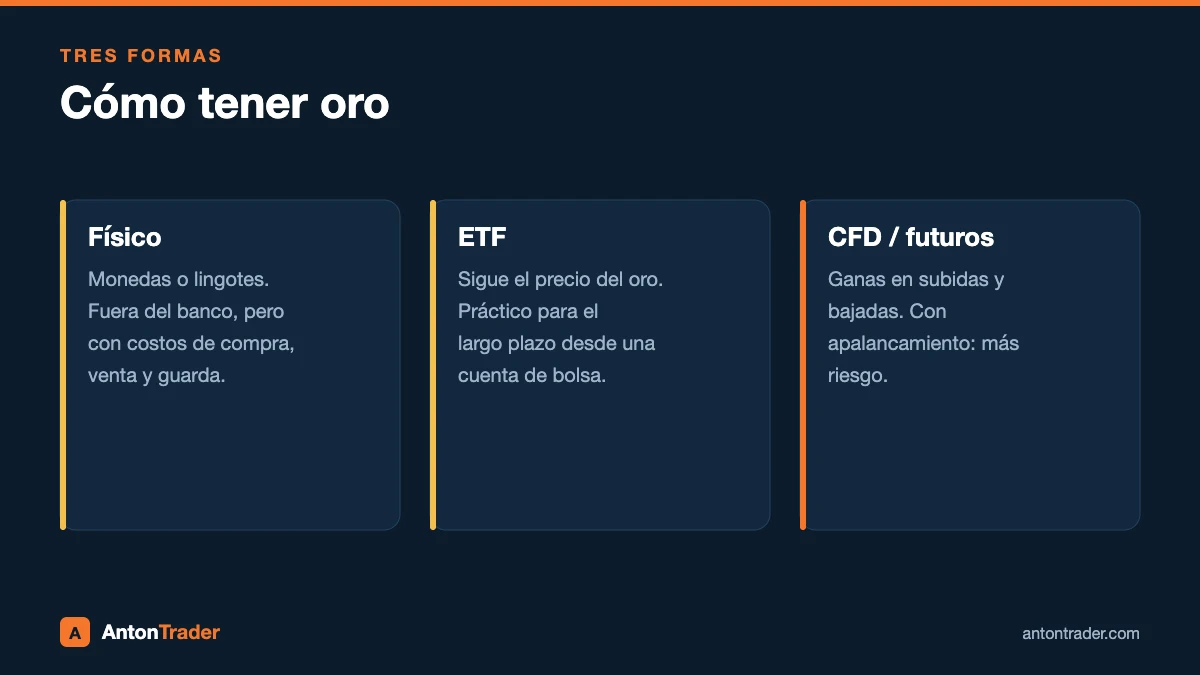
- Physical: coins or bars. Safe from banks, but with purchase, sale, and storage costs.
- ETF: funds that track the price of gold. Practical for long-term investing from a brokerage account.
- CFD or futures (XAU/USD): what I use for trading. You profit from both rises and falls, but with leverage: the risk is much higher.
What moves gold
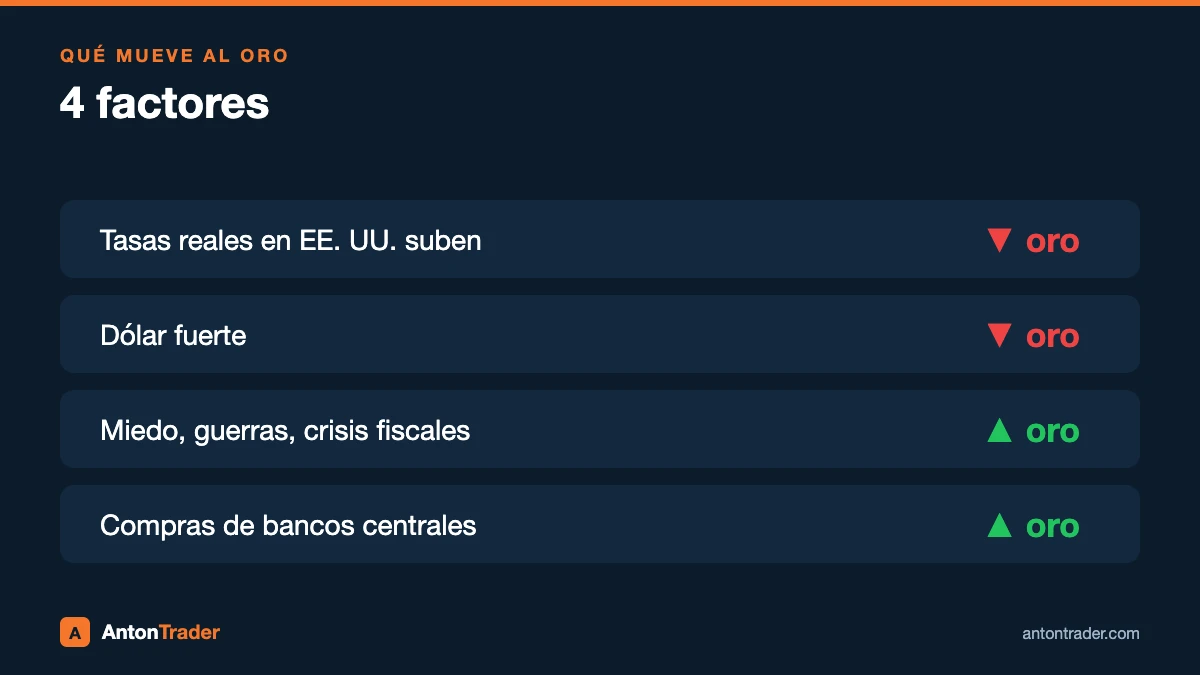
- US real yields: if they rise, gold (which pays no interest) becomes less attractive.
- The dollar: a strong dollar tends to hold gold back.
- Fear: wars, crises, fiscal doubts. In a panic, money runs to gold.
- Central banks: in recent years they bought gold at record levels to diversify reserves.
How I trade XAU/USD
Gold is a “nervous” instrument: it can move 20–30 dollars in minutes on a US data release. That’s why:
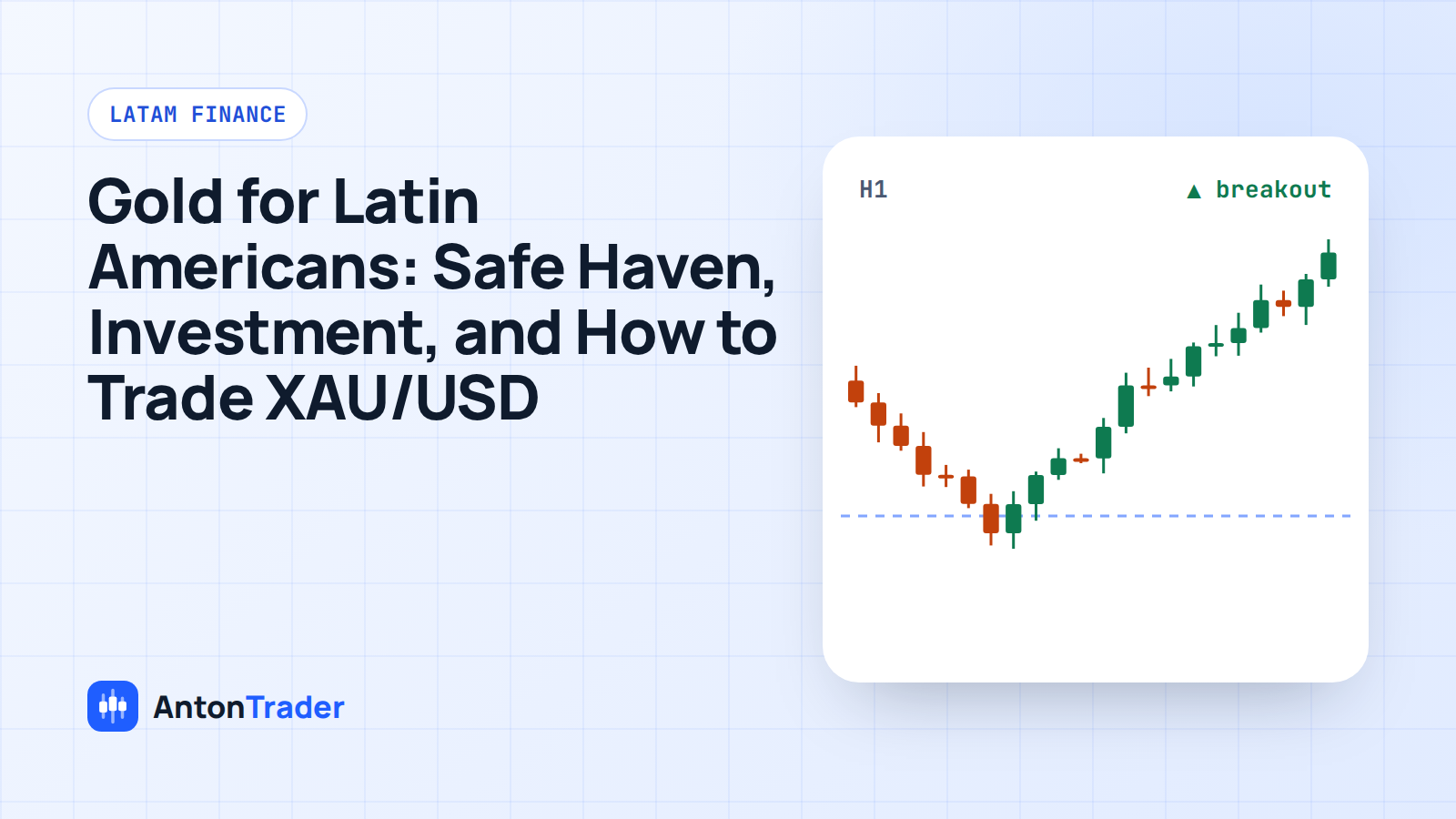
- I work from H1 and H4, marking levels where there was a strong reaction.
- I look for a breakout and retest in the direction of the trend, or a false breakout at the extremes.
- I calculate position size based on how much I’m willing to lose, not the other way around. A “normal” lot in forex can be too much in gold.
- Before US inflation and employment data, I reduce my position or exit.
Gold is not a sure bet that always goes up. It has deep corrections. As a long-term safe haven, it can make sense for part of your savings; as a trade, only with a plan and calculated risk.
Where to trade
These are the brokers and exchanges I use that work with clients from Latin America. Always check that the service is available in your country and start small.
Risk warning: CFDs, Forex, and crypto derivatives carry a high risk of losing money due to leverage. This article is not investment advice.