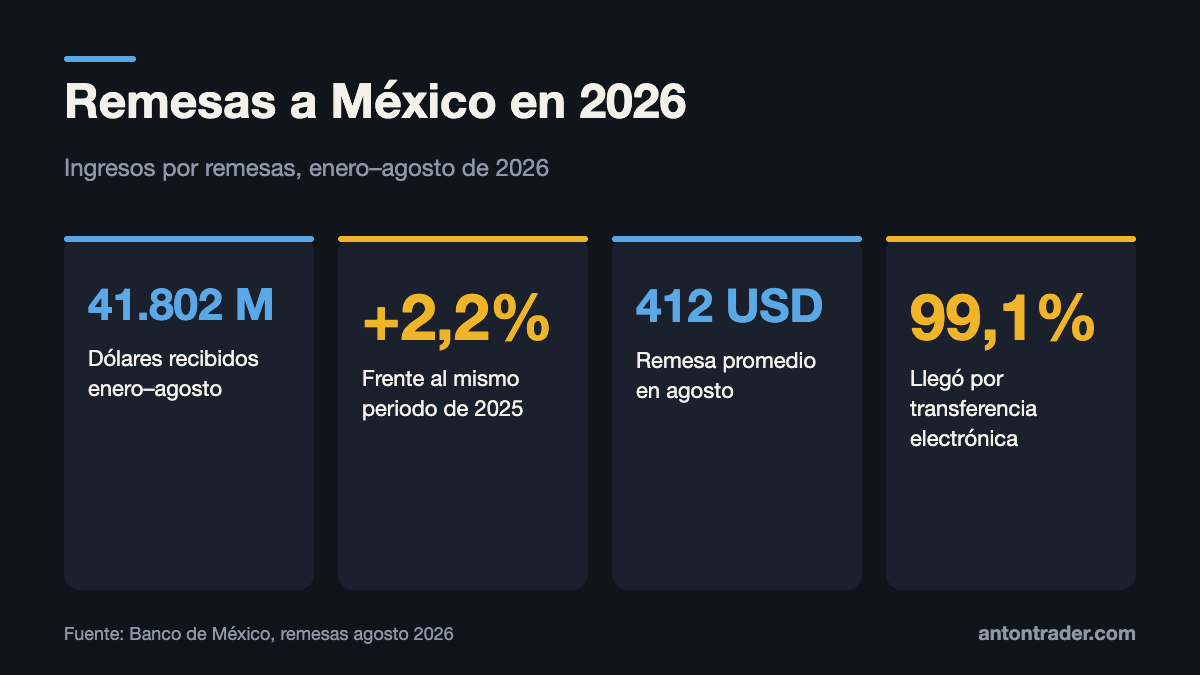
Remittances to Mexico totaled 41,802 million dollars between January and August 2026, up 2.2% from a year earlier, according to the Bank of Mexico. After the decline in 2025, the flow is recovering, but with an important change: there are fewer transfers, and each one is larger.
From the 2025 decline to a slow recovery
In 2025 Mexico received 61,791 million dollars in remittances, 4.56% less than in 2024. It was the first annual decline since 2013. The main reason was not that people sent less per transfer, but that there were fewer transfers: transactions fell 5.5%.
In 2026 the trend changed direction. The cumulative total from January to August is already positive, although August brought only 5,452 million dollars, 3.6% less than in August 2025.
Fewer transfers, but larger ones
In August, about 13.2 million transactions were made with an average of 412 dollars each. In 2025 the average had been 397 dollars. Part of that increase, according to BBVA Research, reflects the movement of the exchange rate and not necessarily that migrants are earning more.
Another figure that says a lot: 99.1% of the money arrived by electronic transfer and less than 1% in cash. Since January 2026, the United States charges a 1% federal tax on remittances sent in cash or with similar instruments; transfers from bank accounts and cards are excluded. That is why the direct impact of the tax is limited, although it weighs on those who do not have a bank account.
Where the money goes
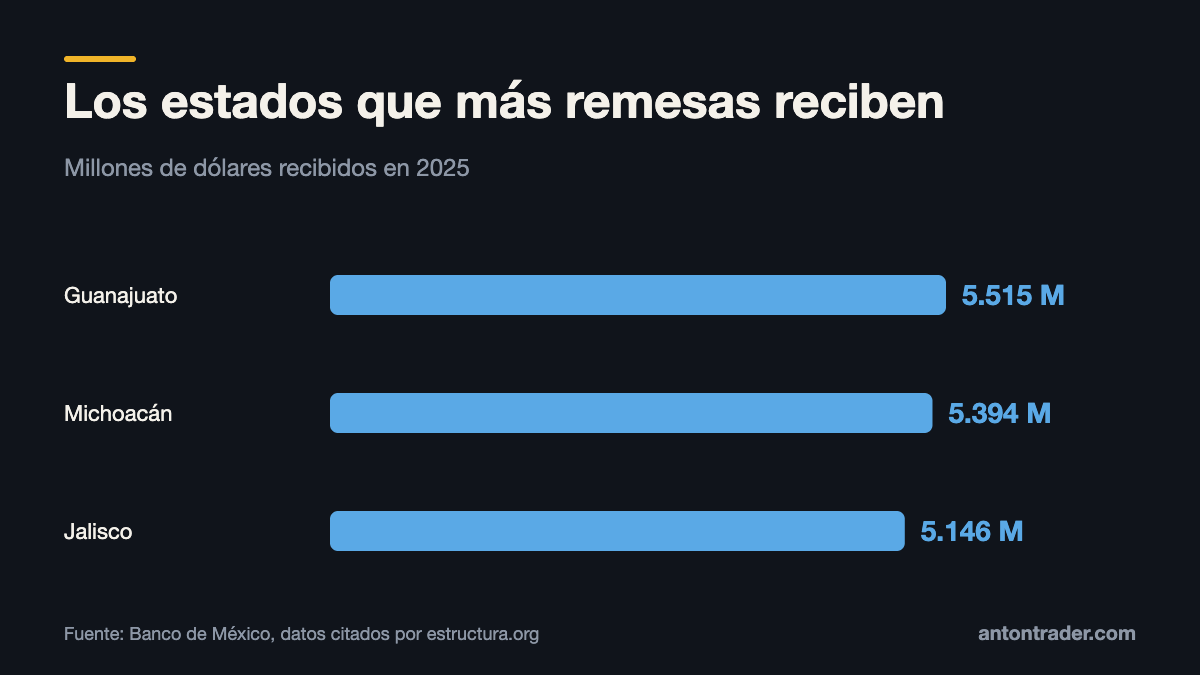
In 2025 Guanajuato overtook Michoacán as the state that receives the most remittances, with Jalisco in third place. Relative to the size of their economies, the most dependent states are Guerrero and Chiapas: there, remittances equal about 14% of state GDP.
What it means for your wallet
If your family receives remittances, there are two things that determine how much really makes it to the table:
- The exchange rate. With a weaker peso, the same dollars buy more pesos; with a strong peso, they buy fewer. That movement matters as much as the amount sent.
- The cost of sending. Between the fee and the exchange rate applied to you, the difference between services can be large. Compare the final amount in pesos, not just the fee.
And if part of that money becomes savings, think about protecting it from inflation, not about “making it grow fast.” Trading is something else: only with money you can afford to risk and after learning the basics.
To understand what moves the peso, read my analysis of the factors behind USD/MXN. If you want to trade the pair, start with a small account at a regulated broker such as FxPro or Tickmill, which accept clients from Mexico.
Where to trade
These are the brokers and exchanges I use that work with clients from Latin America. Always check that the service is available in your country and start small.
Risk warning: CFDs, Forex and crypto derivatives carry a high risk of losing money due to leverage. This article is not investment advice.