Trading in the financial markets usually involves technical analysis to choose when to enter and exit. One of its key elements is support and resistance levels, which serve as a reference. A breakout of those levels can be a signal to open a trade, but that breakout can turn out to be false. Let’s look at why false breakouts happen and how to trade them.
What a false breakout is
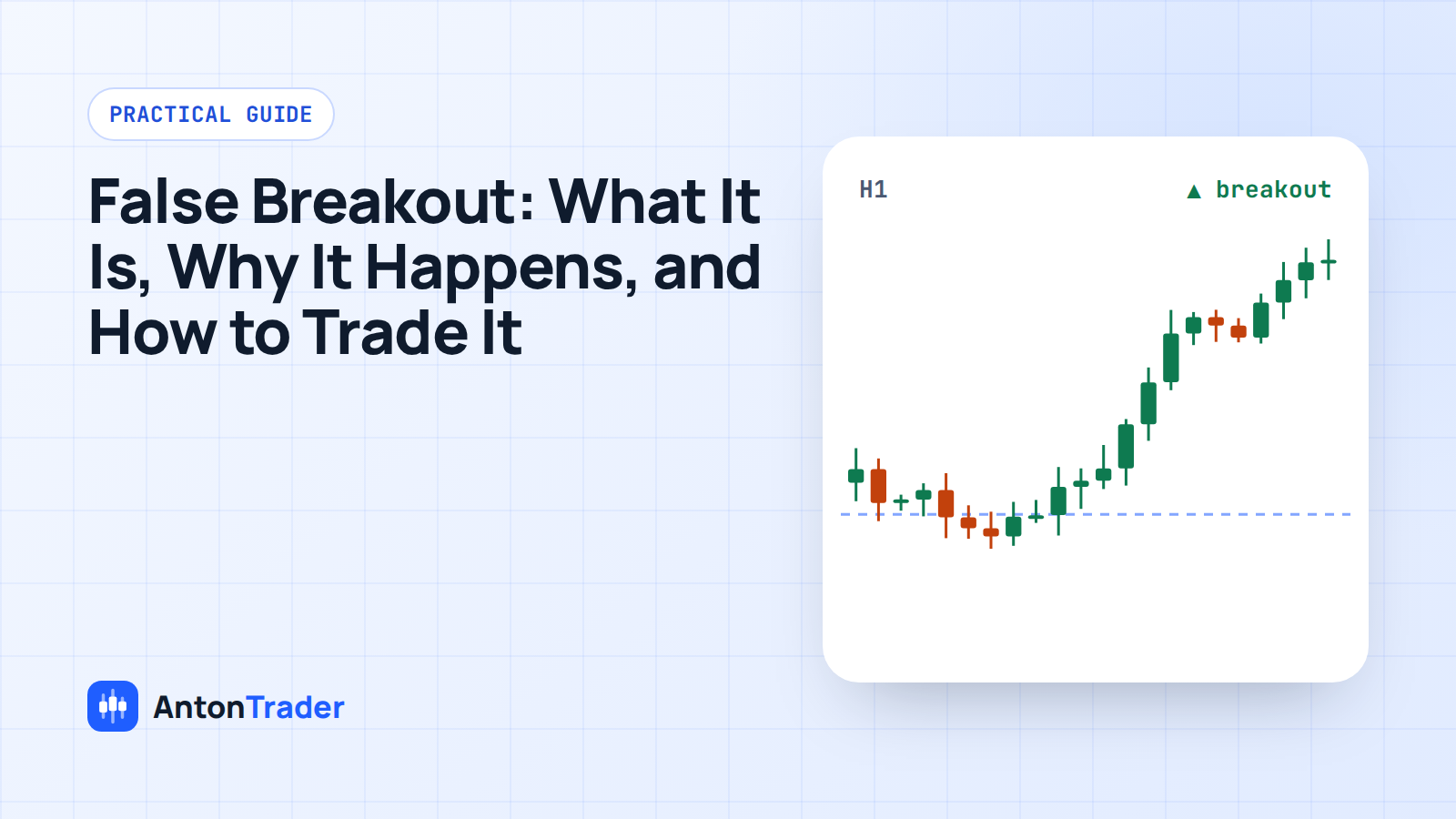
A false breakout is a situation in which price seems to break through a support or resistance level, but then returns to that level. It happens because buyers or sellers fail to overcome the resistance or support, and price starts moving in the opposite direction.
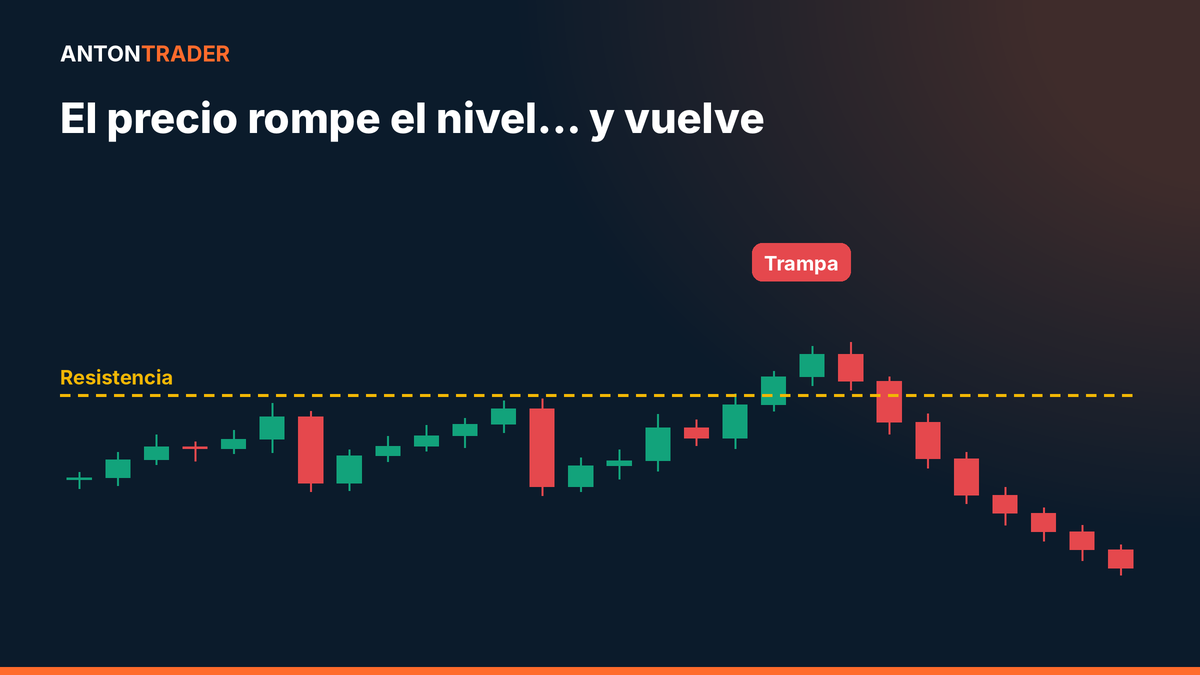
Why it happens
- Market uncertainty: when the market is indecisive, traders are afraid to open new trades, and that leads to a false breakout.
- Lack of liquidity: if there aren’t enough buyers or sellers, the breakout can fail because there isn’t enough money to continue the trend.
- Technical factors: poorly chosen indicators or poorly defined support and resistance levels.

How to trade a false breakout
- Return to the level: after a false breakout, the support or resistance can become a strong level, and price returning to it can be the signal to open a trade in the opposite direction.
- Averaging: after a false breakout, you can open a new trade in the opposite direction at a better price to average the position. Do it only with a total risk limited in advance: I explain this in Lesson 11.
- Indicators: oscillators such as the RSI or the MACD can help you detect when a breakout is false.
A false breakout can happen in any market, and understanding it is important for a trader. Knowing its causes helps you avoid mistakes, and trading it can improve your results.