Crypto regulation in Latin America has moved fast this year. Argentina has just updated the rules for exchanges, and Brazil is already applying its new Central Bank framework. For the average user, the takeaway is simple: your platform has to be more accountable, and you gain some protections.
Argentina: New CNV Rules for Exchanges
On October 15, 2026, the National Securities Commission (CNV) published General Resolution 1172/2026, which replaces the 2025 chapter on Virtual Asset Service Providers (VASPs, or PSAV in Spanish), meaning exchanges and custodians. It has been in effect since October 16.
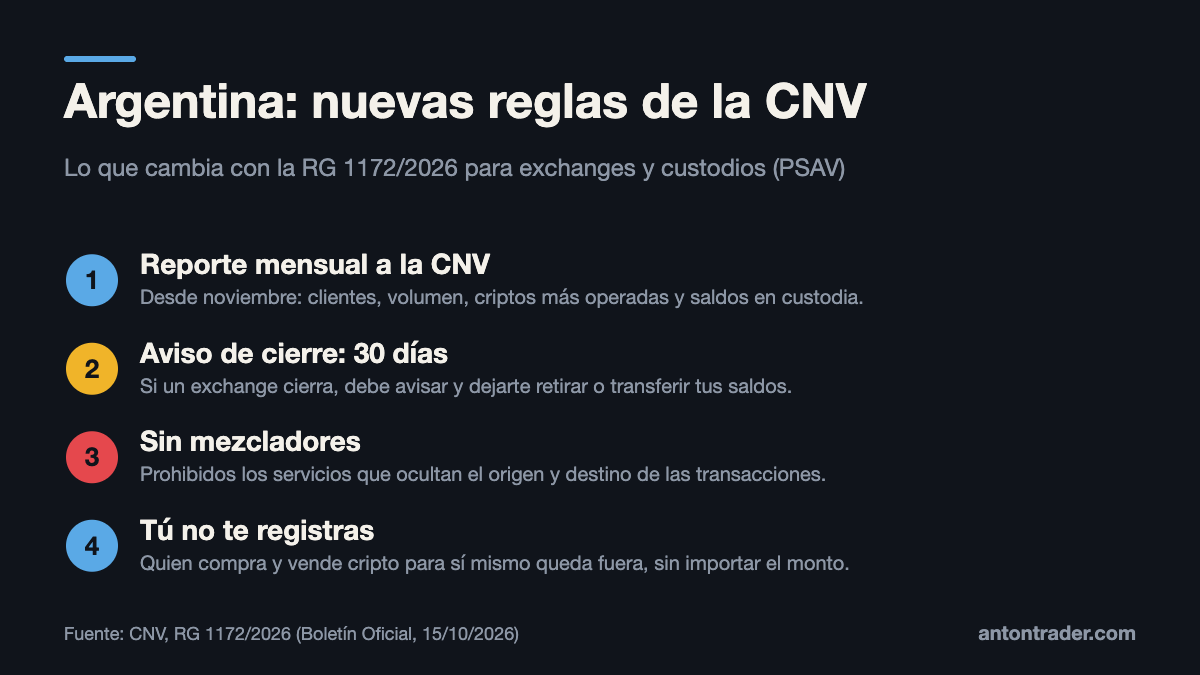
The most important points for you:
- More oversight of the platform. Starting in November, VASPs must report to the CNV every month how many clients they have, how much volume they trade, their most traded cryptocurrencies, and the balances they hold in custody. This is aggregated data, not data on each individual user.
- Notice if an exchange shuts down. It must notify clients at least 30 days in advance and allow them to withdraw or transfer their funds.
- Foreign exchanges. They must register if they operate in Argentina through certain channels, for example with a “.ar” domain or if more than 20% of their business is in the country.
- Users. If you buy and sell crypto for yourself, you don’t have to register, regardless of the amount. Self-custody wallets and decentralized protocols that nobody controls are also excluded.
Brazil: The Central Bank Takes Control
In Brazil, the Central Bank published resolutions 519, 520 and 521 in November 2025. Since February 2, 2026, companies that intermediate, custody or trade crypto assets need authorization from the Central Bank, with rules on customer protection, anti-money laundering and information security.
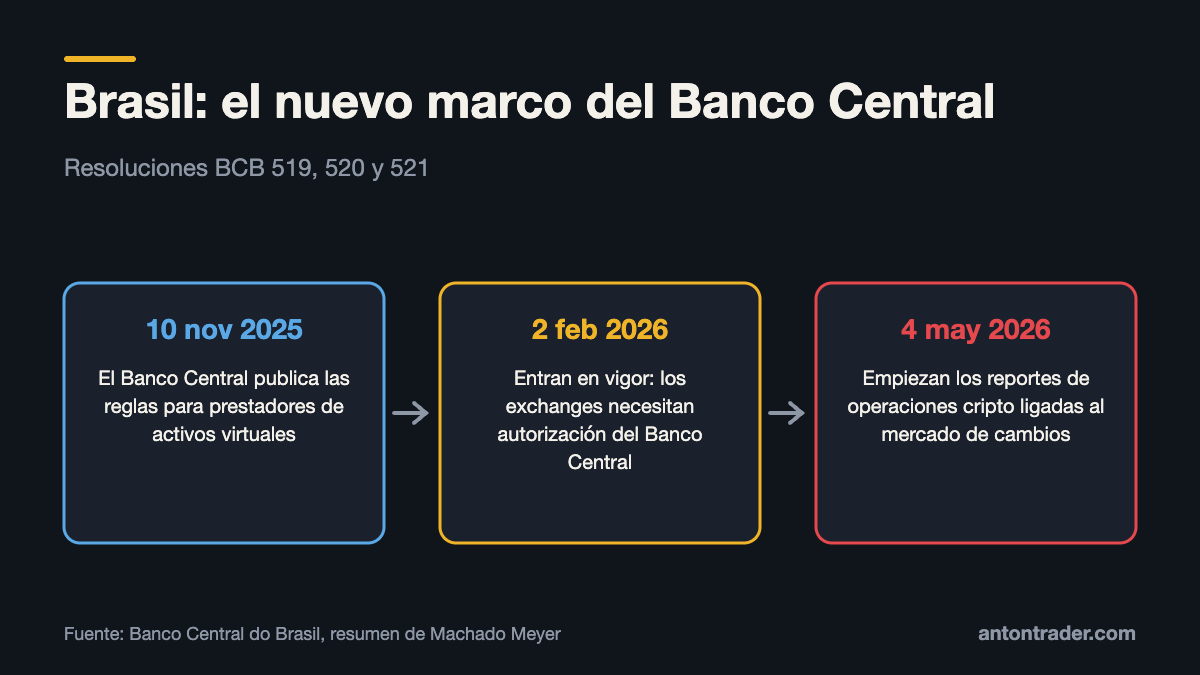
Two points worth knowing:
- Crypto as a foreign exchange operation. International payments and transfers using crypto assets, and the purchase or sale of stablecoins pegged to currencies such as the dollar, are now treated as foreign exchange market operations.
- Stricter requirements for stablecoins. Stablecoins backed by fiat currency have requirements regarding reserves, issuer and auditing, and those with algorithmic reserve control are banned.
Companies that were already operating have 270 days to apply for authorization and can keep running while the process is being resolved.
What This Means for You
More regulation doesn’t mean zero risk, but it does mean more information and clear rules for when something goes wrong. My checklist before using an exchange or a broker remains the same:
- It should be a large platform, with years in the market and many clients. A company like that has an interest in taking care of you so you keep trading.
- Withdrawals should work: make a small deposit and a small withdrawal first.
- Don’t keep more on a single platform than you’re willing to lose.
To buy and store crypto, use large exchanges such as Bybit or BingX. If you only want to trade the price of Bitcoin without owning the crypto, CFD brokers such as FxPro, RoboForex or Tickmill offer CFDs on cryptocurrencies alongside Forex. Always check that the service is available in your country.
Where to Trade
These are the brokers and exchanges I use that work with clients from Latin America. Always check that the service is available in your country and start small.
Risk warning: CFDs, Forex and crypto derivatives carry a high risk of losing money due to leverage. This article is not investment advice.