Scalping is a strategy for taking quick profits from the market. But most often it leads a beginner to empty their account in an instant. Many people believe it requires opening trades nonstop. Or enormous execution speed. Or anything else that makes you lose your head. Now I’ll tell you what you really need to know about scalping.
Scalping isn’t about quantity
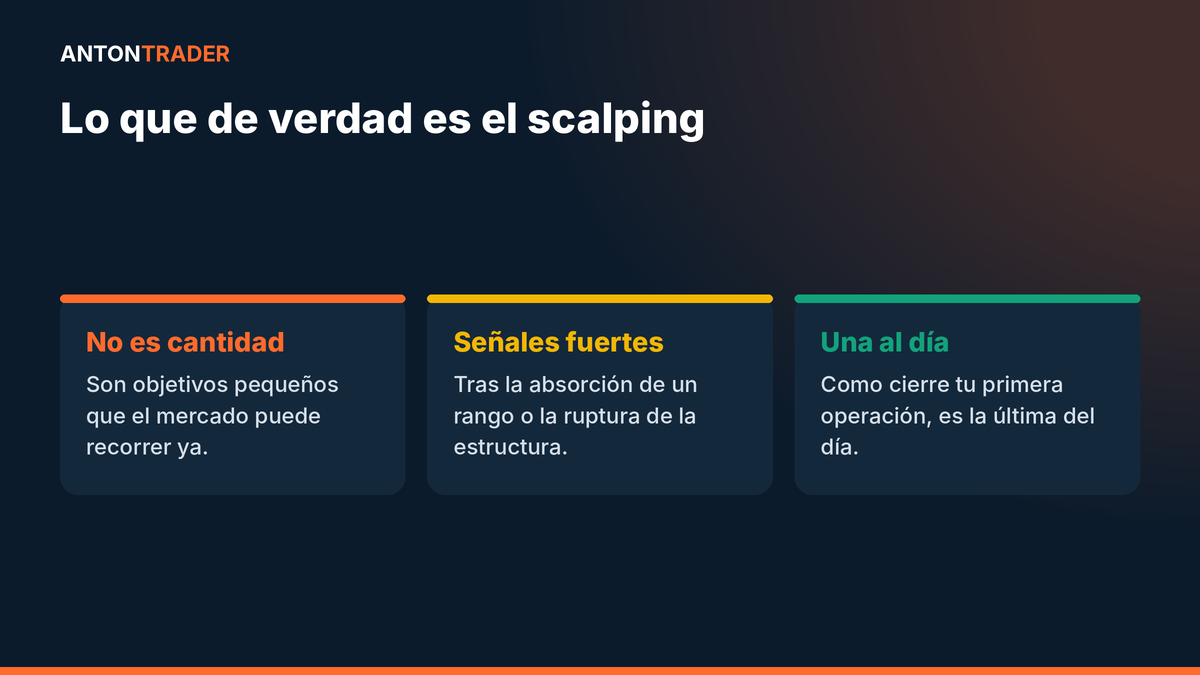
Short-term trading doesn’t mean making 10, 20 or 100 trades a day. It’s simply about small targets that the market can cover with the least effort right now. A micro target that news, the entry of big players and the like don’t have time to influence. Scalping is looking for fast trades with the smallest possible take profit.
Scalping means strong signals
In scalping you can’t take trades “just any way.” Every signal must have the highest possible probability of working, higher than in your usual strategies. What trades are those?
- after the absorption of a range;
- after a break of structure.
Scalping = iron discipline
Now I’m going to tell you something you’ll want to argue with. And if so, short-term trading isn’t for you. There can’t be more than 1 strong signal a day in the market. That means that however your first trade closes, it will be the last one of the day. With experience, you can look for signals on other assets. But for a beginner it’s strictly forbidden: most likely they’re just looking for a way to win back what they lost.