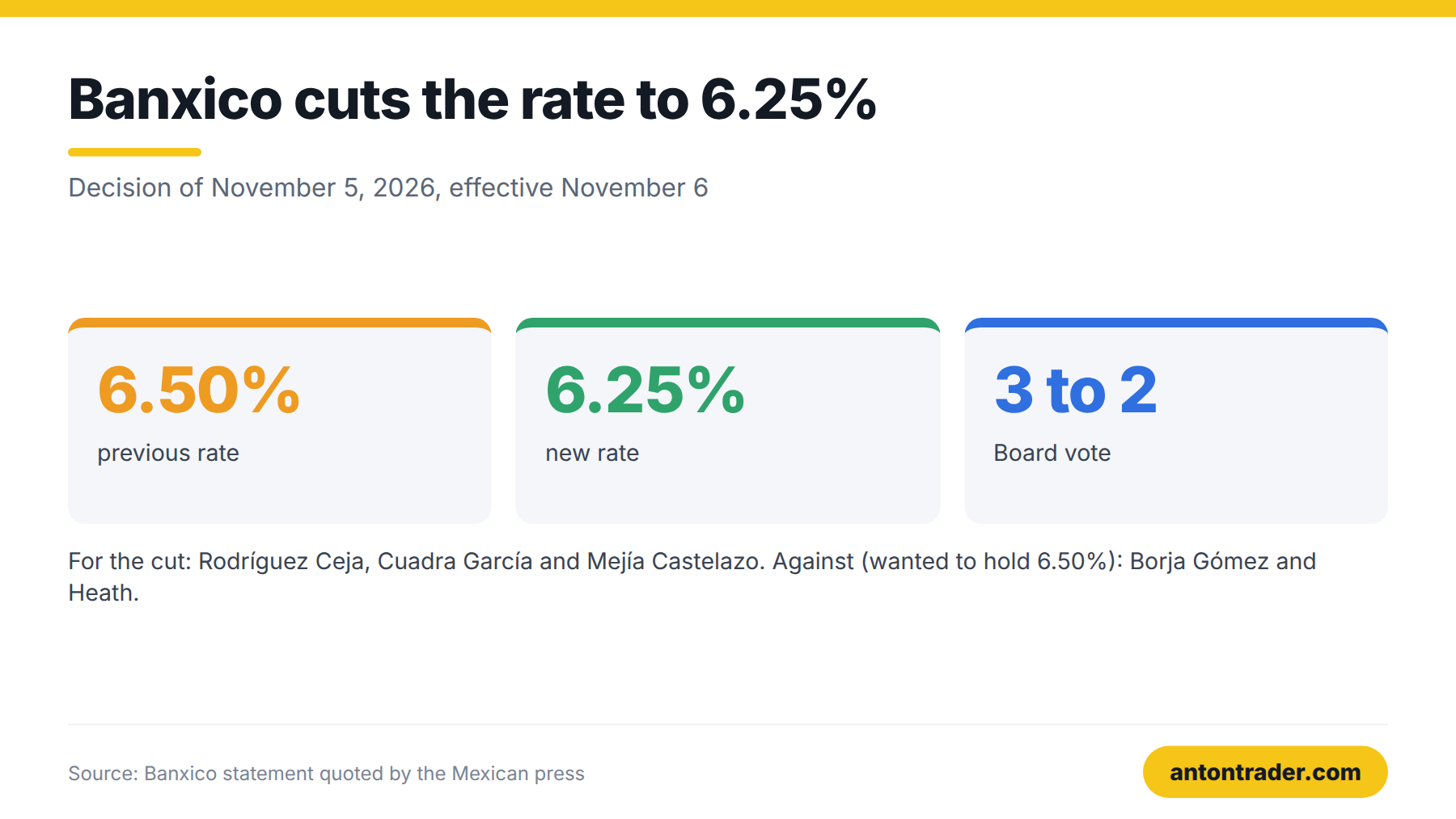
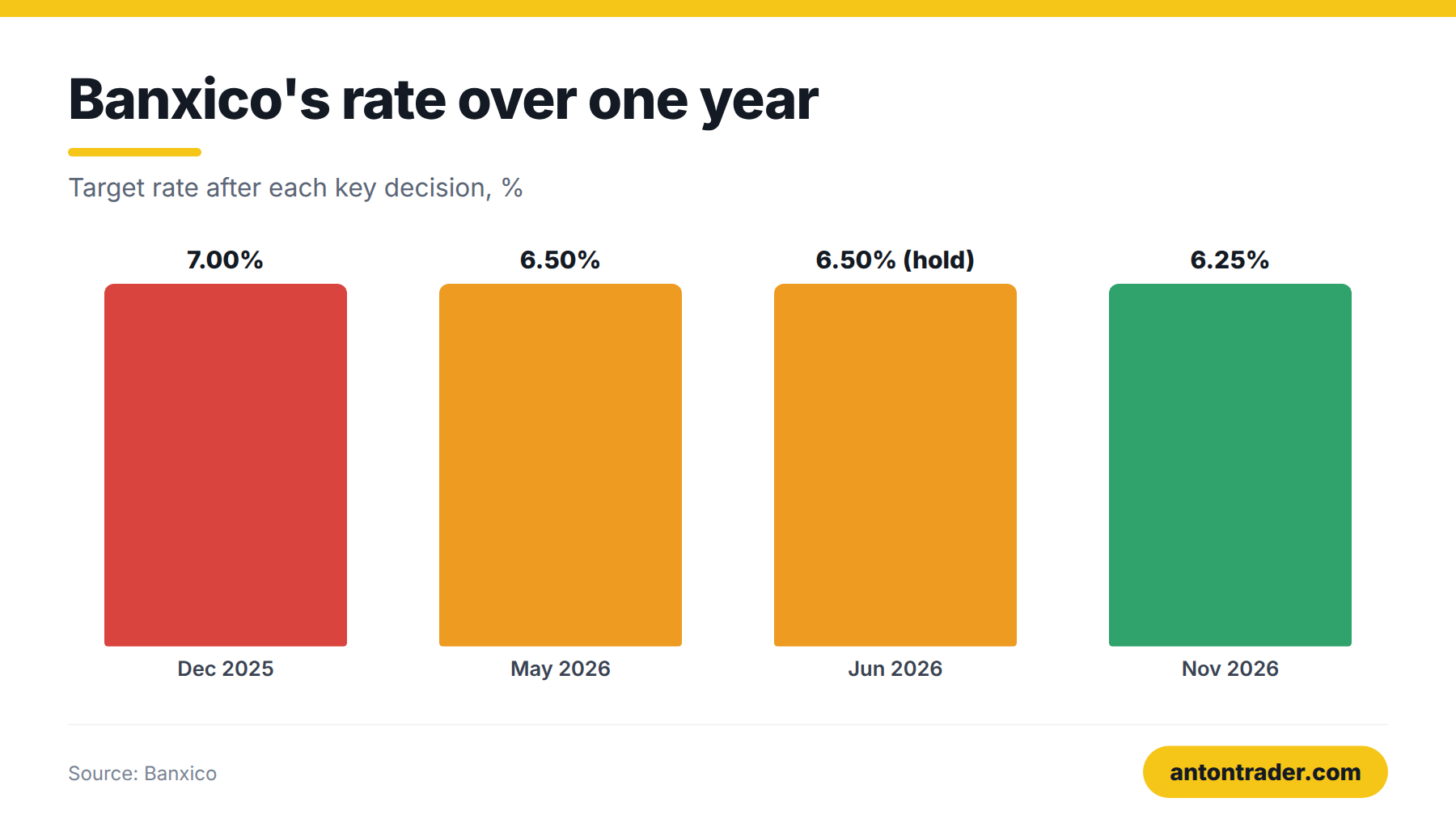
The Bank of Mexico has moved its rate again. On November 5, 2026, Banxico cut its interest rate from 6.50% to 6.25%, and it did so with a split 3-2 vote, which is unusual. I’ll explain what happened and what it means for your savings, your debts and the peso.
What Banxico decided
The Board of Governors cut the target rate by 25 basis points, effective November 6. Three members voted in favor: Victoria Rodríguez Ceja, José Gabriel Cuadra García and Omar Mejía Castelazo. Two, Galia Borja Gómez and Jonathan Heath, preferred to leave it at 6.50%.
The cut was a surprise because in June Banxico had paused, and part of the market thought the easing cycle was already over. Now the bank says that keeping the rate at 6.25% “for a prolonged period” will help inflation reach its target. Translated: don’t expect another cut soon.
Inflation is rising, but the rate is falling
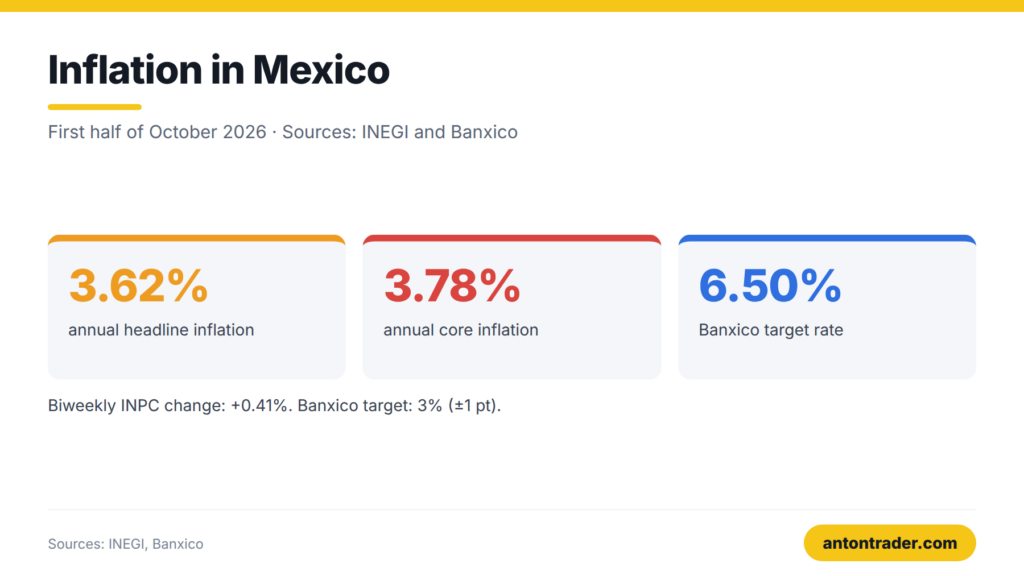
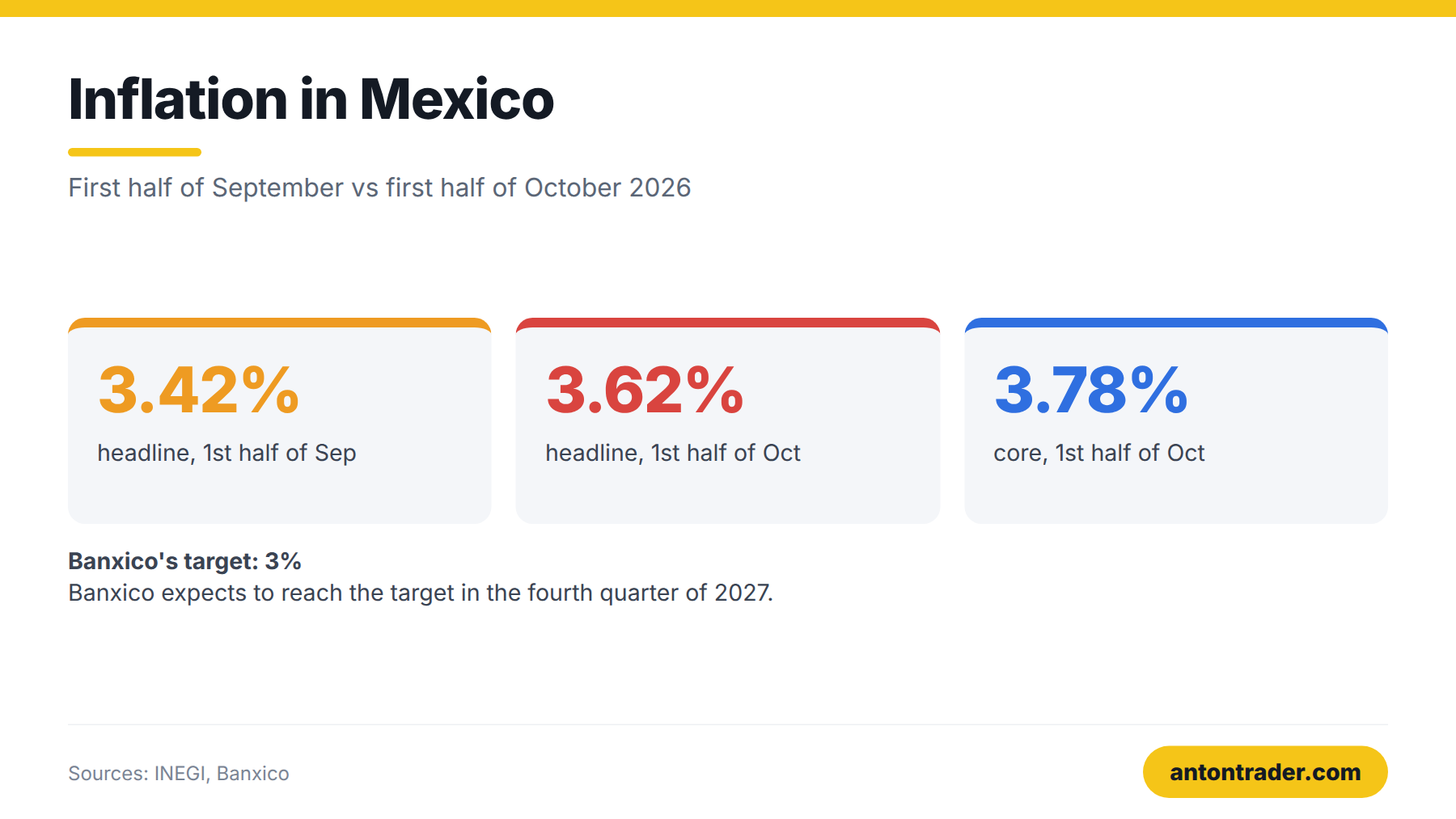
Here is the curious part. Headline inflation went from 3.42% in the first half of September to 3.62% in the first half of October. Core inflation, which excludes volatile prices such as fresh food and energy, barely fell from 3.79% to 3.78%. Banxico even raised its year-end inflation forecast and expects to reach the 3% target only in the fourth quarter of 2027.
So why cut the rate? Because the economy is weak and the “underlying” part of inflation remains stable. The two dissenting votes show that not everyone inside the bank sees the risk the same way. Among the risks Banxico mentions are a larger depreciation of the peso, persistent core inflation and changes in U.S. economic policy.
What it means for your wallet
A lower rate isn’t felt overnight, but it is felt:
- Savings in pesos: promissory notes, Cetes and interest-bearing accounts tend to yield a bit less. If your savings yield less than inflation, you are actually losing purchasing power.
- Loans: rates on new loans may fall, although banks are slow to pass it on. Your credit card won’t magically get cheaper.
- The peso: when the rate in Mexico falls and the gap with the United States narrows, the peso loses some of its appeal for investors seeking yield. On the day of the decision, the dollar at currency exchange counters was around 19 pesos.
If you want to understand this mechanism, I recommend my article on how interest rates move the peso, the real and the sol.
How to protect yourself without doing anything crazy
The rule I always repeat: don’t move all your savings because of one piece of news. Check how much your money yields compared to inflation, hold part of it in a strong currency if that gives you peace of mind, and don’t chase promises of “guaranteed returns”.
If you want to learn to trade USD/MXN, do it first on a demo account and then with small amounts, with large brokers with years in the market such as FxPro, RoboForex or Tickmill. A Banxico decision moves the peso within minutes, and that can work for you or against you.
Where to trade
These are the brokers and exchanges I use that work with clients from Latin America. Always check that the service is available in your country, and start small.
Risk warning: CFDs, Forex and crypto derivatives carry a high risk of losing money due to leverage. This article is not investment advice.