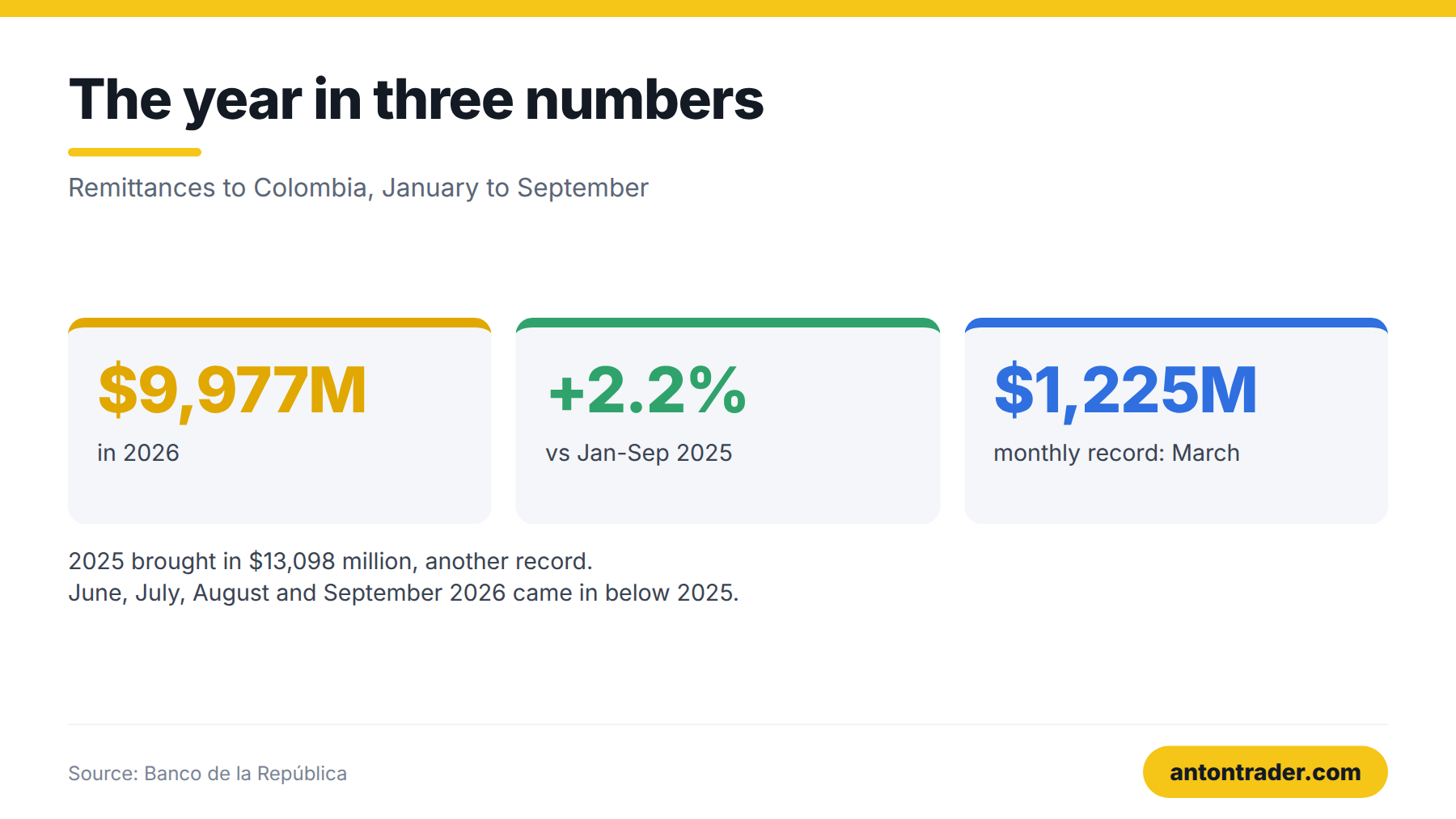
Remittances to Colombia remain huge in 2026, but they no longer grow the way they used to. Between January and September, $9.977 billion arrived, just 2.2% more than in the same period of 2025, according to Banco de la República data published by Portafolio. I’ll tell you what the numbers say and how to protect that money.
A record start and a weaker second half
The year started strong. March brought $1.225 billion, 12.5% more than a year earlier and the highest monthly figure in history. The first quarter added up to about $3.347 billion, a record for that period.
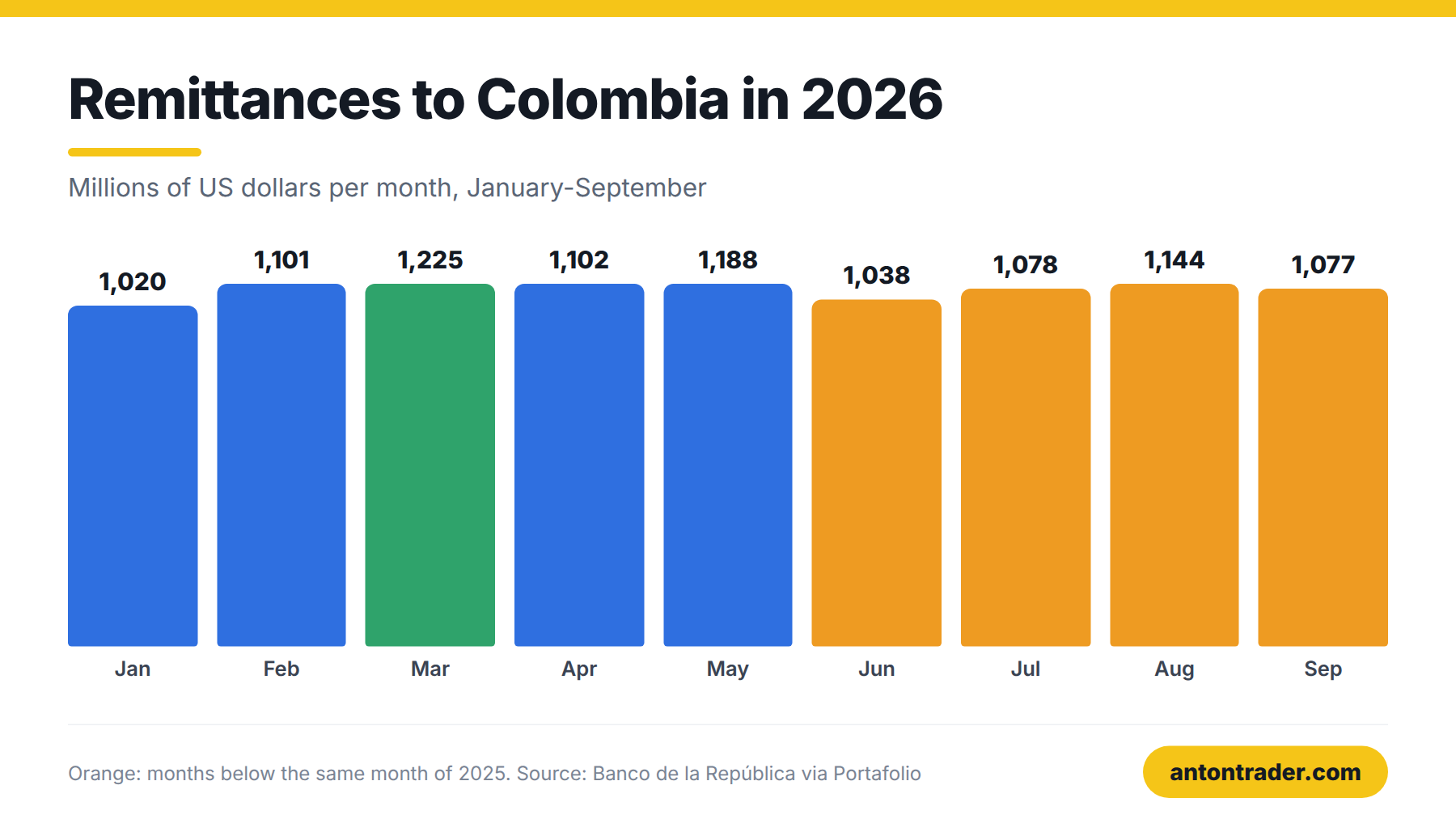
Then the pace changed. June, July, August and September came in below the same months of 2025. September, for example, closed at $1.077 billion versus $1.100 billion a year earlier. That is why the nine-month total came close to, but stayed below, $10 billion.
Why they matter so much
In 2025 Colombia received $13.098 billion in remittances, a record. According to BBVA Research, about 53% comes from the United States and they equal around 2.8% of GDP. In the first quarter of 2026, remittances even exceeded foreign direct investment: about $3.347 billion versus $2.129 billion.
Behind every figure there is a family paying rent, school or food with that money. If remittances slow down, it shows in consumption in many regions of the country. A practical detail: since January 2026, the United States charges 1% on transfers paid in cash; transfers from a bank account do not pay that tax.
| Period | Remittances | Change vs. 2025 |
|---|---|---|
| March 2026 (record) | USD 1.225 billion | +12.5% |
| First quarter 2026 | USD 3.347 billion | +6.9% |
| September 2026 | USD 1.077 billion | −2.1% |
| January–September 2026 | USD 9.977 billion | +2.2% |
Source: Banco de la República, cited by Portafolio and La República.
How to protect the money that arrives
A remittance is money earned with great effort far from home. What hurts most is losing a part of it to fees, a bad exchange rate or an “opportunity” that turns out to be a scam.
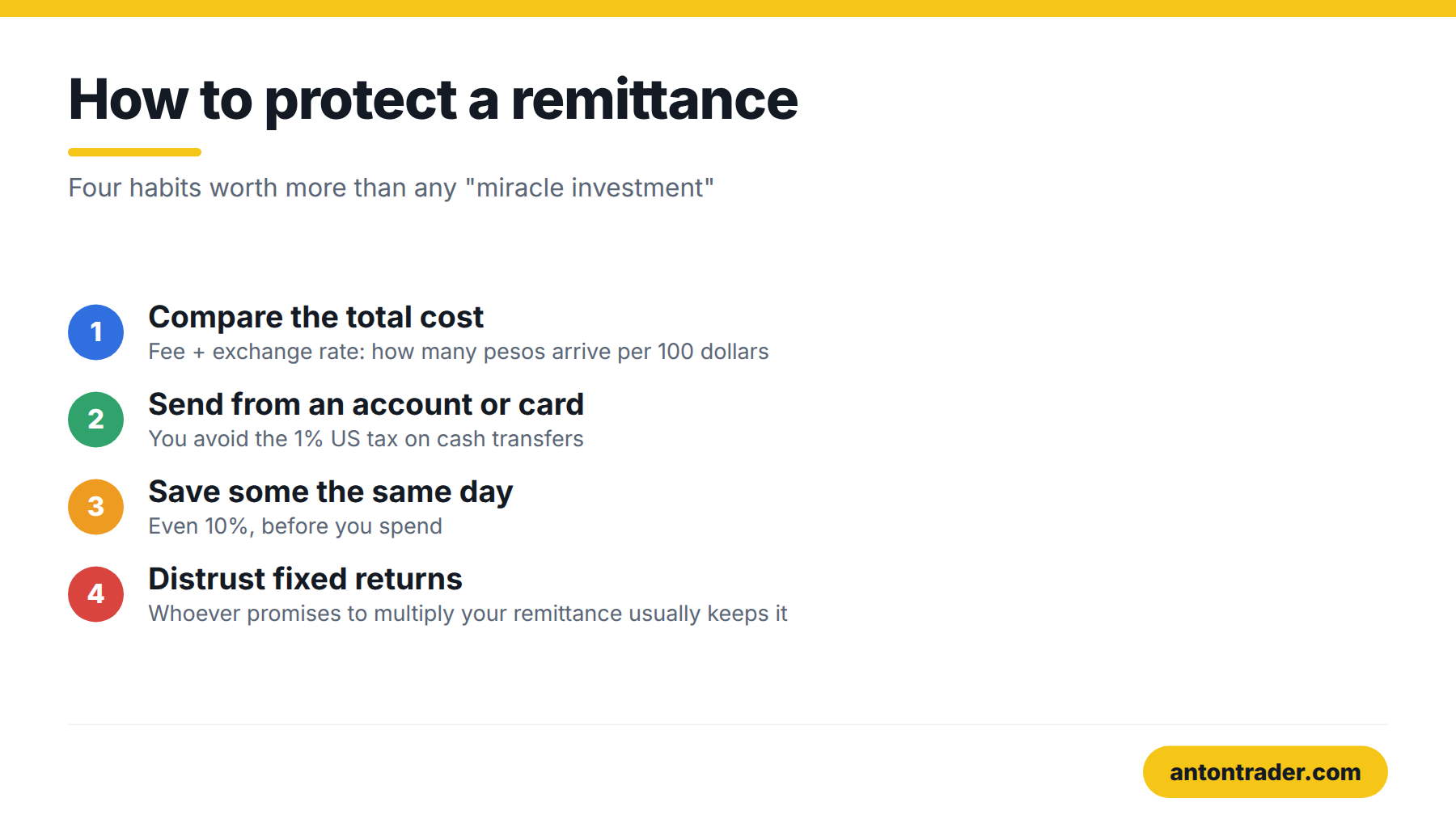
If someone in your family receives remittances, it’s worth reviewing together how much actually arrives, setting aside savings from day one, and calmly deciding whether part of it is kept in pesos or in dollars. What you should not do is hand that money to someone who promises fixed profits every week: it is the most common way to lose it. I wrote about this in trading scams.
And trading?
Trading is not a way to multiply a remittance. It is a skill that is learned over time, starting on a demo account and with money you can afford to lose. If you decide to take the step, do it with large brokers with years of history, such as FxPro, RoboForex or Tickmill, and with small amounts until you understand how it works.
Where to trade
These are the brokers and exchanges I use and that work with clients from Latin America. Always check that the service is available in your country and start small.
Risk warning: CFDs, Forex and crypto derivatives carry a high risk of losing money due to leverage. This article is not investment advice.