The BCV dollar never stopped rising in 2026. The official rate of the Central Bank of Venezuela went from 301.37 bolívares in January to about 877.90 in mid-October: the dollar rose more than 190% and the bolívar lost almost two-thirds of its value. I’ll explain what is behind it and what you can do so your money doesn’t melt away.
The bolívar’s numbers in 2026
At the end of May the official dollar was already at 549.37 bolívares, 82% more than in January. In May alone it rose 12.2%. On October 5 it closed at 872.39, and by mid-month it was around 877.90, according to NTN24 reports using BCV data.
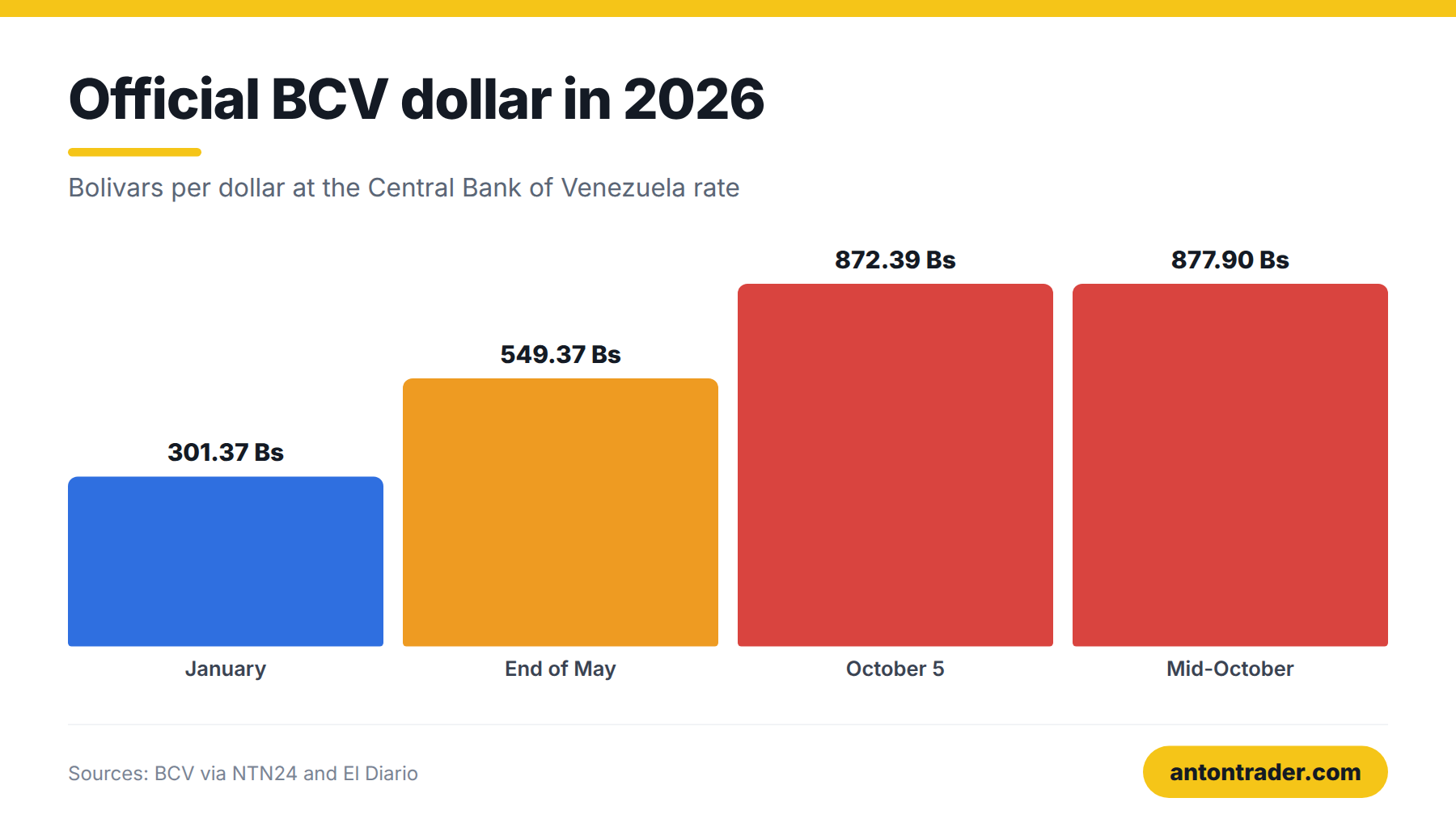
| Date | BCV dollar | Increase since January |
|---|---|---|
| January 2026 | 301.37 Bs | — |
| End of May | 549.37 Bs | +82% |
| October 5 | 872.39 Bs | +189% |
| Mid-October | 877.90 Bs | +191% |
Watch how you read this: the dollar rising 191% means that with one bolívar you buy about three times fewer dollars than in January. It’s the same story told from the other side.
Inflation: lower, but still among the highest in the world
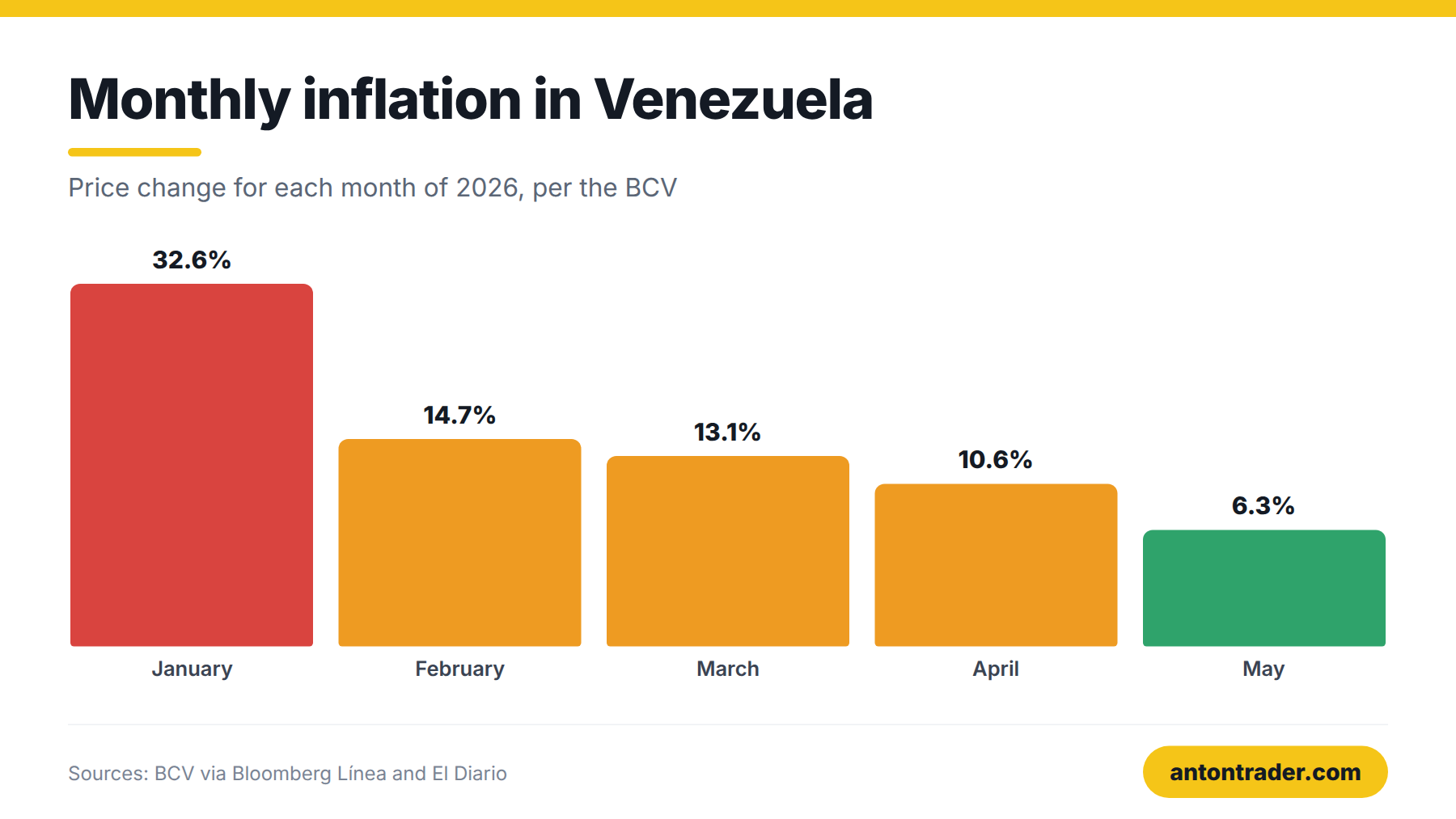
According to the BCV, monthly inflation was 32.6% in January, 14.7% in February, 13.1% in March, 10.6% in April and 6.3% in May, the lowest figure in 19 months. The trend improved, but 6% a month is still a huge number: over a year, prices would multiply.
The minimum wage has been frozen since 2022 at 130 bolívares, less than one dollar at the official exchange rate. Real incomes depend on bonuses set in dollars and paid in bolívares, and street prices follow the dollar. That’s why every jump in the exchange rate is felt in the market right away.
Why the dollar is rising
The economists cited by Bloomberg Línea agree on several causes. The economy imports almost everything and constantly needs dollars. People have little confidence in the bolívar as a store of value and swap it as soon as they can. And although the BCV sold more than 3 billion dollars in the first quarter to slow the decline, those interventions weren’t enough to change the trend.
How to protect your money
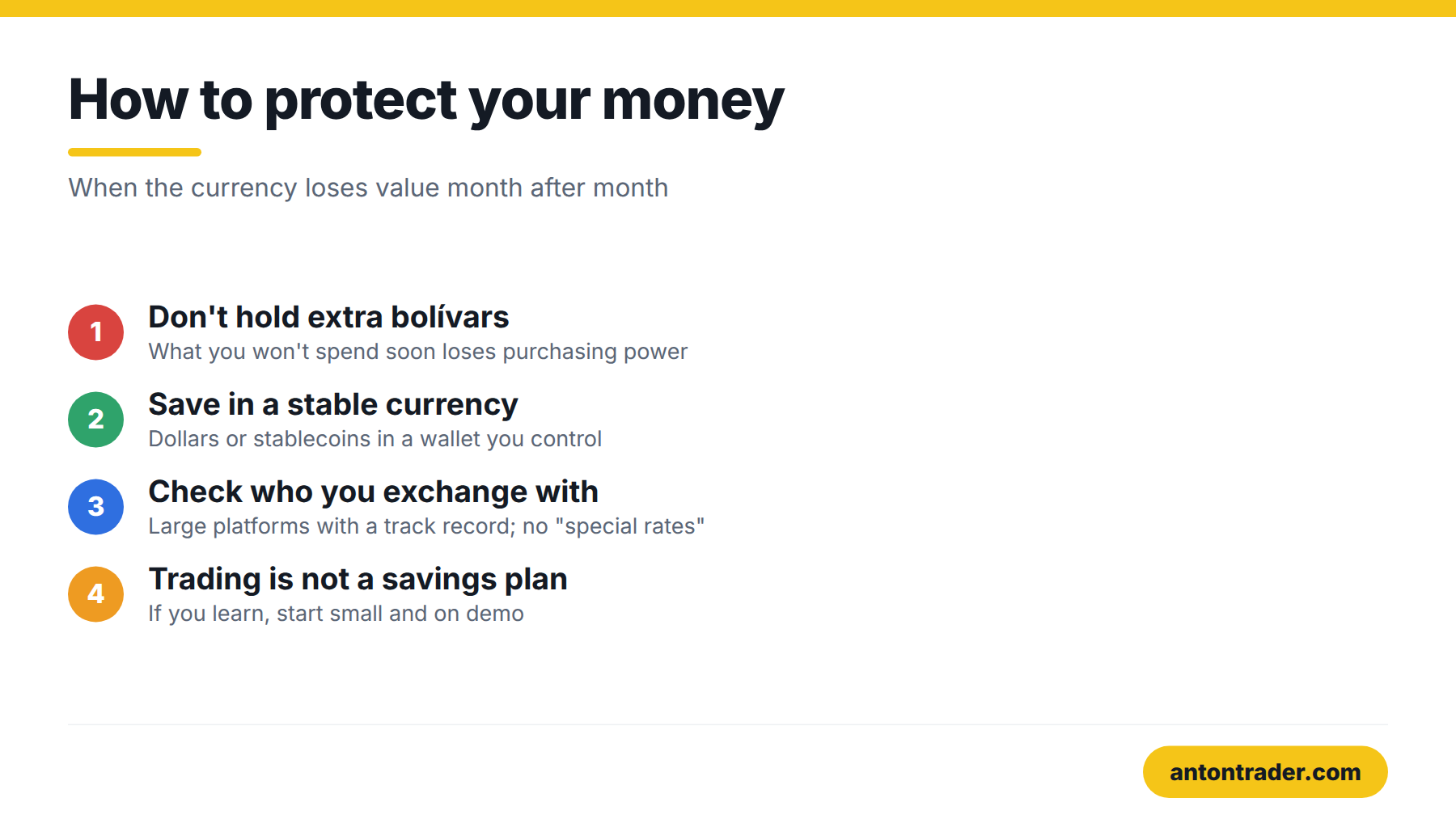
What many Venezuelans learned the hard way: bolívares are for spending, not for saving. What you won’t use soon is better kept in a stable currency. Stablecoins like USDT have become an everyday tool; I explain it in stablecoins in Latin America.
If you use crypto, buy on large platforms like Bybit or BingX and keep your savings in a wallet that you control. Be wary of anyone offering you a “special rate” or fixed returns: scammers multiply in times of crisis.
And if you want to learn trading, don’t do it with your grocery money. Start on a demo account and then with a small amount, with brokers that have many years in the market such as FxPro, RoboForex or Tickmill. Always check that the service is available for Venezuela before opening an account.
Where to trade
These are the brokers and exchanges I use that work with clients from Latin America. Always check that the service is available in your country and start small.
Risk warning: CFDs, Forex and crypto derivatives carry a high risk of losing money due to leverage. This article is not investment advice.