Inflation in Argentina was 2.2% in October 2026, according to INDEC. It is the highest monthly reading since April and came in above what analysts expected. I’ll explain what pushed prices up and what it means for your wallet.
What INDEC said
The data was published on November 12. In October, prices rose 2.2% compared to September, when the index had printed 1.9%. Over the last twelve months the increase reaches 33.1%, and year to date, 26.3%.
The analysts surveyed by the Central Bank in its REM survey expected 1.8%. In other words, the number surprised to the upside. Since July, monthly inflation had not exceeded 2%.
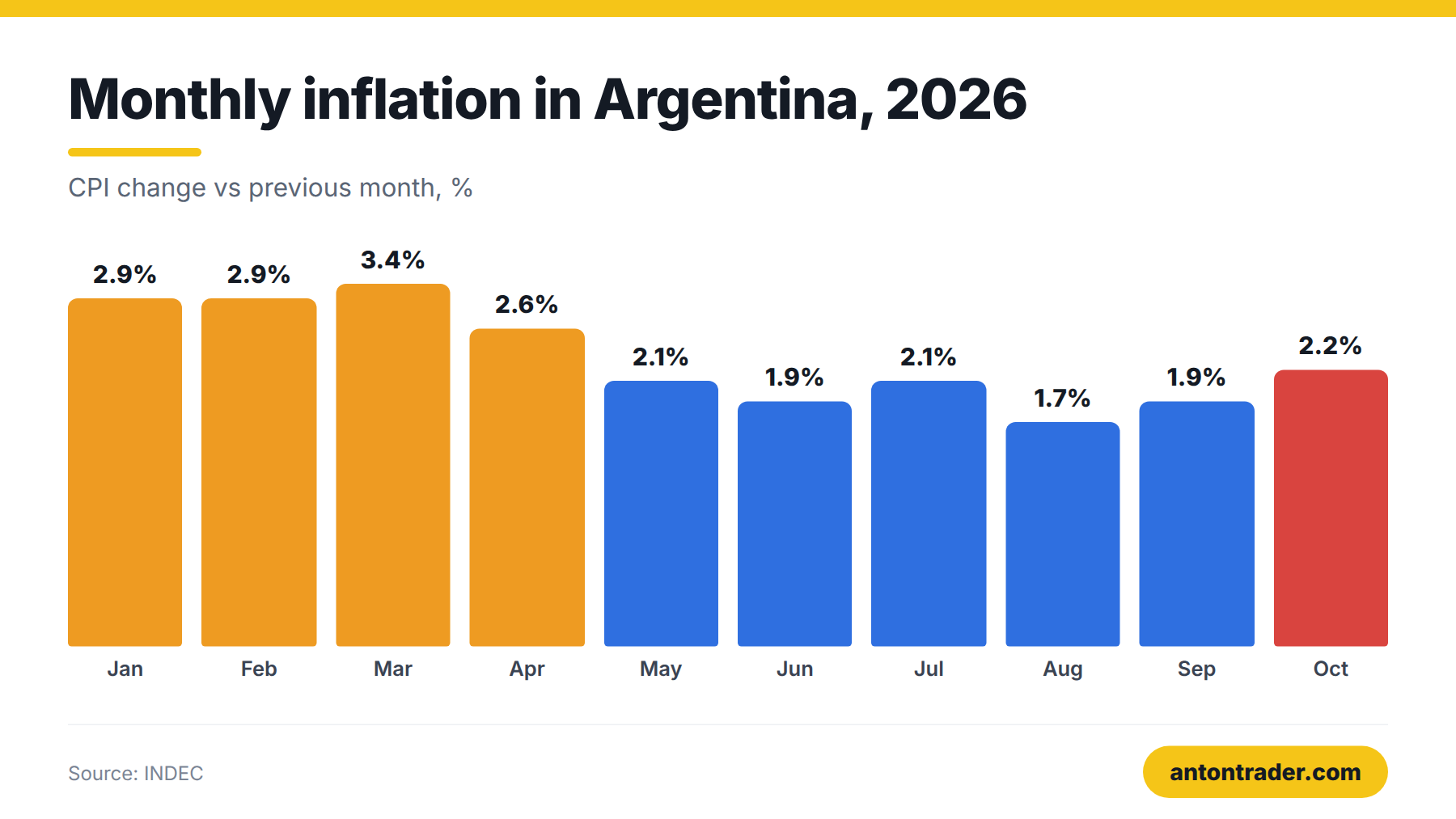
Looking at the full year, you can see the whole picture: a high start, with 3.4% in March, a drop to 1.7% in August and now a rebound. It’s not a dramatic jump, but it breaks a streak of calm months.
What rose the most: electricity, gas and vegetables
The category with the biggest increase was housing, water, electricity, gas and other fuels, at 4.2%. Behind it was mostly gas: Minister Luis Caputo linked it to changes in the Zona Fría regime. Next came recreation and culture, at 3.3%. At the other end, alcoholic beverages and tobacco rose just 0.8%.
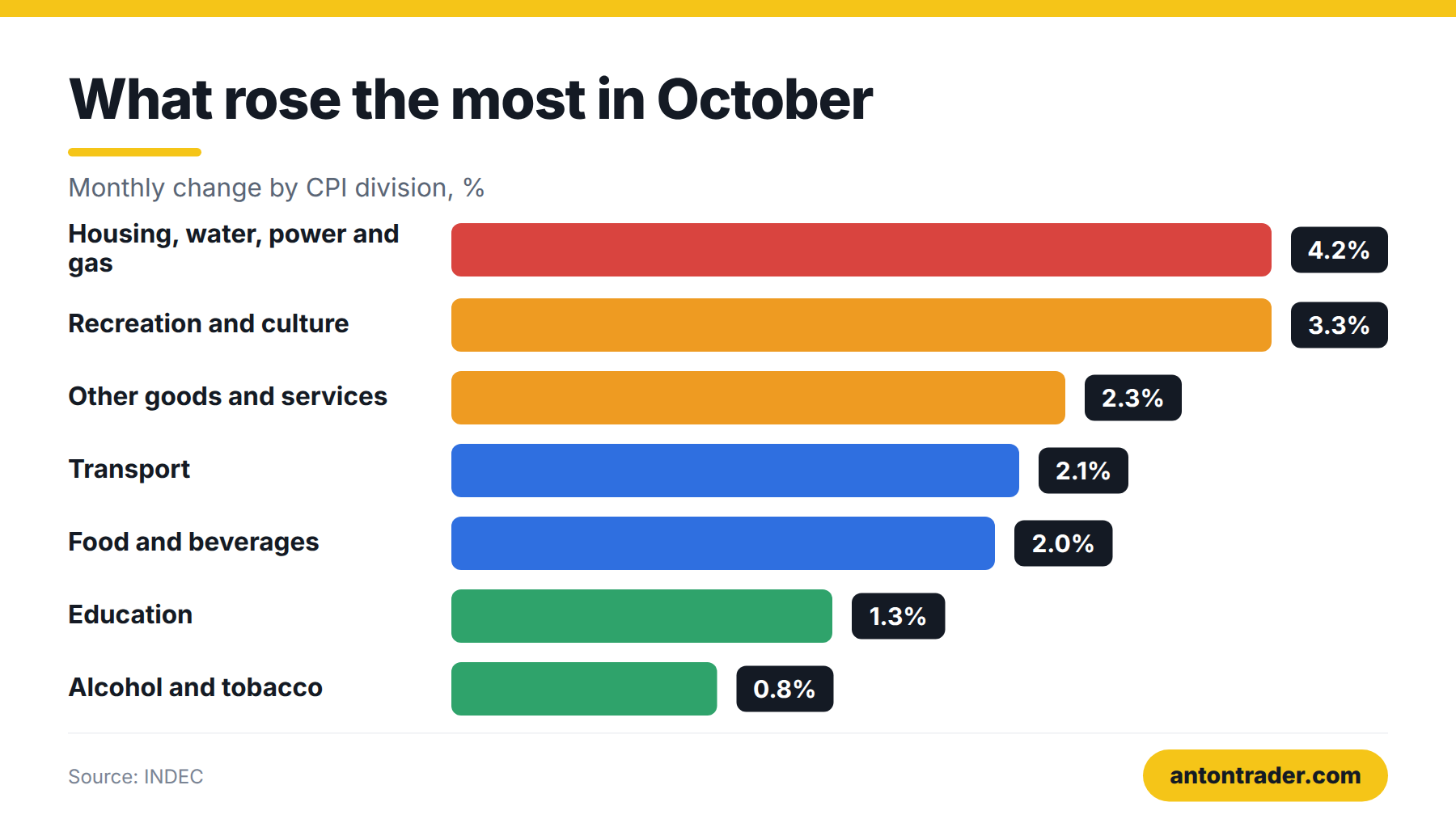
Seasonal prices, such as vegetables and legumes, jumped 5.5%, and regulated prices, such as gas and fuels, 2.9%. By region, the most expensive was Pampeana, at 2.6%, and the most moderate was the Northeast, at 1.5%.
The hidden good news: core inflation
There is one figure worth looking at calmly. Core inflation, which leaves out seasonal and regulated prices, was 1.5%, the lowest since July 2025 according to Caputo. In September it had been 1.7%.
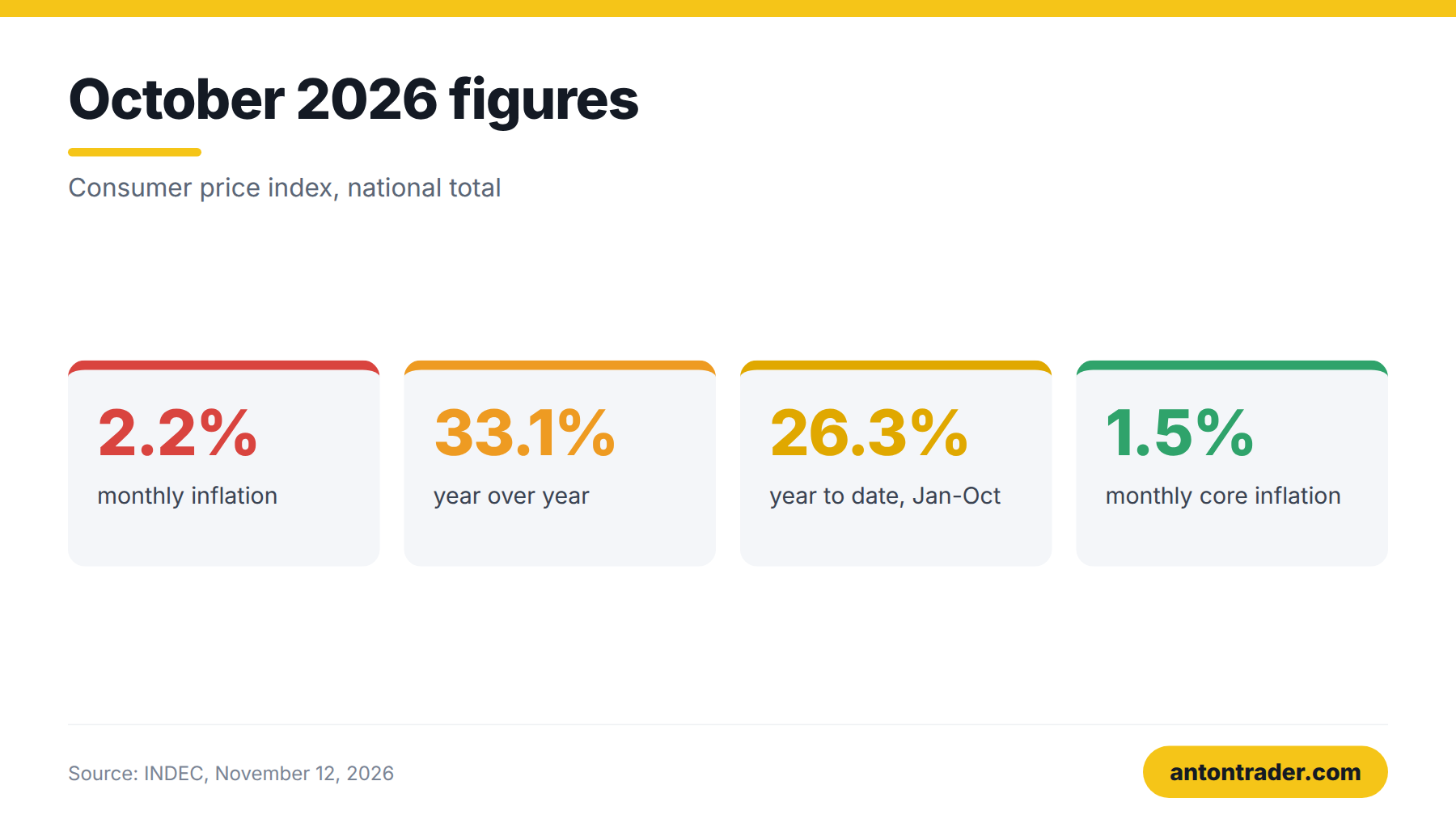
Translated into daily life: what accelerated were mostly utility rates and vegetables, not the rest of prices. That doesn’t make your gas bill any cheaper, but it indicates that the underlying trend has not broken. The next reading, for November, comes out on December 15.
| Indicator | September 2026 | October 2026 |
|---|---|---|
| Monthly inflation | 1.9% | 2.2% |
| Core inflation | 1.7% | 1.5% |
| Year over year | 33.4% | 33.1% |
| Year to date | 23.6% | 26.3% |
Source: INDEC, as cited by Rankia and Diario Río Negro.
What to do with your pesos
With 33% annual inflation, the peso you leave sitting in a drawer loses a third of its purchasing power in a year. That’s why so many Argentines save in dollars, in fixed-term deposits or in stablecoins. No option is perfect, and what makes you lose the most money is not inflation, but haste.
My usual advice: first an emergency fund, then savings in something that doesn’t lose value, and only with a small part, learn trading. If someone promises you fixed returns “to beat inflation,” walk away: it’s the most commonly used bait.
If you want to learn to trade, do it on a demo account and then with a small amount, using brokers that have been in the market for many years such as FxPro, RoboForex or Tickmill. To buy or store crypto, I use Bybit and BingX. Always check that the service is available in Argentina.
Where to trade
These are the brokers and exchanges I use and that work with clients from Latin America. Always check that the service is available in your country and start small.
Risk warning: CFDs, Forex and crypto derivatives carry a high risk of losing money due to leverage. This article is not investment advice.