The remittances to El Salvador keep breaking records in 2026. From January to September, $7,619.9 million arrived, 3.5% more than in the same period of 2025, according to the Central Reserve Bank (BCR). Let’s look at what is behind the figure and what role cryptocurrencies play.
A record, but with less momentum
In nine months the country received $260.9 million more than a year earlier. It is the highest figure for that period in the entire BCR series. Even so, the pace slowed considerably: in 2025 the growth from January to September had been 18.5%.
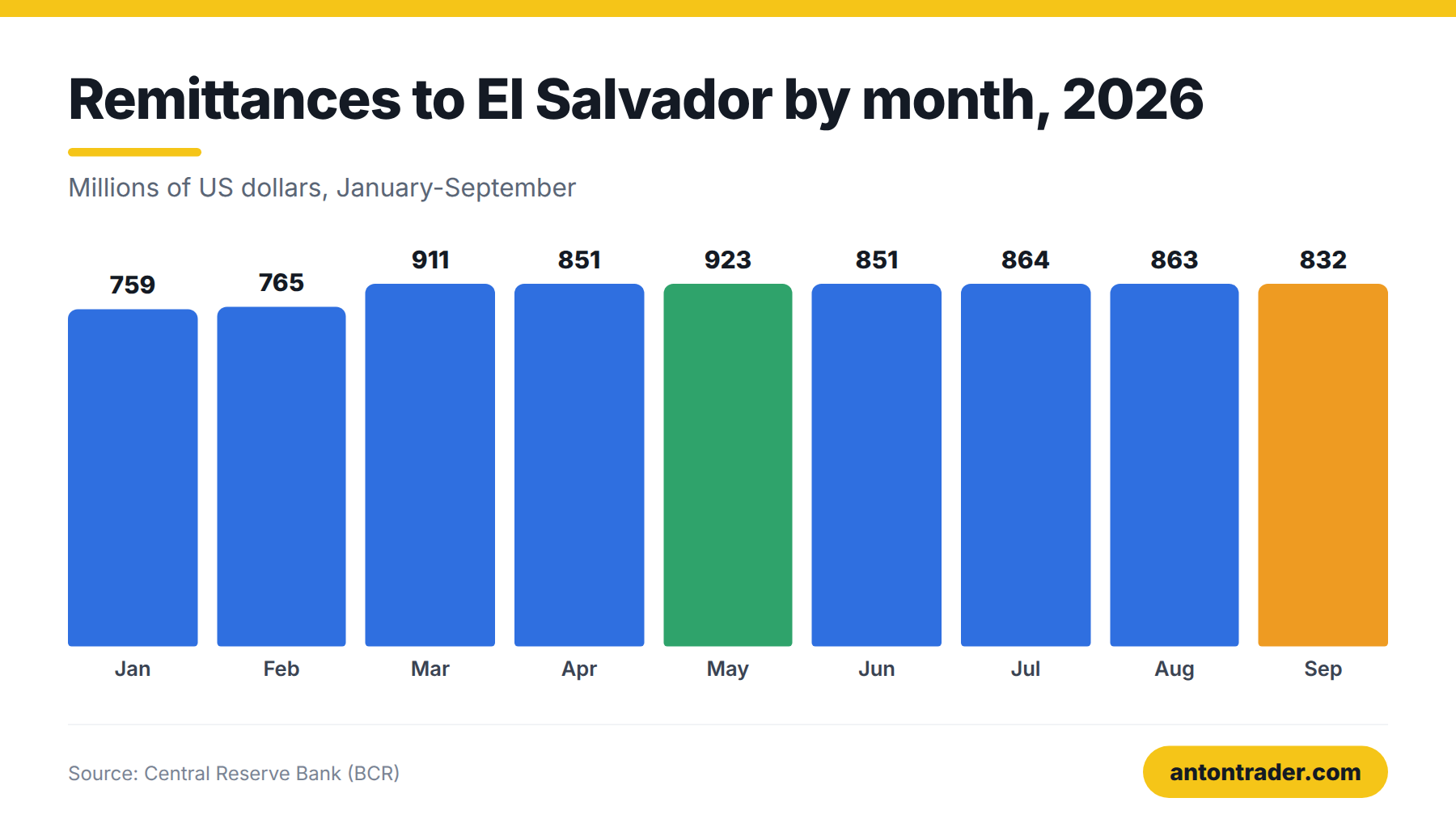
The best month was May, with $923 million. September closed at $831.6 million: 3.7% less than August, though 1.45% more than September 2025. There were 20.2 million transfers, practically the same as the previous year (+0.4%), so the increase came more from the amount than from the number of transfers.
Why they matter so much to the country
In El Salvador, remittances are not a minor detail: they are equivalent to about 24% of GDP. In 2025 they totaled $9,987.9 million, 17.7% more than in 2024, and reached more than 1.5 million people.
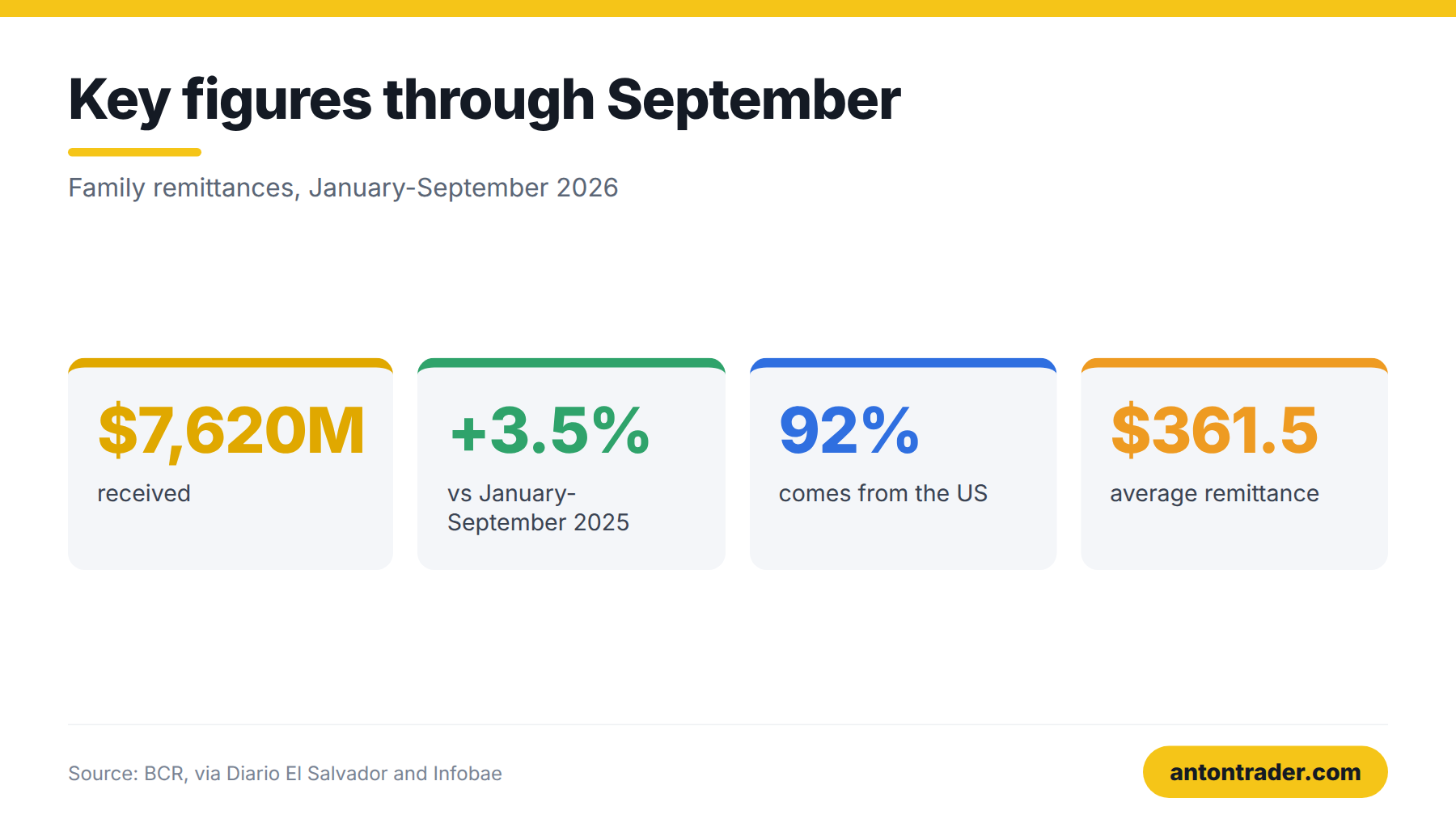
Almost all the money comes from the United States: $7,031.5 million through September, about 92% of the total. The average remittance, according to the BCR, was $361.5. For many families, it is what pays for food, rent and school.
| Indicator | Jan–Sep 2025 | Jan–Sep 2026 |
|---|---|---|
| Total remittances | USD 7,359.0 million | USD 7,619.9 million |
| From the United States | USD 6,806.2 million | USD 7,031.5 million |
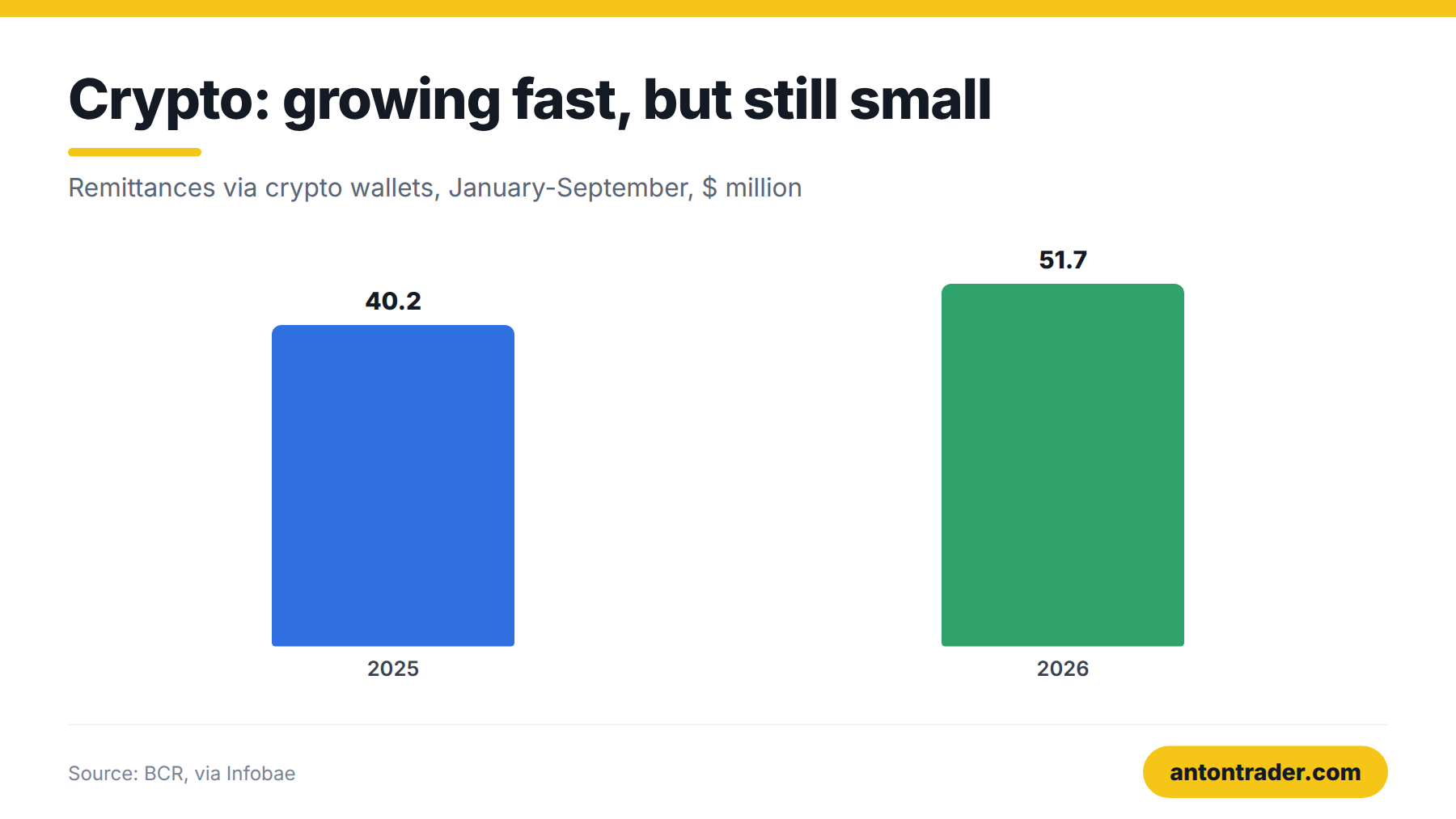
| Via crypto wallets | USD 40.2 million | USD 51.7 million |
| Number of transfers | 20.1 million | 20.2 million |
Source: BCR, cited by Diario El Salvador, El Diario de Hoy and Infobae.
What about crypto remittances?
Here is the curious fact. Despite all of El Salvador’s fame with bitcoin, remittances arriving through cryptocurrency wallets totaled $51.7 million through September. They grew 28.7%, but represent only 0.68% of the total.
Why so little? Because people use what is simple and familiar to them: the bank or the money transfer agency. Crypto can make transfers cheaper, but it requires learning to use a wallet, protecting your keys and understanding volatility. If someone in your family wants to try it, they should start with small amounts and with dollar stablecoins, not with coins that go up and down 10% in a single day.
How to protect that money
El Salvador uses the dollar, so the risk is not so much devaluation as fees and scams. Compare how much actually arrives after each transfer, set aside savings from day one and be wary of anyone who promises to “multiply” the remittance with fixed returns.
If you want to learn trading, do it with money you can afford to lose and start on a demo account. I use brokers with many years in the market such as FxPro, RoboForex and Tickmill, and for crypto, Bybit and BingX. Always check that the service is available in El Salvador.
Where to trade
These are the brokers and exchanges I use that work with clients from Latin America. Always check that the service is available in your country and start small.
Risk warning: CFDs, Forex and crypto derivatives carry a high risk of losing money due to leverage. This article is not investment advice.