The inflation in Bolivia was 2.07% in October 2026, according to the National Statistics Institute (INE). So far this year prices have risen 6.03%, and over the last twelve months, 7.08%. I’ll tell you which products pushed the figure up and what you can do so your money doesn’t shrink.
What the INE said
The INE published the figure on November 5. A 2.07% increase in a single month is a lot: if that pace repeated all year, annual inflation would exceed 25%. Luckily not every month is like this, which is why the cumulative figure from January to October is 6.03%.
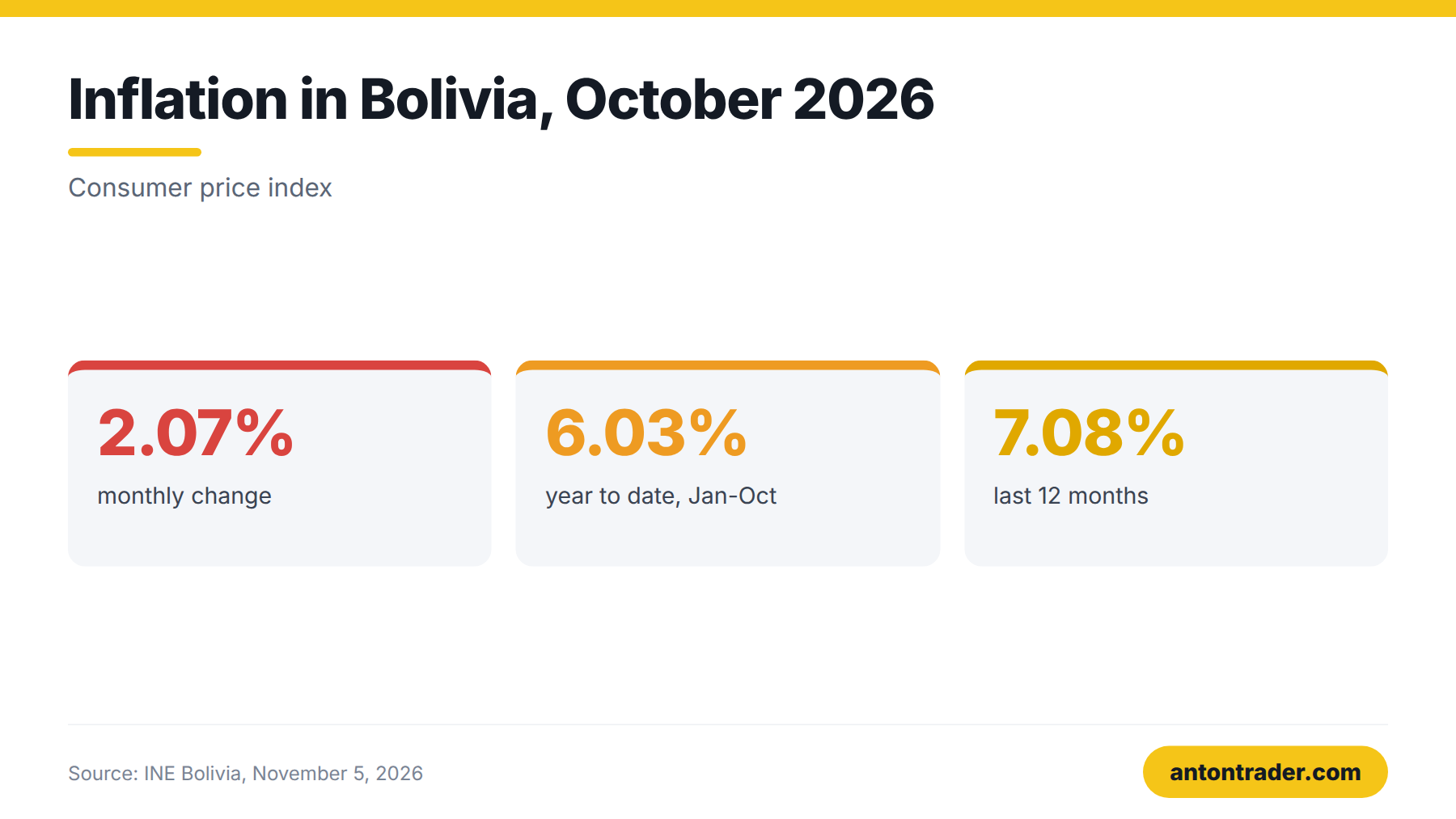
Twelve of the index’s divisions recorded increases. The ones that weighed the most were transport, at 3.50%, and food and non-alcoholic beverages, at 3.39%, according to the INE figures published by FmBolivia. At the other end were health (0.43%), recreation and culture (0.39%) and education (0.04%).
Bus fares and vegetables, the main drivers
If you felt the hit at the market and on the bus, it’s not your imagination. Onions rose 21.61% in a month, potatoes 16.12% and tomatoes 12.56%. The fare for the micro, bus or colectivo went up 14.55% and was the product that influenced the index the most.
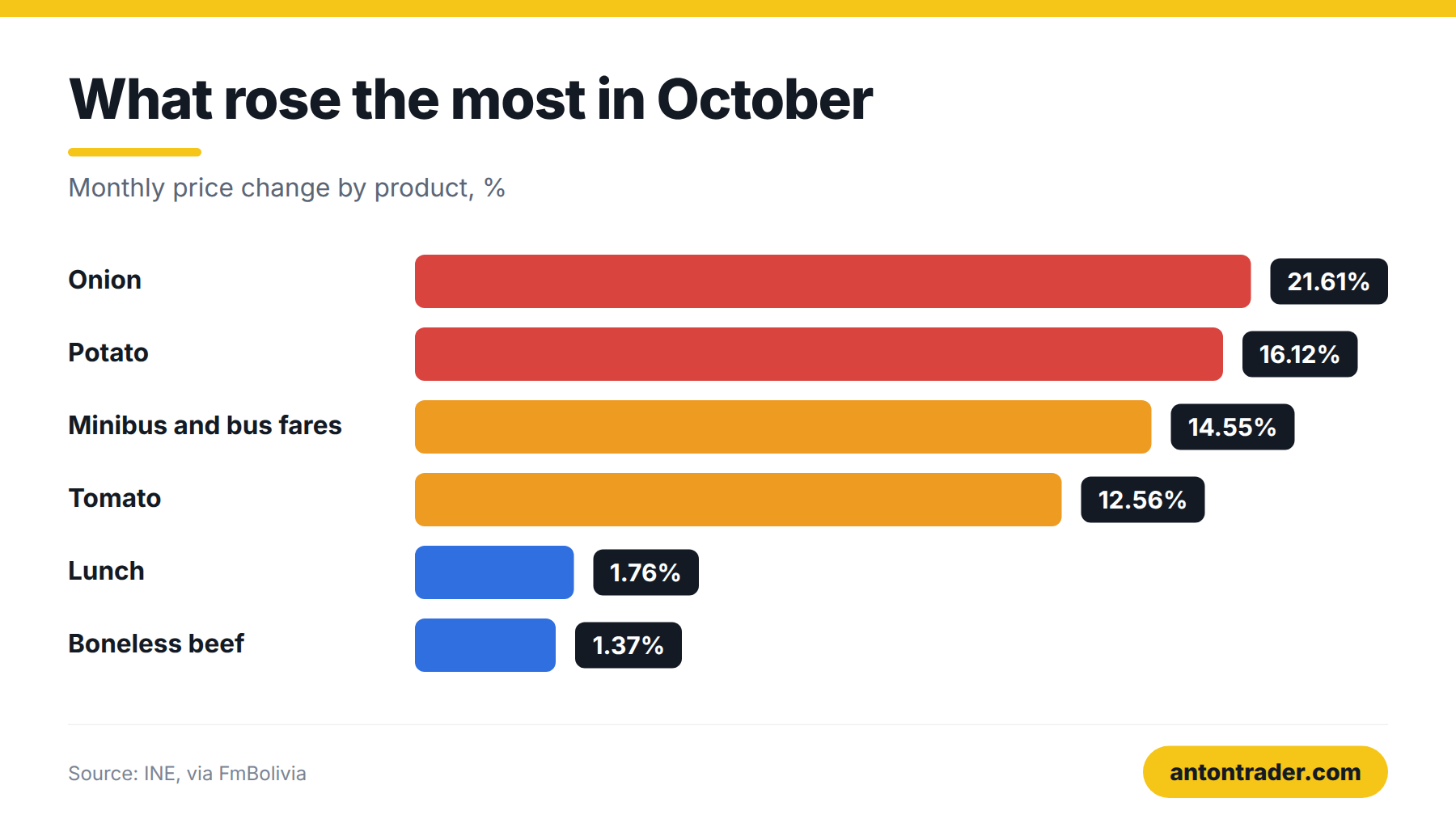
Lunch (1.76%) and boneless beef (1.37%) also went up. On the other hand, cheeses (−5.30%), green peas (−6.59%) and green beans (−4.59%) fell. That’s what inflation looks like in real life: not everything rises equally, but what rises tends to be exactly what you buy every day.
Where it rose the most
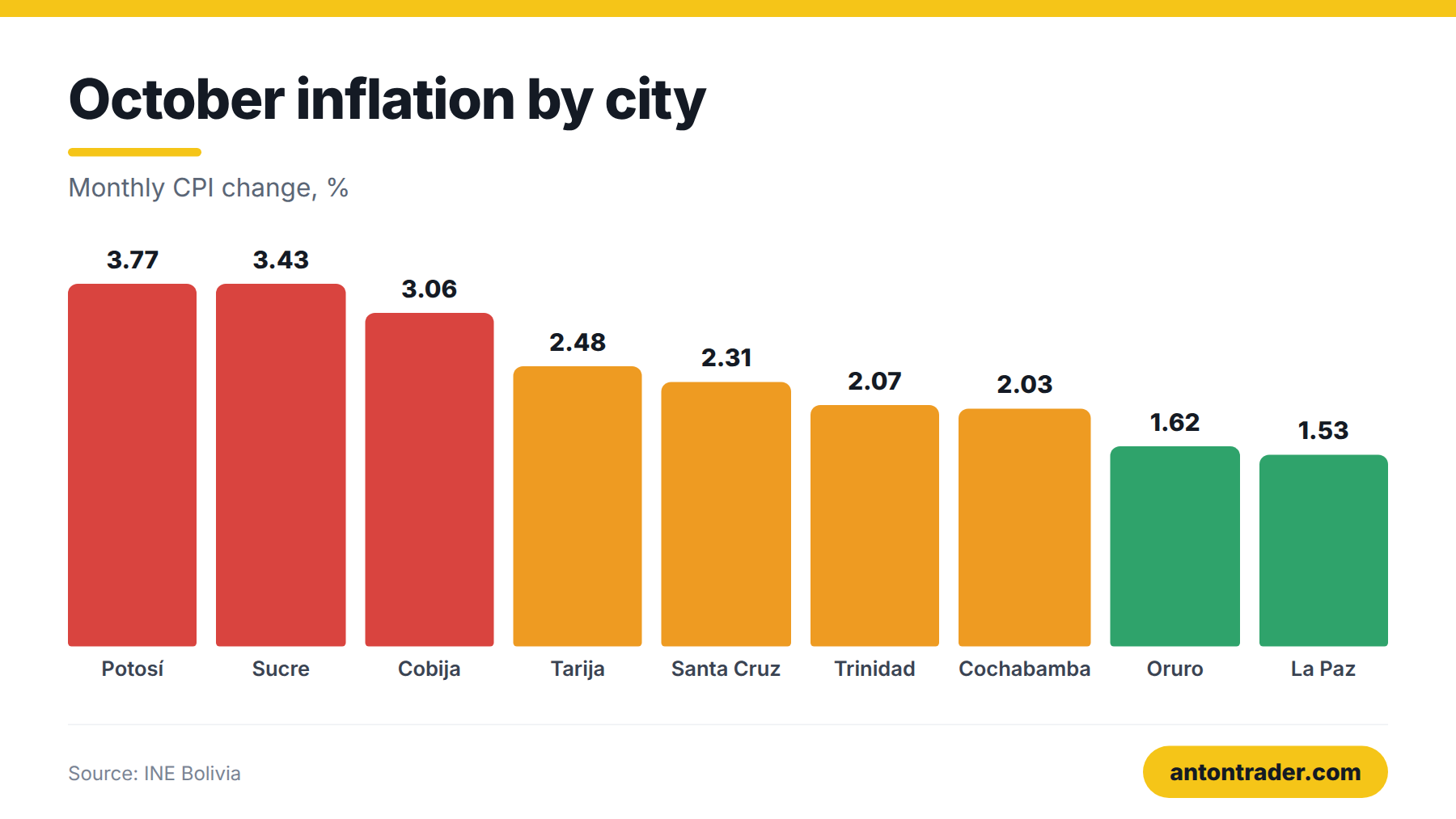
October’s inflation was not the same across the whole country. Potosí had the largest change, at 3.77%, followed by Sucre (3.43%) and Cobija (3.06%). The lowest were Oruro (1.62%) and La Paz (1.53%).
| Indicator | October 2026 |
|---|---|
| Monthly inflation | 2.07% |
| Year-to-date January–October | 6.03% |
| Last twelve months | 7.08% |
| City with the largest increase | Potosí, 3.77% |
| City with the smallest increase | La Paz, 1.53% |
Source: Bolivia’s INE, also cited by FmBolivia and PYME Noticias.
How to protect your money
With prices rising 2% in a month, idle money loses value fast. The first defense is the most boring one: know what you spend on, build a small emergency fund and don’t go into debt to consume.
Many Bolivians look to keep part of their savings in dollars, in gold or in stablecoins. Each option has its own risks and rules, so do your research first and never put everything in one place. And be wary of anyone offering you a “fixed return” to beat inflation: it’s the favorite phrase of scammers.
If you want to learn trading, start on a demo account and then with a small amount of money, with brokers with many years of track record like FxPro, RoboForex or Tickmill. For crypto I use Bybit and BingX. Before opening an account, check that the service is available in Bolivia.
Where to trade
These are the brokers and exchanges I use that work with clients from Latin America. Always check that the service is available in your country and start small.
Risk warning: CFDs, Forex and crypto derivatives carry a high risk of losing money due to leverage. This article is not investment advice.