US inflation for October came in higher than expected, and the market now treats a Federal Reserve rate hike in December as almost certain. The dollar strengthened, bonds are paying more than 5%, and gold and bitcoin fell. I’ll explain what happened and how it can affect your money, wherever you live.
What happened with October inflation
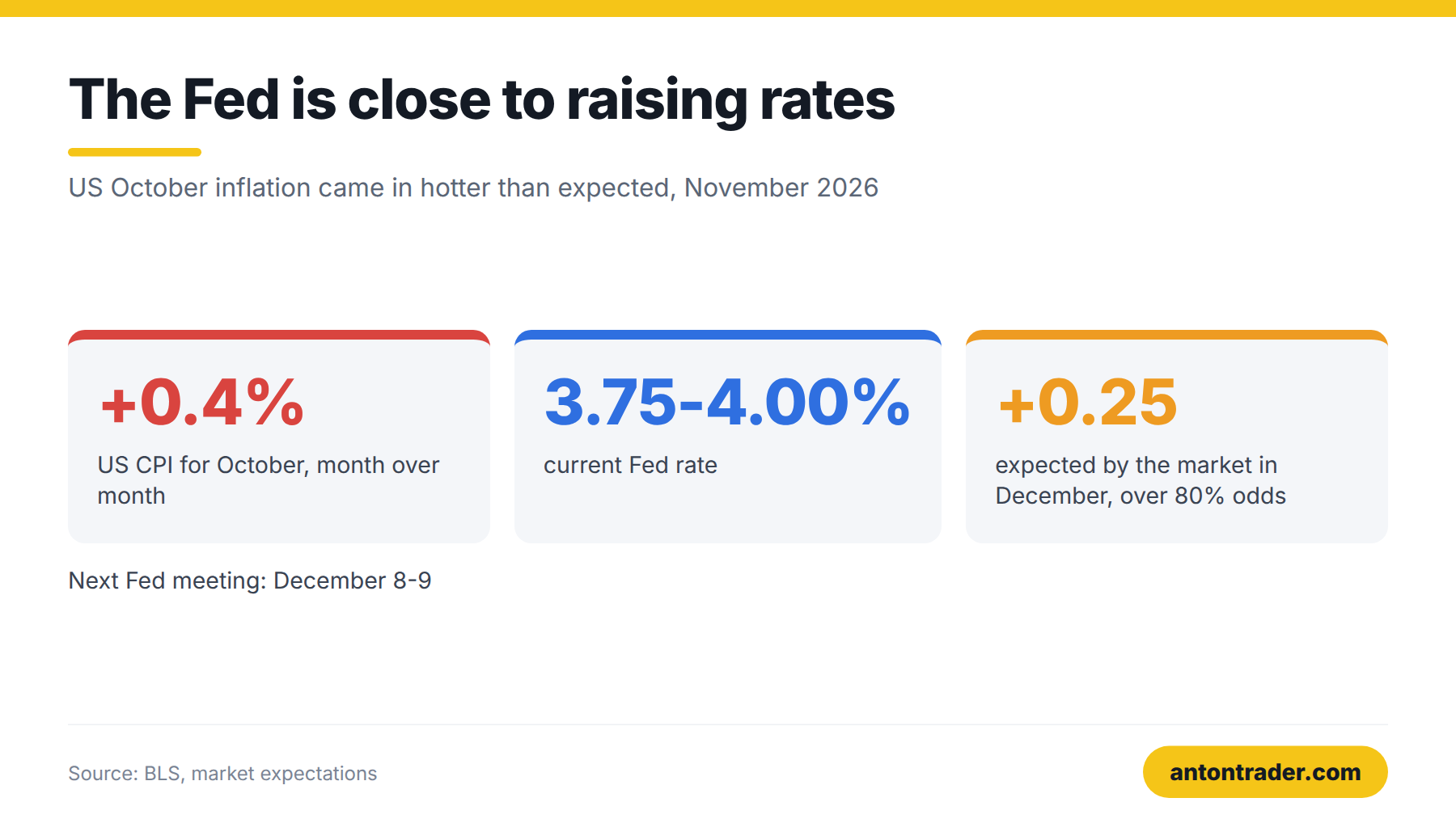
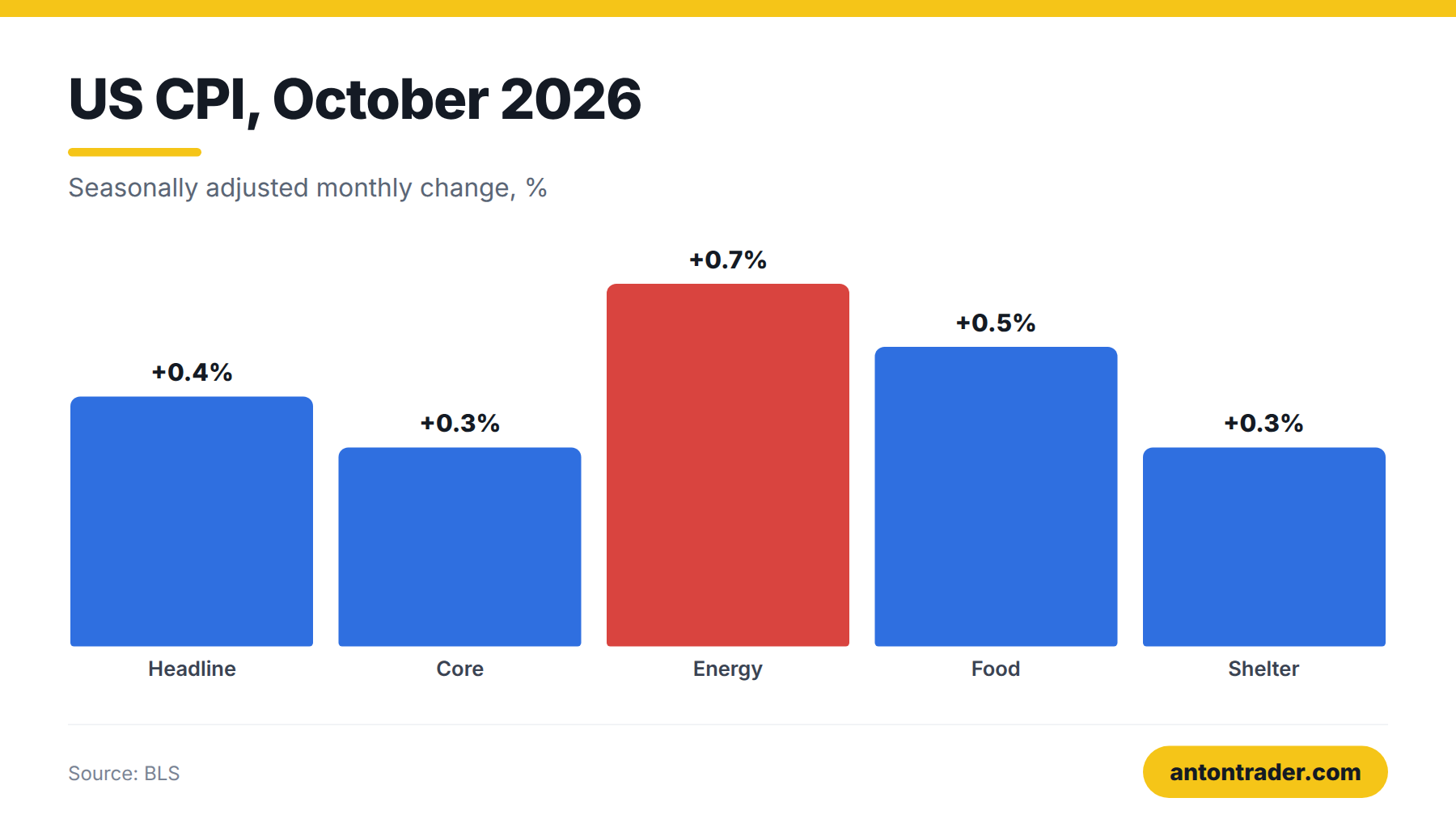
On November 10, the Bureau of Labor Statistics (BLS) published the October consumer price index (CPI). Prices rose 0.4% for the month. Economists expected 0.3%. Core inflation, which excludes food and energy, rose 0.3%, also above the expected 0.2%.
Energy rose 0.7%, food 0.5% and housing 0.3%. Housing alone accounted for more than 30% of the month’s increase. One unusual detail: this time the BLS did not publish annual inflation, because October data from last year was not collected during the 2025 government shutdown.
Why the Fed could raise rates
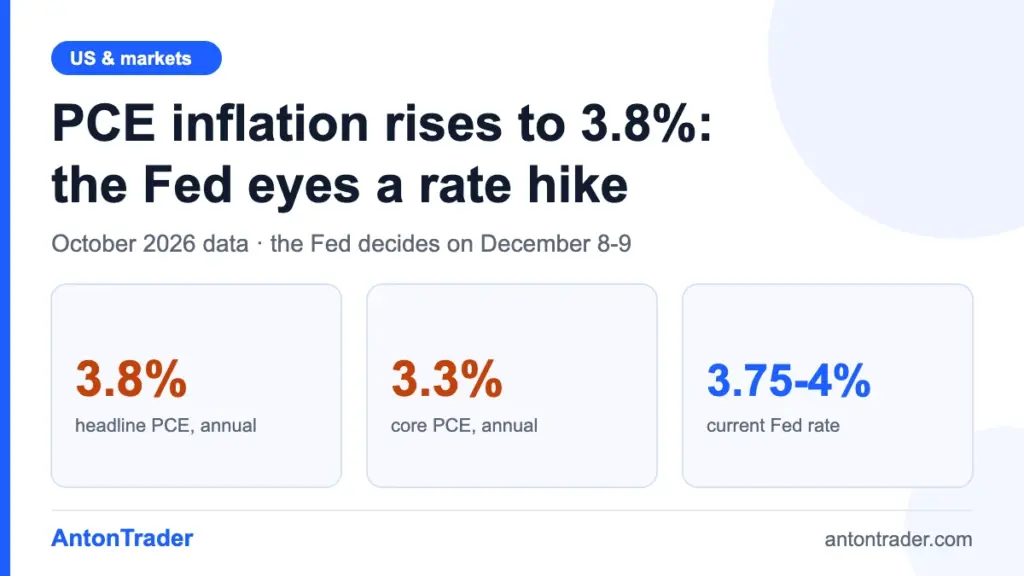
The Fed’s benchmark rate is currently 3.75%-4.00%. On October 28 they held it, but two members already voted to raise it. After the October data, according to CME’s FedWatch tool as cited by AP and Reuters, the market saw a probability of more than 80% of a 0.25-point hike at the December 8-9 meeting. Governor Christopher Waller even said he could support 0.5 points if inflation keeps surprising to the upside.
When money in dollars becomes more expensive, capital looks for yield in the US. That’s why 10-year Treasury bonds pay more than 5.1%, the dollar hit its highest level in 19 months, and gold fell almost 3% in a single day, on November 12. Bitcoin dropped to its lowest level in several months.
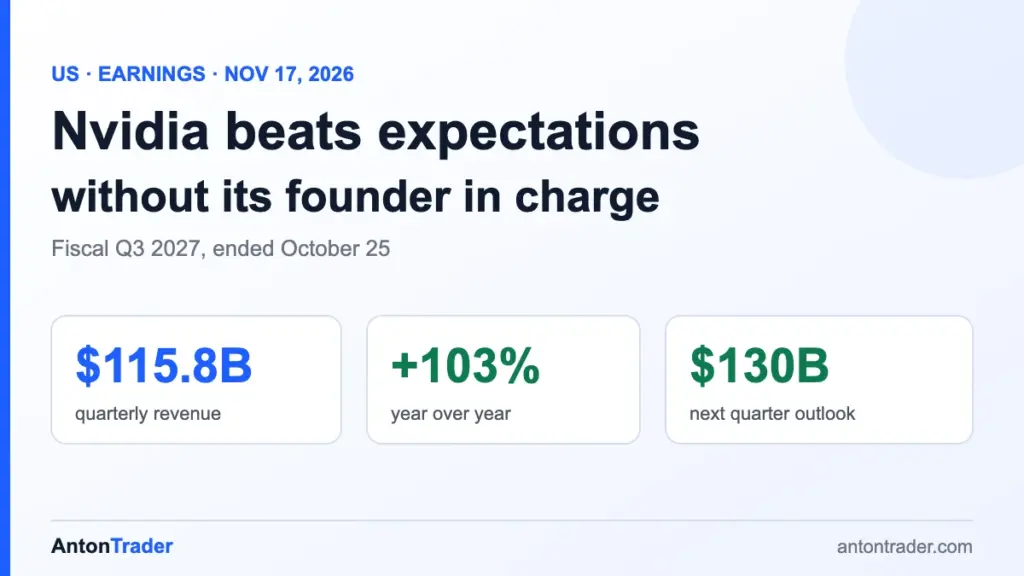
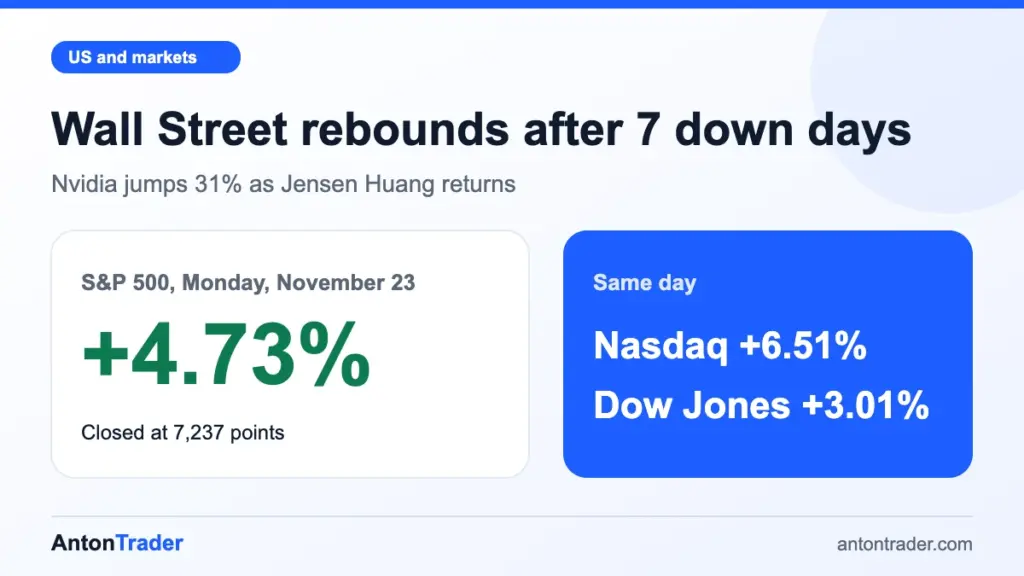
On top of this came the blow to tech: on November 12, Jensen Huang, CEO of Nvidia, resigned, and the company named its chief financial officer, Colette Kress, as interim CEO. Nvidia reports its results today, November 17, after the close.
What it means for you
- Your dollar savings gain strength against many currencies. In Brazil, the dollar reached 5.65 reais on November 13. If your local currency weakens, what you pay in dollars gets more expensive.
- Dollar loans and credit cards can become more expensive if the Fed raises rates. If you have dollar debt with a variable rate, check how much you would pay with 0.25 points more.
- Gold and crypto suffer when rates rise: they pay no interest and compete with bonds that now yield more than 5%. Expect sharp moves around December 9.
- If you trade the dollar, gold or indices with CFDs (contracts for difference, you don’t buy the asset), choose a reputable broker. In my rating you’ll find FxPro, Tickmill and RoboForex.
What to watch now
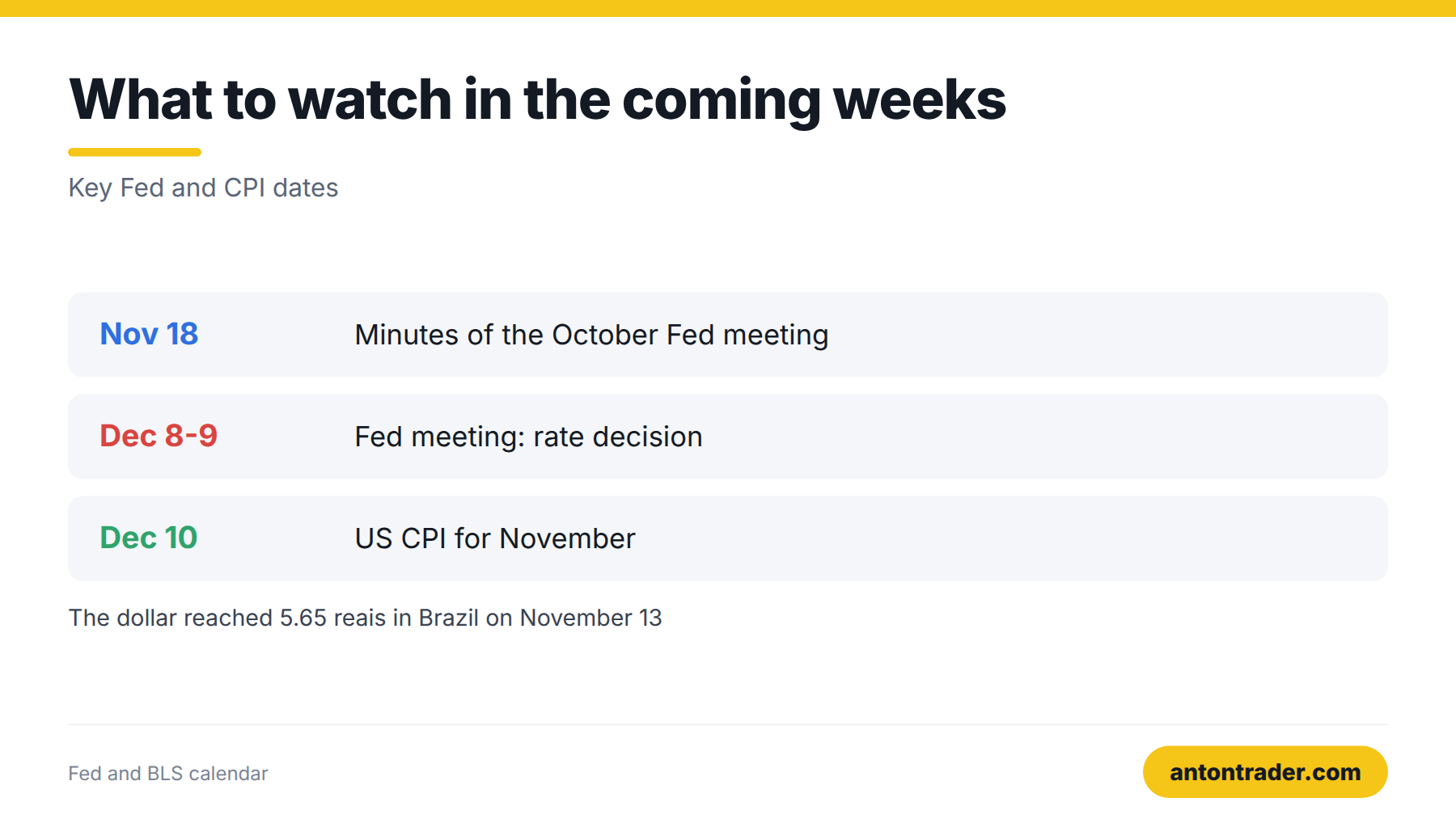
Three dates mark the road ahead. On November 18, the minutes of the October meeting are released: they will show how many members want to raise rates. On December 8-9, the Fed decides the rate and publishes new projections. On December 10, the November CPI arrives, already after the decision. Until then, every price data release and every Fed speech can move the dollar, gold and bitcoin.
Sources
- BLS: Consumer Price Index, October 2026
- Federal Reserve: statement of October 28, 2026
- Federal Reserve: FOMC calendar
- AP: prices rose 0.4% in October
- InvestmentNews: October CPI and hike probabilities
- Reuters via Nation Thailand: gold and dollar, November 12
- USAGOLD: metals report, November 12
- Motley Fool: why bitcoin is falling
- TechCrunch: Jensen Huang’s resignation
- Metrópoles: dollar in Brazil, November 13
Everything written here is my personal opinion and experience, not investment advice. Trading CFDs, Forex and crypto derivatives carries a high risk of losing money.