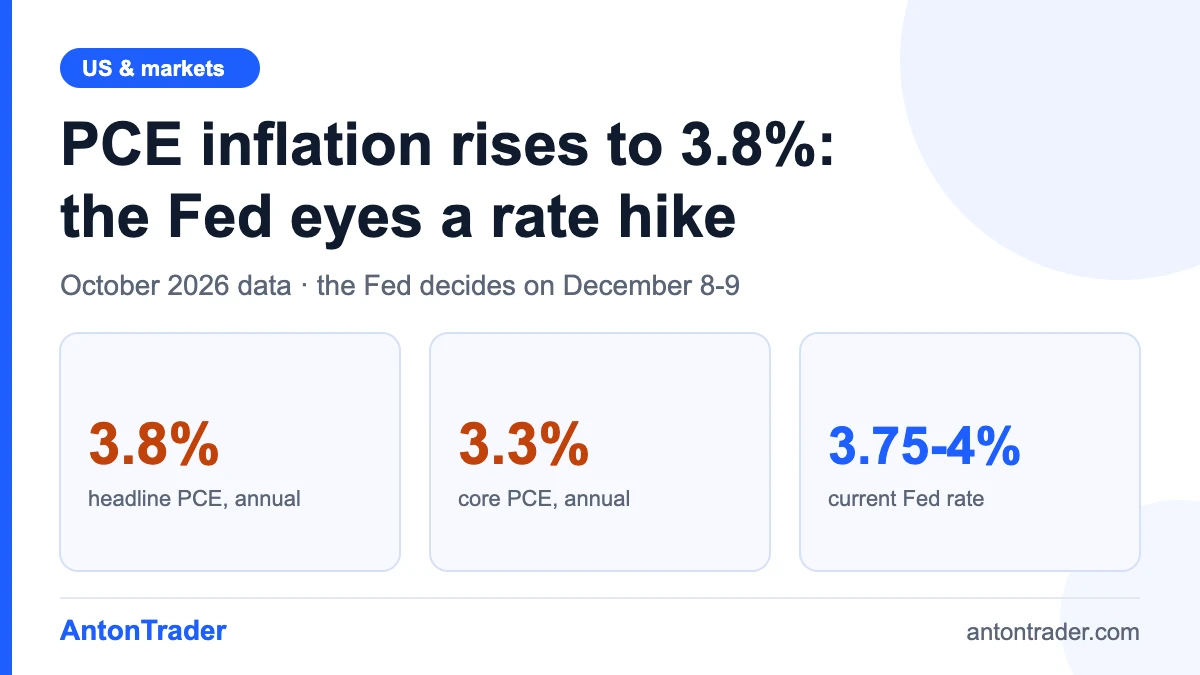
The inflation measure the Federal Reserve watches most closely rose to 3.8% year over year in October, according to the U.S. Bureau of Economic Analysis (BEA). It is the fourth straight monthly increase and puts the Fed very close to raising its rate at the December 8–9 meeting. I’ll explain what the data said and how it reaches your money, wherever you live.
What the PCE inflation data said
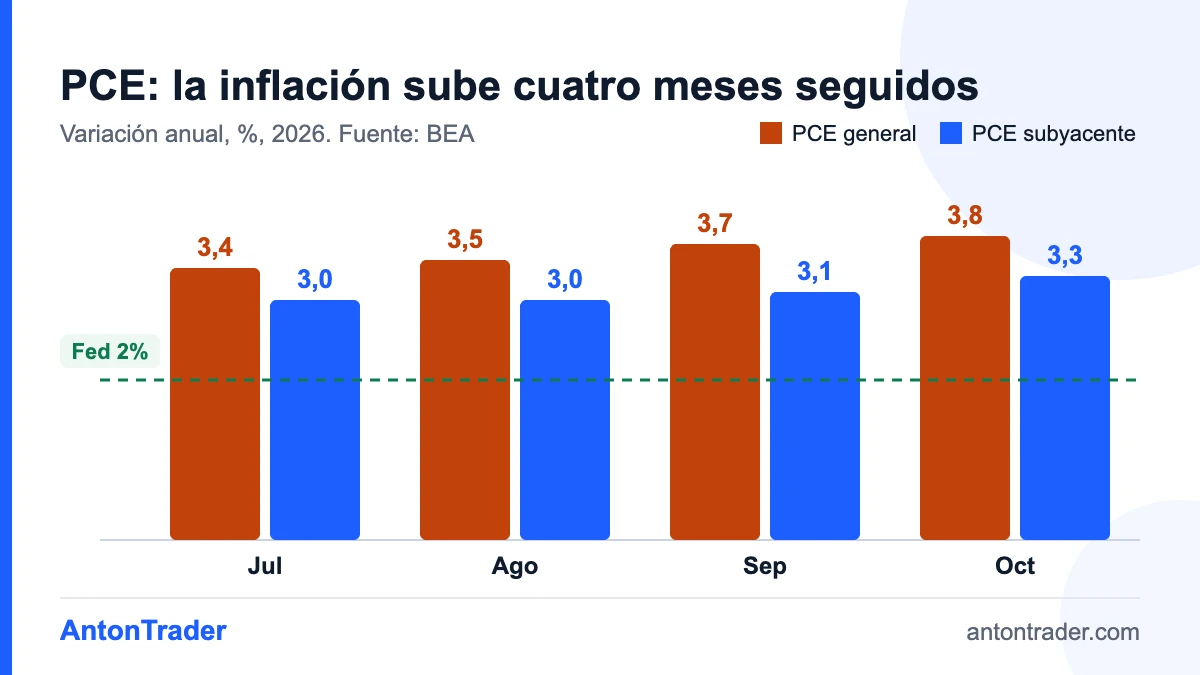
The PCE is the price index for consumer spending. The Fed prefers it to the CPI because it covers more types of spending. On November 25, the BEA published the October figures:
| Month 2026 | Headline PCE | Core PCE (excluding food and energy) |
|---|---|---|
| July | 3.4% | 3.0% |
| August | 3.5% | 3.0% |
| September | 3.7% | 3.1% |
| October | 3.8% | 3.3% |
What worries me is the core figure: it jumped from 3.1% to 3.3% in a single month. That means it’s not just oil going up, but also services and everyday goods. The Fed’s target is 2%, and both numbers are moving further away from it.
The same day, the BEA revised U.S. growth: third-quarter GDP rose at an annual rate of 4.3%, versus 2.2% in the second quarter. A fast-growing economy with rising inflation is exactly the combination that pushes a central bank to hit the brakes with higher rates.
What the Fed could do on December 8–9
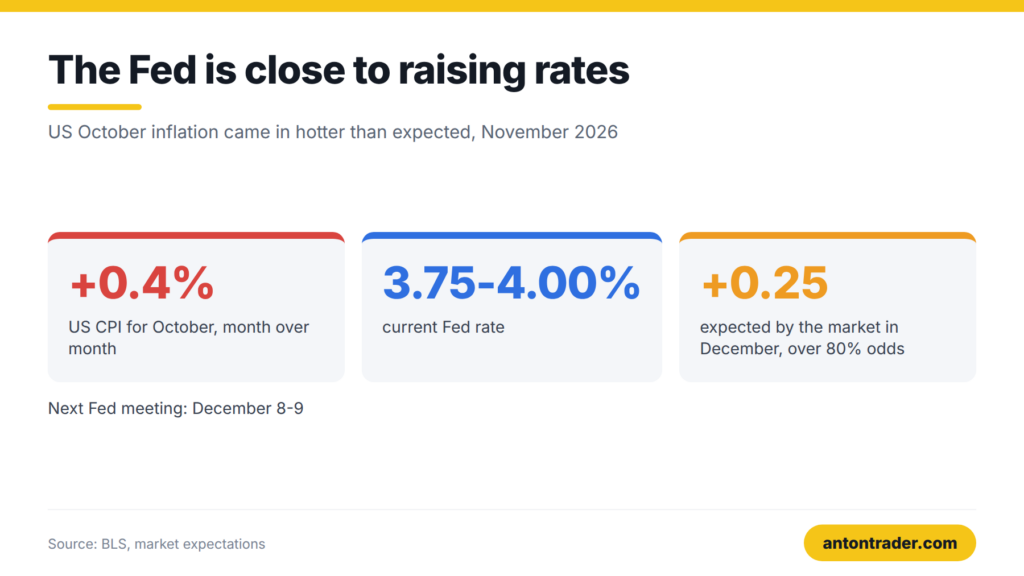
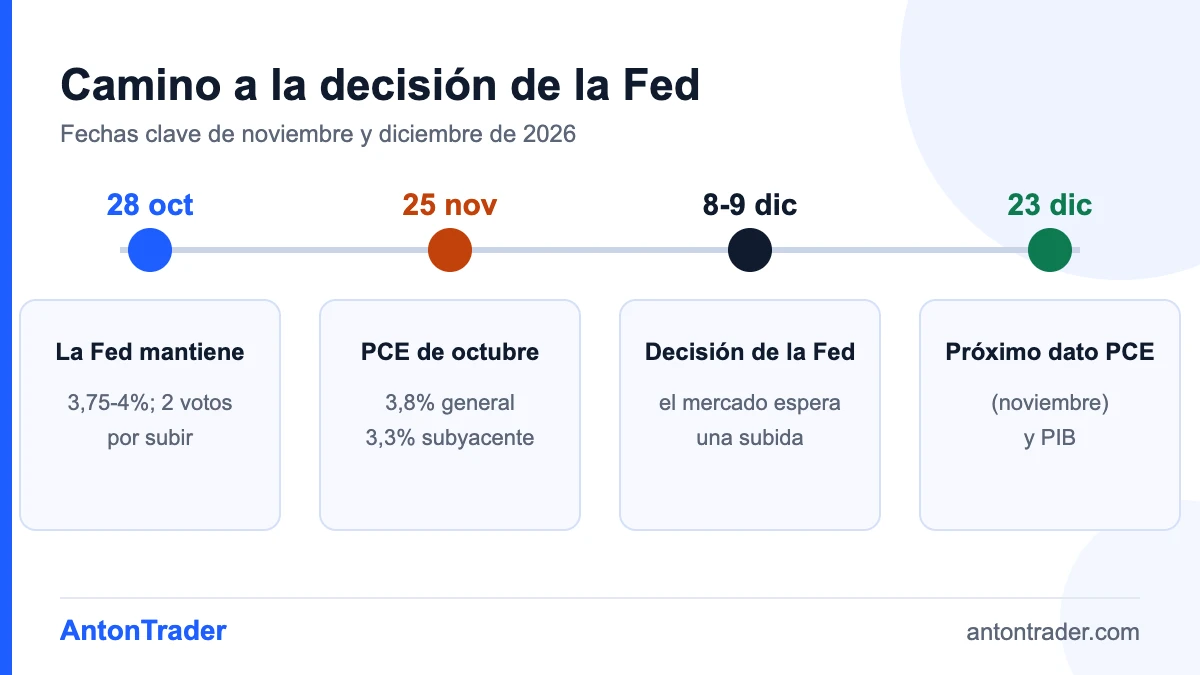
On October 28, the Fed left its rate in the 3.75% to 4% range, but the vote was 10 to 2: Lisa Cook and Beth Hammack wanted to raise it right away. With the October PCE on the table, Associated Press describes a December hike as likely, and prediction markets see it as almost certain.
In addition, December brings new Fed economic projections. They will show whether it’s a single hike or the start of a cycle. That message can move the markets more than the decision itself.
How this reaches your pocket
A higher U.S. rate makes holding dollars more attractive. When that happens, money flows out of emerging-market currencies, and the peso, the real, the sol or the tenge can lose value against the dollar. If you earn in local currency and buy imported goods, you’ll notice it in prices.
Dollar-denominated loans also get more expensive, because banks use U.S. rates as a benchmark. And risk assets, such as tech stocks and bitcoin, tend to suffer when money becomes more expensive: on Wednesday the Nasdaq fell more than 4% during the session, according to AP, although it closed with a much smaller decline.
Watch the dates: U.S. markets close this Thursday for Thanksgiving, and on Friday the stock market closes early. With low volume, moves can be sharp.
What this means for you
- If you have dollar-denominated or variable-rate debts, expect them to possibly go up. It’s a good time to review how much you pay and whether it makes sense to lock in the rate.
- If you save in local currency, holding part of it in dollars protects you if your currency weakens after the Fed’s decision.
- If you trade gold, the dollar or indices, expect strong volatility on December 9. Use a stop loss and a small lot size. If you trade CFDs, do it with a reputable broker like FxPro; the others I review are in my ranking of brokers and exchanges.
- Don’t bet everything on a single piece of news. The next PCE release comes out on December 23 and could change the picture again.
Sources
- BEA: Personal Consumption Expenditures Price Index
- BEA: PCE Price Index Excluding Food and Energy
- BEA: GDP (Second Estimate), 3rd Quarter 2026
- Federal Reserve: FOMC statement, October 28, 2026
- Federal Reserve: FOMC meeting calendar
- Associated Press: Wall Street recovers most early losses (11/25/2026)
Everything written here is my personal opinion and experience, not investment advice. Trading CFDs, Forex and crypto derivatives carries a high risk of losing money.