Nvidia reported its results on November 17, five days after the departure of its chief executive and founder, Jensen Huang. The numbers came in above what Wall Street expected: revenue of $115.8 billion for the quarter, double what it was a year ago. Let me explain what happened and why this matters for markets around the world.
What Nvidia reported
The quarter is the third of the company’s fiscal year 2027 and ended on October 25. Here are the key numbers:
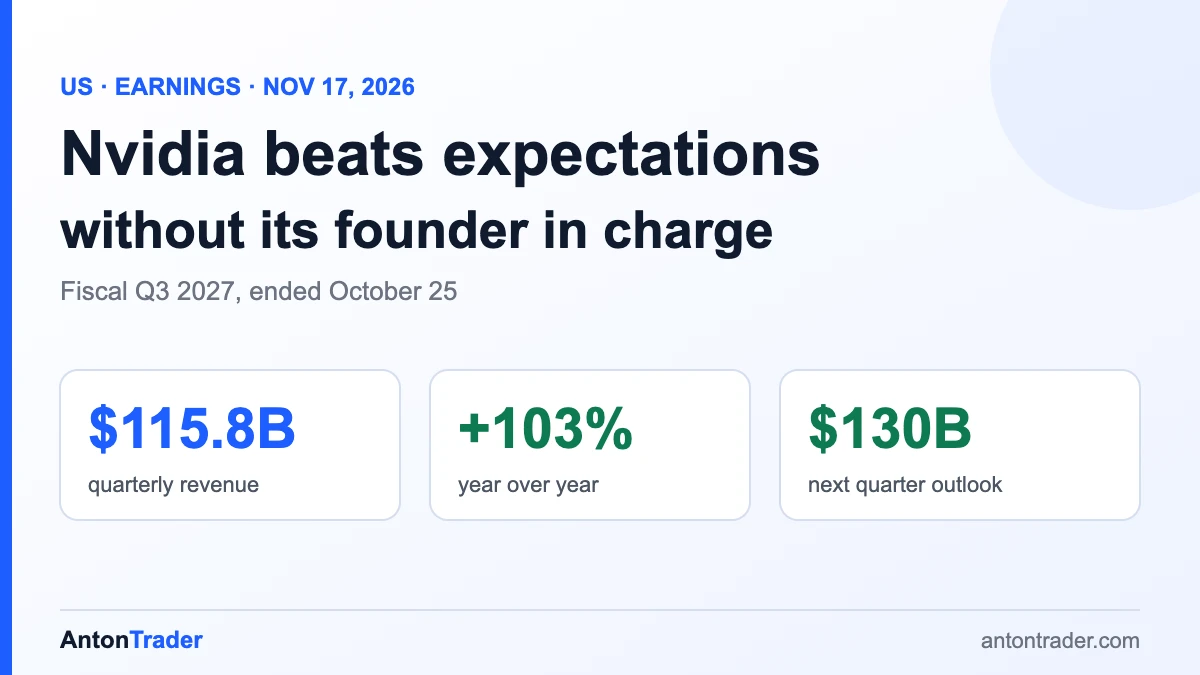
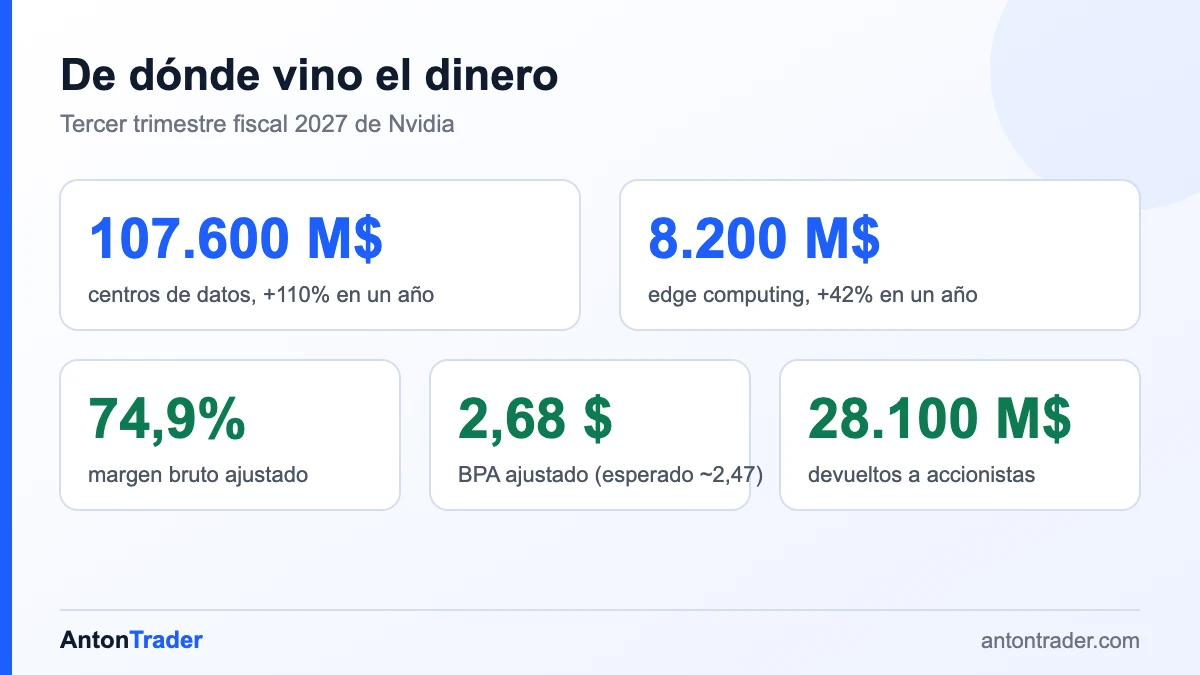
- Revenue: $115.8 billion, 103% more than a year ago and 20% more than the previous quarter. Analysts surveyed by LSEG expected about $109.1 billion.
- Data centers: $107.6 billion, 110% more in a year. This is the AI chip business, and it already accounts for more than 90% of sales.
- Adjusted earnings per share: $2.68, compared with about $2.47 expected.
- Adjusted gross margin: 74.9%, slightly less than the 75.0% of the previous quarter. The company attributes this to the launch of its new Vera Rubin platform.
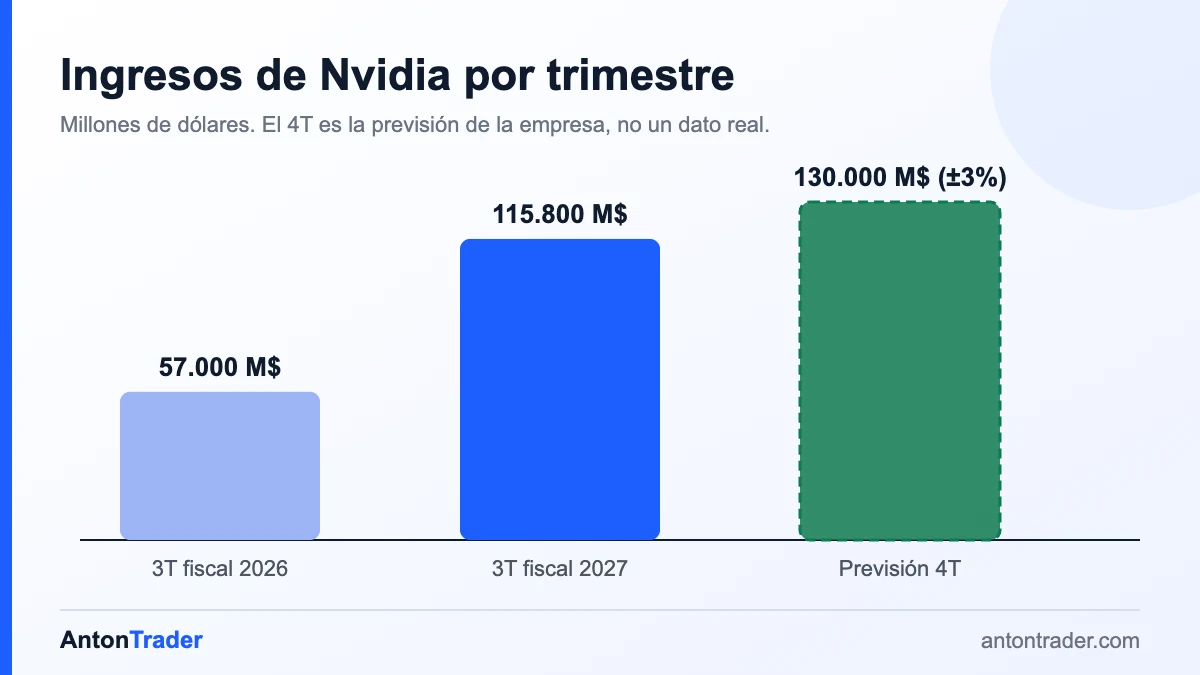
For the next quarter, Nvidia expects revenue of $130 billion, plus or minus 3%. That forecast does not include data center chip sales to China. During the quarter it also returned $28.1 billion to its shareholders through buybacks and dividends.
A company without its founder
On November 12, Jensen Huang, who had led Nvidia since its founding, resigned as chief executive. The board named Colette Kress, chief financial officer since 2013, as interim CEO, and it is looking at internal and external candidates for the permanent role. It was Kress who presented these results.
That is why the report carried special weight. The market was not only looking at sales; it also wanted to see whether the company keeps running without its best-known face. The answer from the numbers was clear: demand for AI chips remains strong. In after-hours trading, the stock rose more than 3%, according to Fox Business and StockAnalysis.
Why it matters beyond Nvidia
Nvidia is one of the largest companies on the US stock market and carries a lot of weight in the S&P 500 and Nasdaq 100 indices. When its results disappoint, the entire tech sector falls and investor sentiment falls with it. When they surprise to the upside, the market gains confidence in the AI wave.
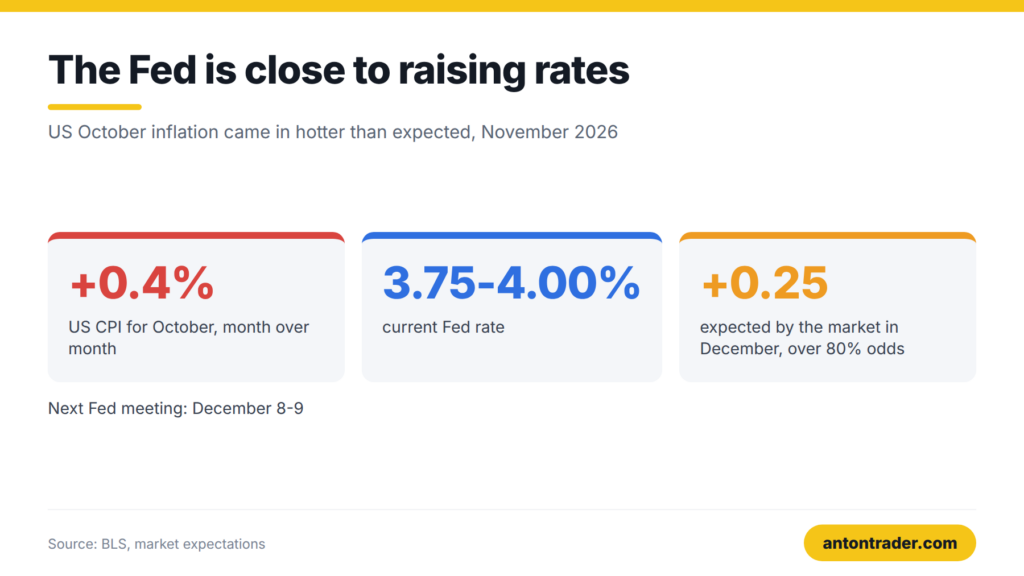
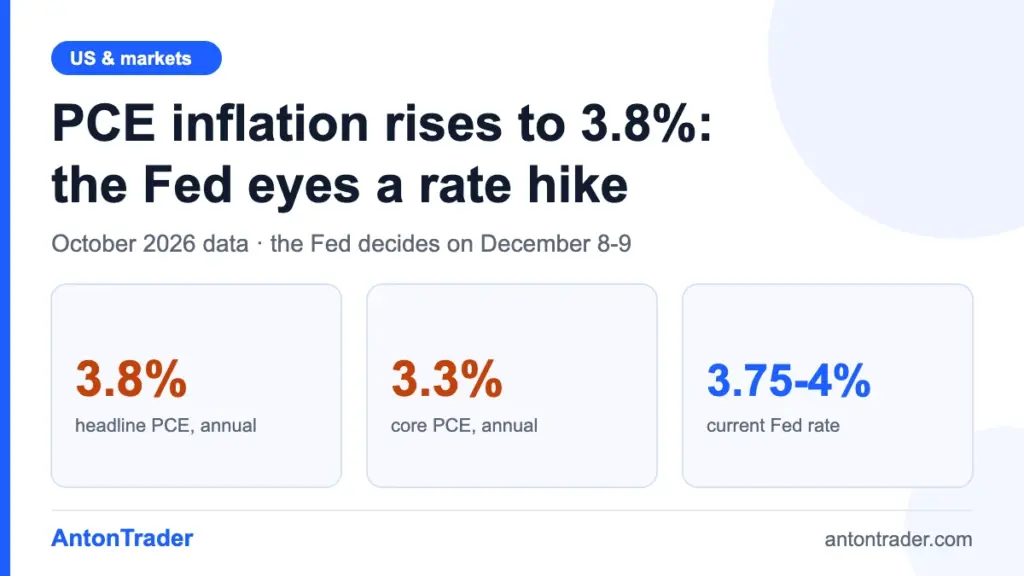
That sentiment reaches far. When big funds feel safe, they buy more risk assets: tech stocks, crypto and emerging-market currencies. When they are afraid, they take refuge in the dollar. On that same Tuesday the 17th, before the results, the S&P 500 fell 1.0% and the Nasdaq 100 dropped 0.7%, in a market that is already nervous about a possible Fed rate hike in December.
What it means for you
- If you hold index funds or ETFs tracking the S&P 500 or the Nasdaq, part of your money is already in Nvidia. Its results move your portfolio even if you don’t own the stock directly.
- Look at the forecast, not just the quarter. The $130 billion expected excludes China. Any change in export restrictions can move the stock sharply.
- The leadership change is still open. Until there is a permanent CEO, every piece of news about the search can cause abrupt jumps in the stock.
- If you trade US stocks or indices with CFDs (contracts for difference, where you don’t buy the stock itself), choose a solid broker. In my rating you will find FxPro, Tickmill and RoboForex.
What to watch now
The first thing is who the new chief executive will be and when the board will announce it. The second is the Fed: its meeting on December 8 and 9 will decide whether it raises rates, and a hike tends to hit growth stocks like Nvidia harder. The third is China: during the quarter the company shipped $2.4 billion of older Hopper chips to that country, and any change in export rules could upset the numbers.
Sources
- Nvidia press release (reproduced by TechPowerUp), November 17, 2026
- Fox Business: Nvidia reports results after Jensen Huang’s resignation
- StockTitan: third-quarter fiscal 2027 results and outlook
- StockAnalysis: Nvidia beats estimates
- Federal Reserve: FOMC calendar
Everything written here is my personal opinion and experience, not investment advice. Trading CFDs, Forex and crypto derivatives carries a high risk of losing money.