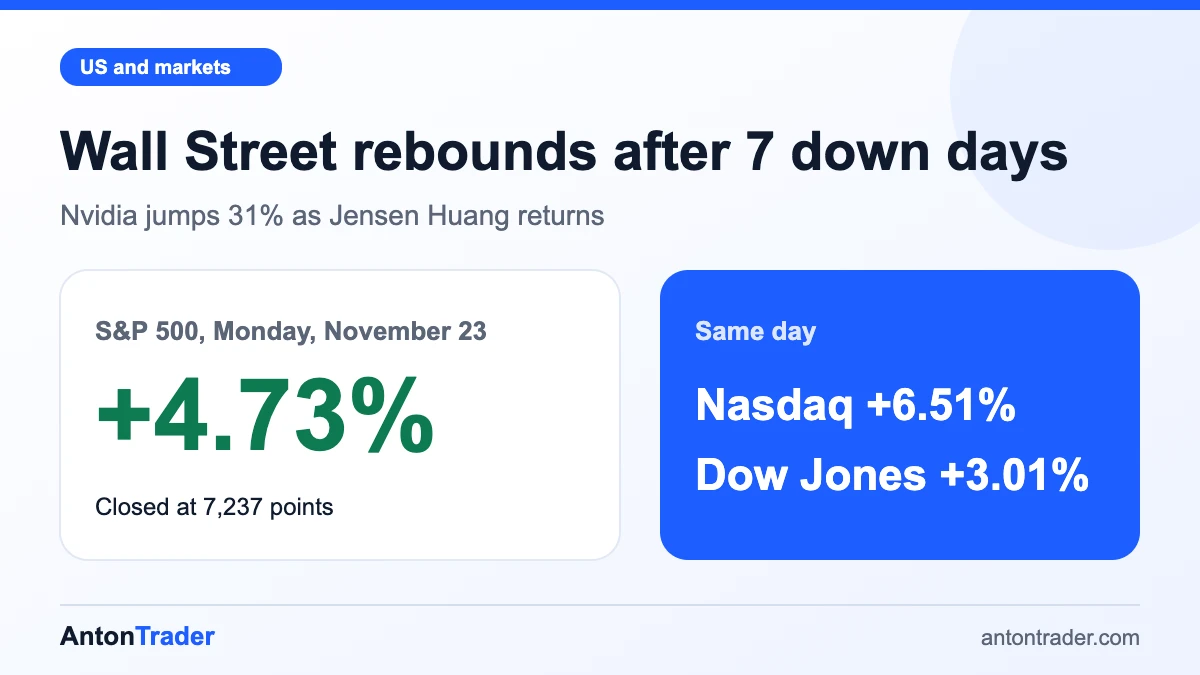
On Monday, November 23, Wall Street had one of its strongest days of the year: the S&P 500 rose 4.73% and the Nasdaq 6.51%. The driver was Nvidia, which jumped more than 31% after its board put Jensen Huang back in the CEO role. But the Federal Reserve is still ready to raise rates in December, and that matters more for your money than one good day in the stock market.
What happened: from seven straight declines to a huge rebound
On Friday, November 20, the S&P 500 closed at 6,910 points, down 3.70% in a single day. It was its seventh consecutive decline. The Nasdaq lost more than 5% that day and the Dow Jones 1.93%. The fear came from two sides: doubts about artificial intelligence companies and a Fed increasingly willing to raise rates.
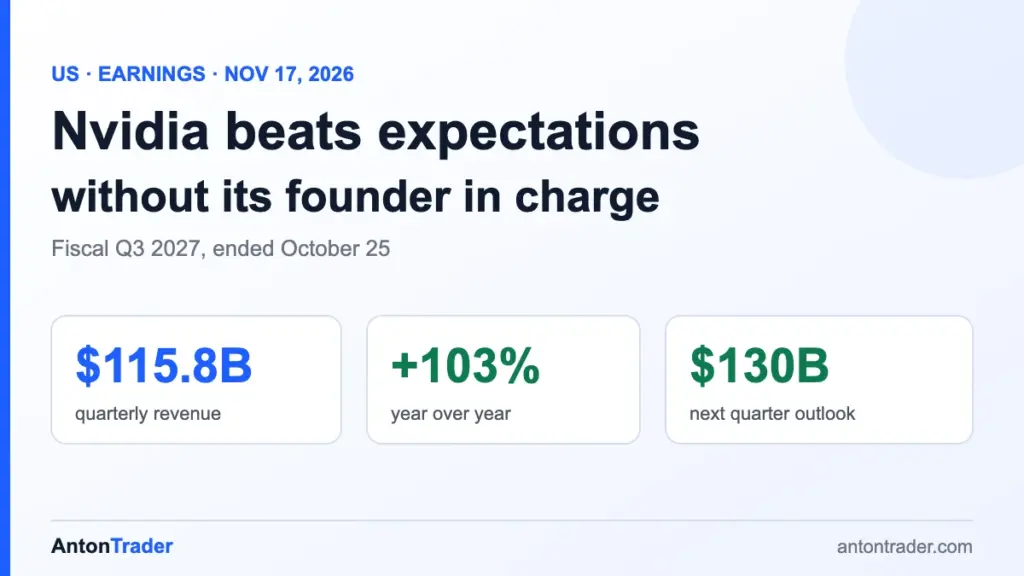
On Monday everything flipped. Huang, Nvidia’s co-founder, had resigned on November 12 (we covered it in this analysis of Nvidia’s results). His return restored confidence in the sector: Nvidia rose more than 31%, Micron close to 19%, and data center companies such as CoreWeave and Nebius more than 20%.
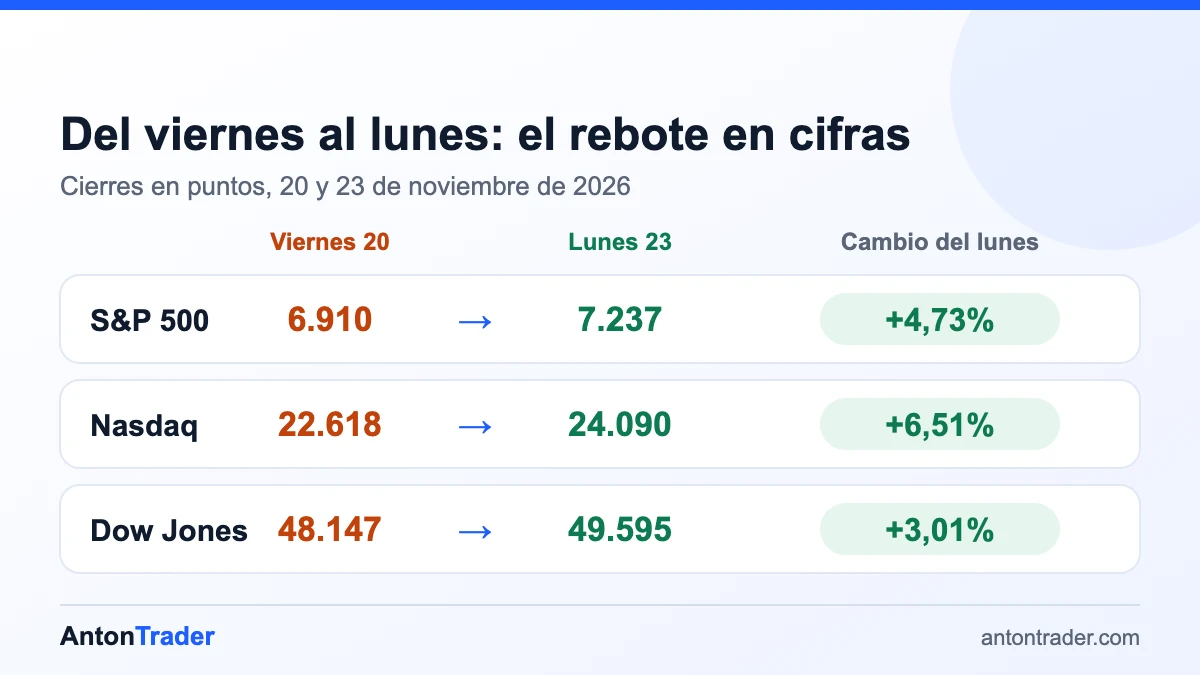
Monday’s closes: S&P 500 at 7,237 points (+4.73%), Nasdaq at 24,090 (+6.51%) and Dow Jones at 49,595 (+3.01%). A rebound like this doesn’t erase the previous week, but it shows how much the indexes now depend on a few tech companies: when a single stock like Nvidia moves 31%, it drags the entire market with it.
Why the Fed matters more than the rebound
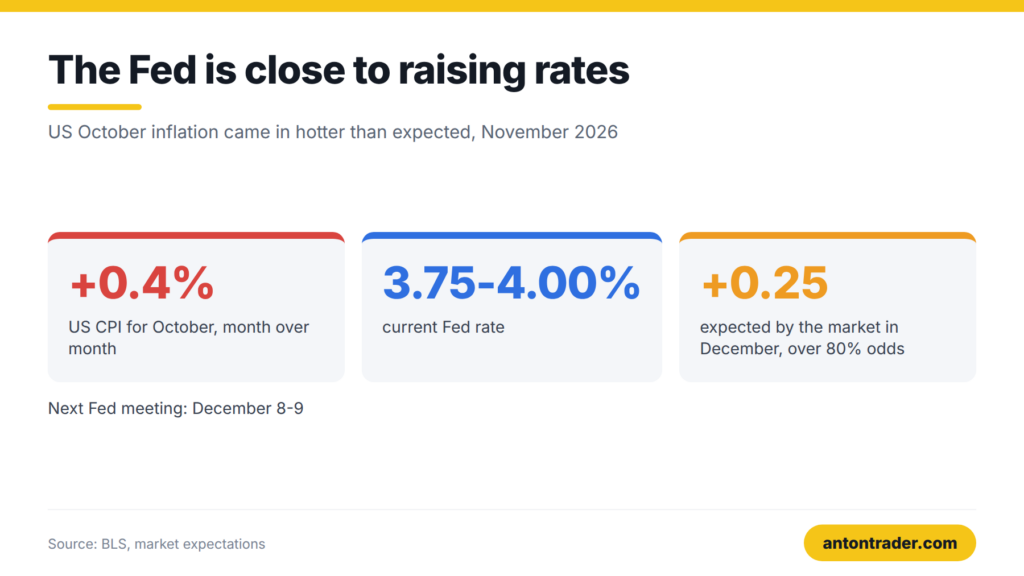
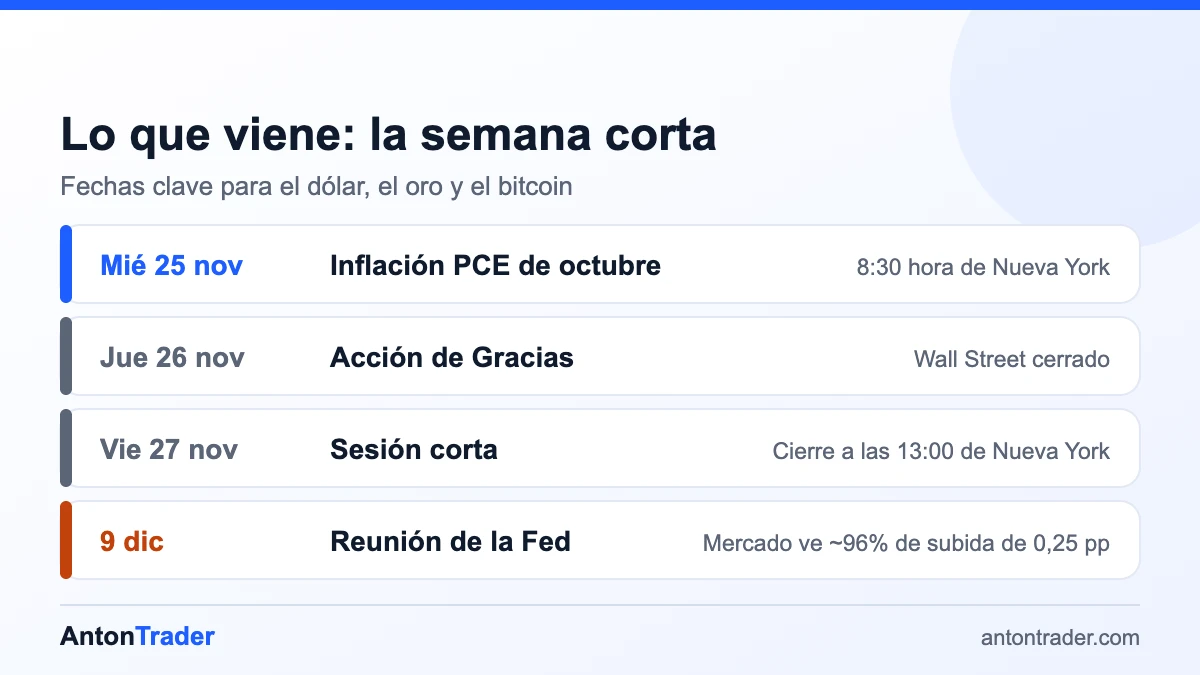
The rebound didn’t change the main picture. The minutes of the Fed’s October meeting, released on November 18, showed that almost all its members expect further rate hikes. According to CME’s FedWatch tool, the market sees around a 96% probability of a 0.25-point hike at the December 9 meeting.
Higher rates in the United States make holding money in dollars more attractive. That usually strengthens the dollar against emerging-market currencies, including those in Latin America, and takes strength away from risk assets like bitcoin. Gold felt it too: on Friday it dropped to around $3,526 per ounce and on Monday it moved back above $3,600. The dollar index is holding near 103.8 points.
What it means for you
First: don’t chase the rebound. A +4.73% day after seven red days attracts those who want to quickly recover what they lost, and that is the most expensive way to enter the market.
- If you trade indexes or tech stocks: reduce your position sizes this week. With 5% moves in a single day, a normal stop loss gets skipped easily.
- If you save in your local currency: a Fed that raises rates usually puts pressure on the region’s currencies. Don’t change everything at once; do it in parts if you need dollars.
- If you hold bitcoin: high US rates work against risk assets. Keep in your own wallet whatever you don’t use for trading.
- If you want to trade volatility: do it with a regulated broker and always with a stop loss in place. CFDs on indexes, gold and crypto from FxPro, Tickmill and RoboForex let you trade in both directions; to buy crypto, BingX and Bybit.
What to watch this week
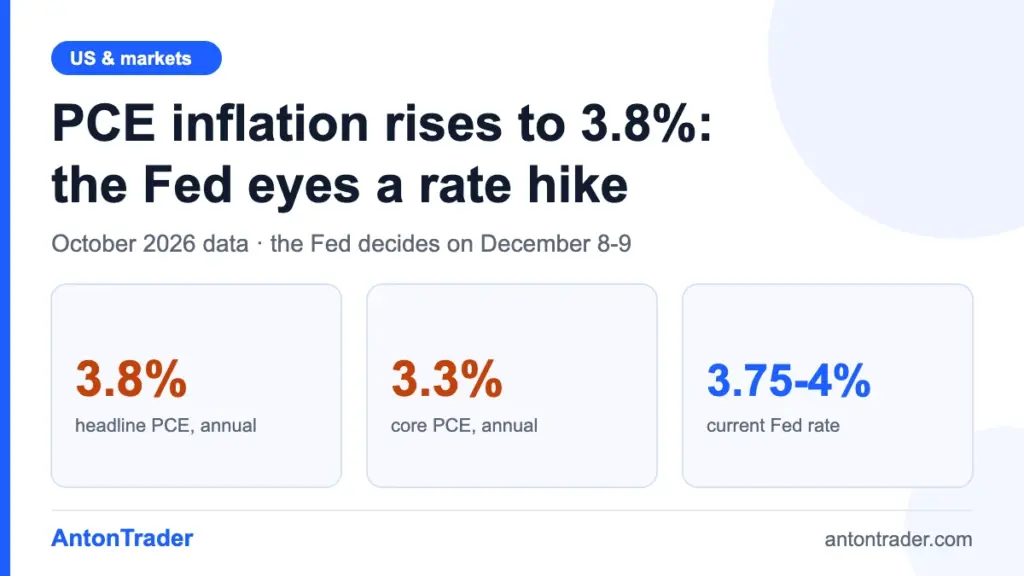
The key data arrives on Wednesday, November 25 at 8:30 a.m. New York time: October PCE inflation, the price indicator the Fed follows most closely. A high reading would confirm the December hike and could slow the rebound; a lower one would give stock markets some breathing room. On Thursday the 26th Wall Street is closed for Thanksgiving, and on Friday the 27th it trades only until 1:00 p.m., so there will be less volume and sharper moves. On the Fed’s path you can also read our previous analysis on rates.
Sources
- Fox Business: US stocks rebound as battered AI and chip stocks rally (11/23/2026)
- The Motley Fool: Markets rebound from correction on AI relief rally (11/23/2026)
- The Rio Times: Global economy briefing, November 23, 2026
- Kitco: gold and the Fed’s signals (11/23/2026)
- Federal Reserve: FOMC meeting calendar
Everything written here is my personal opinion and experience, not investment advice. Trading CFDs, Forex and crypto derivatives carries a high risk of losing money.